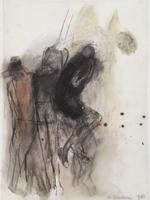
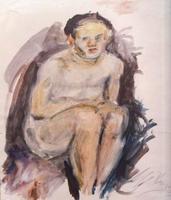
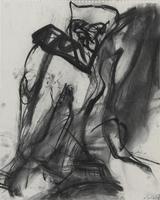
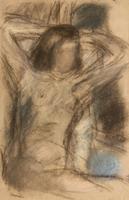
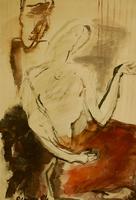
Based on the provided facts, Salvador Dalí’s “Sedet sola civitas plena populo (Lamentations 1:1)” stands as a significant work from his Classic Period (1941-1989). Painted in the religious painting genre, it merges Expressionism and Symbolism to reinterpret a biblical verse.
The title, taken from Lamentations 1:1, depicts a once-populous city now sitting desolate. Dalí uses the expressive, distorted forms of Expressionism to convey the raw emotion of grief and abandonment, while the Symbolist layer imbues the scene with deeper, often personal or mystical meaning. This work is significant for marking Dalí’s shift away from pure Surrealism toward a renewed interest in classical composition, religious iconography, and spiritual themes—a hallmark of his mature period. Here, the city itself becomes a symbol of the human soul in isolation, rendered with the emotional intensity typical of Expressionist religious art. The painting thus represents a fusion of modern stylistic techniques with timeless sacred narrative, demonstrating Dalí’s ability to infuse traditional subject matter with psychological and symbolic depth.