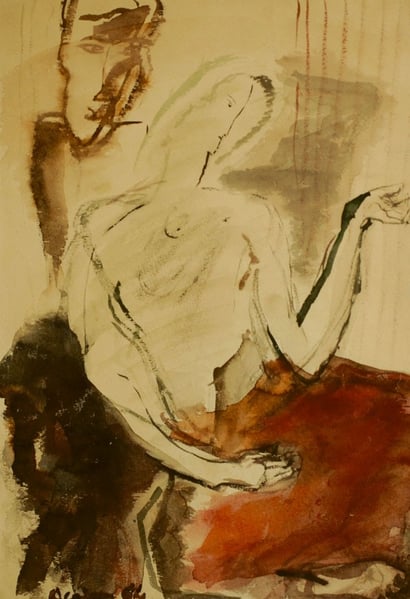
Экспертный разбор работы «Personnages» художника Aurel Cojan
Стиль: Art Informel · Жанр: figurative
Artwork Analysis: "Personnages" by Aurel Cojan
Style: Art Informel • Genre: Figurative
Aurel Cojan’s “Personnages” occupies a singular crossroads within the post-war European avant-garde. While Art Informel is typically understood as a radical, non-representational movement—privileging gesture, accident, and raw materiality over recognizable form—Cojan here reintroduces the human figure without sacrificing the movement’s core principles. This tension between figuration and informality is precisely what makes the work significant.
Formal & Material Innovations
Cojan employs the hallmarks of Art Informel: heavy impasto, visceral brushwork, and a palette dominated by earth tones, grays, and muted reds. Yet he channels these gestural energies into the depiction of standing, interacting figures. The figures are not clearly delineated but emerge from the chaos of paint—their limbs, torsos, and faces are hinted at through slashes, smears, and scratchings into the pigment. The surface becomes a field of existential struggle, where human presence is both asserted and dissolved. This technique aligns with the “informal” rejection of classical composition, replacing it with a sense of immediacy and raw psychic energy.
The Human Figure as Existential Trace
In the context of Art Informel, which often reflected the trauma of World War II and the anxiety of the atomic age, Cojan’s “Personnages” offers a fragile, haunted humanity. The figures are not stable portraits but ghostly presences—almost shamanic or primordial. They recall the art brut of Jean Dubuffet and the existential figuration of Alberto Giacometti, yet they are more abstracted, more embedded in the material process. Cojan’s figures are witnesses to their own fragmentation, their bodies becoming landscapes of scarred paint. This fuses the existentialist concerns of the era (identity, alienation, mortality) with the Art Informel ethos of spontaneous, anti-academic creation.
Significance within Art Informel
Most artists of the movement—such as Pierre Soulages, Hans Hartung, or Wols—abandoned the figure entirely, seeking a universal language of pure gesture. Cojan, however, insisted that the human form could still be the site of authentic, informal expression. By doing so, he expanded the boundaries of the movement, proving that figuration and abstraction could coexist in a state of productive tension. “Personnages” stands as a testament to the continued relevance of the figure in an age of uncertainty—not as a polished image, but as a raw, almost archaeological trace of human presence.
In summary, the work’s significance lies in its daring synthesis: the raw, process-driven energy of Art Informel married to a deeply felt, figurative subject matter. Cojan’s figures are not representations but incarnations—born from paint, gesture, and a profound sense of mortal fragility.
Визуально похожие
20 работ с близкой композицией и палитрой
Seated Female Nude
Ernst Ludwig Kirchner
Seated Nude
Paul Cezanne
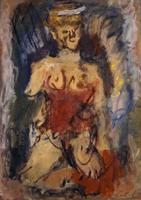
Actress
George Bouzianis
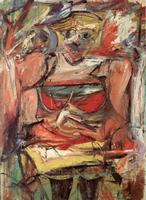
Woman V, 1952-53 (oil & charcoal on canvas)
Willem de Kooning
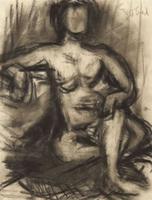
Czobel Bela Visage
Bela Czobel
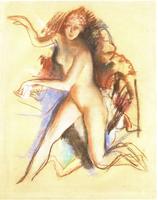
Nude
Zinaida Serebriakova
Female nude
Pablo Picasso
Hiroshima Child
Karel Appel
Seated Woman
Charles Alston
Presentation at the Old Court
Vasile Kazar
Female figure
Hryhorii Havrylenko
Imi
Nathan Oliveira
The Great Odalisque (after Ingres)
Pablo Picasso
The Dance between the Women
Ernst Ludwig Kirchner
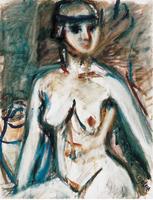
Czóbel Béla , Párizsi Modell 1920
Bela Czobel
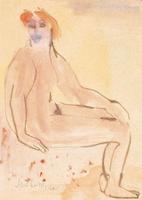
Anna Margit Ülő Akt
Anna Margit
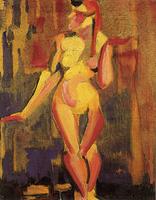
Nu Cubista N°1
Anita Malfatti
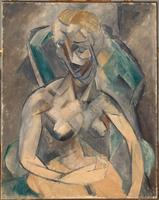
Young Woman
Pablo Picasso
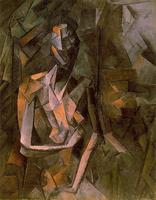
Seated female nude
Pablo Picasso
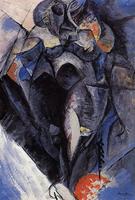
Figure
Umberto Boccioni