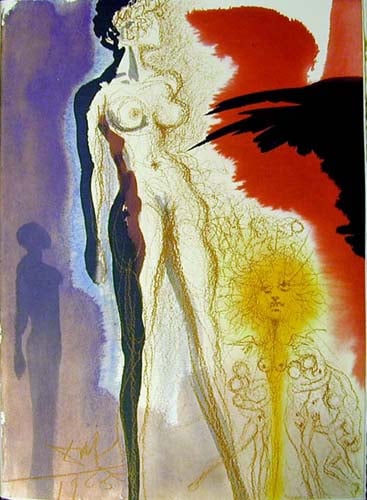
Uxnor Lot in satuam salis conversa (Genesis 19:24)
Ayrıntılar
Salvador Dali sanatçısının Uxnor Lot in satuam salis conversa (Genesis 19:24) eseri hakkında uzman analizi
Tarz: Expressionism, Symbolism · Tür: religious painting
This analysis is based solely on the provided structured facts.
Artwork: "Uxnor Lot in satuam salis conversa (Genesis 19:24)"
Style: Expressionism, Symbolism
Genre: Religious painting
Period: Classic Period (1941–1989)
Expert Analysis:
Salvador Dalí’s Uxnor Lot in satuam salis conversa (Lot’s wife turned into a pillar of salt, based on Genesis 19:24) is a significant work from Dalí’s Classic Period (1941–1989). During this late phase, Dalí famously repudiated his earlier Surrealist automatism in favor of a highly controlled, technically precise style that blended Renaissance composition with modern psychological depth. The painting’s Expressionist and Symbolist stylistic framework is key to its importance.
As a religious painting, it is part of Dalí’s sustained engagement with Catholic mysticism and nuclear mysticism after World War II. The subject—Lot’s wife looking back at the destruction of Sodom and Gomorrah and being turned into salt—is a potent symbol of human disobedience, nostalgia, and the inescapable consequences of divine judgment. Dalí’s Expressionist treatment amplifies the emotional tension: distorted forms, dramatic contrasts of light and shadow, and intense coloration convey the horror and rigidity of her transformation. The Symbolist dimension elevates the event beyond mere biblical illustration: the pillar of salt becomes a dual emblem of both punishment and preservation—a frozen, crystalline memory of sin and longing.
What makes this work significant within its period is how it encapsulates Dalí’s mature ambition to fuse traditional religious painting with avant-garde expression. Unlike his earlier, more overtly bizarre Surrealist works, this piece demonstrates a disciplined, almost classical composition, yet the eruptive energy of Expressionism and the layered, idiosyncratic Symbolism prevent it from becoming a mere academic copy. It stands as a testament to Dalí’s unique position: a modern artist who, in his Classic Period, reanimated the power of biblical narrative through a lens that was simultaneously personal, psychological, and historically informed. The painting thus bridges two centuries—Renaissance spirituality and 20th-century anxiety—making it a crucial work in understanding Dalí’s later artistic identity.
Görsel olarak benzer
İlişkili kompozisyon ve renk paletine sahip 20 eser
Stultae et prudentes Filiae (Sirach 7:26)
Salvador Dali
Senza Titolo
Bruno Cassinari
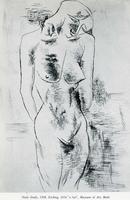
Nude study
Georges Braque
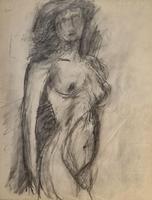
Béla Czóbel Female Nude
Bela Czobel
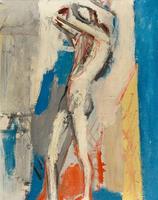
Standing Male Nude, Unterengstringen
Max Gubler
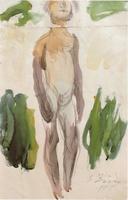
Naked man
George Bouzianis
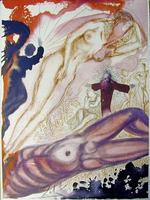
Mulier e latere viri
Salvador Dali
Stehendes Liebespaar (klein)
Otto Mueller
Standing Nude
Amedeo Modigliani
Coniunctio I
Manuel Neri
Untitled
Eugene Leroy
Untitled, Standing Figure
Nathan Oliveira
Couple
Ernst Ludwig Kirchner
Filius prodigus
Salvador Dali
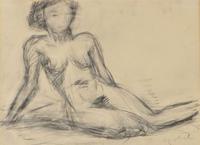
Nude Sitting
Bela Czobel
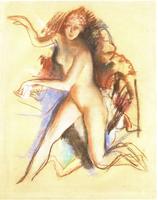
Nude
Zinaida Serebriakova
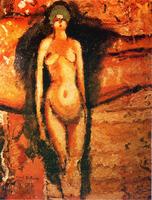
Standing Nude
Marcel Duchamp
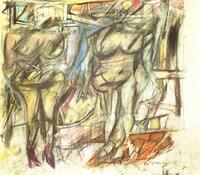
Two Woman IV
Willem de Kooning
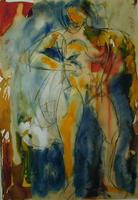
Two, But Not Two
Romare Bearden
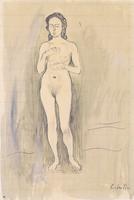
Female Nude (Study for "Truth")
Ferdinand Hodler