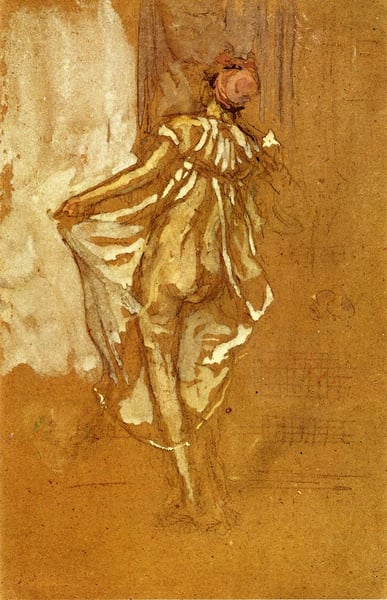
Expert Analysis: "A Dancing Woman in a Pink Robe Seen from the Back" by James McNeill Whistler
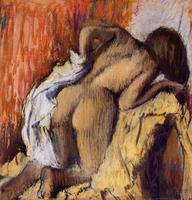
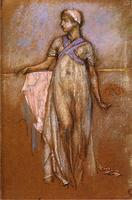
Within the Symbolist movement, Whistler’s painting is significant for its radical departure from narrative clarity and its embrace of mood, suggestion, and formal harmony. By depicting a dancing woman seen from the back, Whistler denies the viewer the conventional facial expression or anecdotal gesture, instead focusing entirely on the abstract play of the pink robe’s drapery, the fluid line of the dancer’s silhouette, and the subtle tonal gradations of the interior space. This aligns with Symbolism’s core interest in evoking emotion through color and form rather than explicit storytelling—here, the anonymous figure becomes a vessel for ephemeral beauty and rhythmic movement. As a genre painting, it transforms an everyday moment into a poetic, almost musical composition, reflecting Whistler’s famous belief that art should be akin to music (he often titled works “arrangements” and “nocturnes”). The work’s significance lies in how it pushes genre painting toward pure aesthetic sensation, making the unseen and the indirect the very subject of the work.