Description
Style: Realism · Genre: genre painting
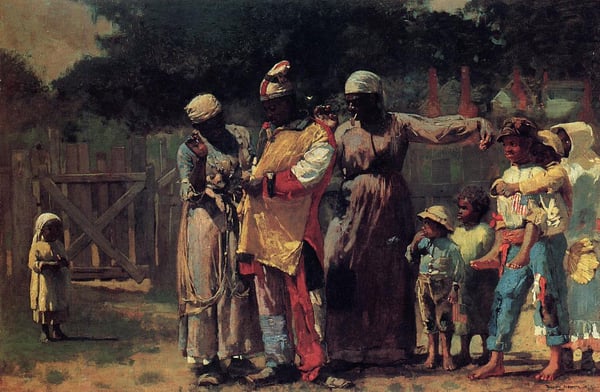
Having visited Virginia as an artist-correspondent during the Civil War, Homer returned there at least once during the mid-1870s, apparently to observe what had happened to the lives of former slaves during the first decade of Emancipation. The brilliant light and color of this scene, originally titled "Sketch–4th of July in Virginia," contradict its more solemn meaning. The central figure is being dressed as Harlequin, the clown and social outcast of European comic theater. The strips of cloth being sewn to his costume, however, derive from African ceremonial dress and from the festival of Jonkonnu, when slaves left their quarters to dance at their master's house. In the years following the Civil War, aspects of Jonkonnu became part of the celebration of the Fourth of July and Emancipation. Here, the pageantry of multihued costumes suggests a festive celebration, but it also reflects the dislocation of traditional African culture and the beginnings of its transformation into a new tradition.
Museum / Gallery
Visually similar
20 works with related composition and palette
Market fair in Poltava
Vladimir Makovsky
Gypsy family
August von Pettenkofen
Весілля в Київській губернії
Микола Пимоненко
Gipsy Tent
Arthur Verona
Prayer in time of drought
Grigoriy Myasoyedov
Easter Procession in a Village
Vasily Perov
The development of new lands by Russian
Klavdy Lebedev
Religious Procession
Ilya Repin
Homecoming into the fathers house
Ferdinand Georg Waldmüller
Two Arabs
William Merritt Chase
Fortune teller
Vasily Vereshchagin
Buffalo Coat
Charles M. Russell
Barge Haulers on the Volga
Ilya Repin
Traditional Swedish dance
August Malmstrom
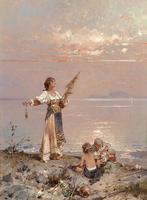
In the Bay of Naples
Franz Richard Unterberger
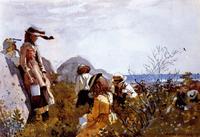
The berry pickers
Winslow Homer
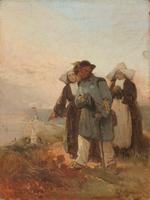
Bersagliere wounded in the Crimea
Gerolamo Induno
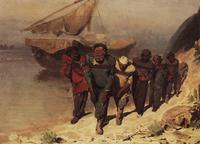
Barge Haulers on the Volga
Ilya Repin
The Wounded Montenegrin
Paja Jovanovic
Rodina
Ivan Mrkviсka