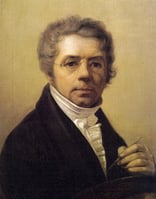
Analisi esperta di Bathers di Alexey Venetsianov
Stile: Realism · Genere: nude painting (nu)
Expert Analysis of Bathers by Alexey Venetsianov
Artist: Alexey Venetsianov (1780–1847)
Style: Realism
Genre: Nude painting (nu)
Significance and Context
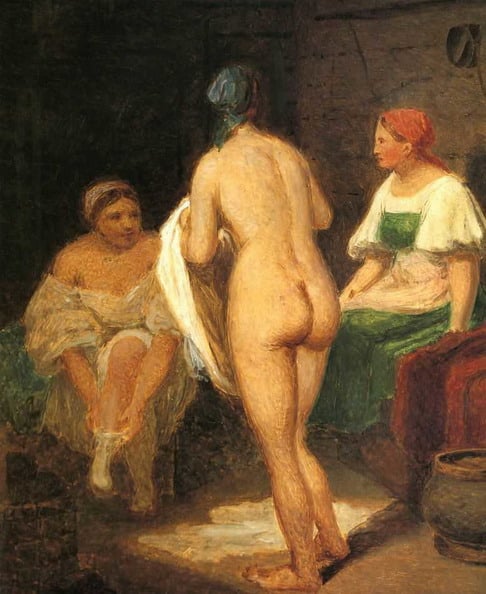
Alexey Venetsianov is celebrated as a pioneering figure in Russian Realism, best known for his tender, unidealized depictions of peasant life and the Russian countryside. Bathers stands out within his oeuvre as a rare venture into the nude genre—a bold choice for an early 19th-century Russian artist. While his contemporaries often reserved the nude for classical mythology or history painting, Venetsianov brings his signature "naturalism" to the human form, stripping away allegory and academic artifice.
What Makes This Work Significant
-
Realism in the Nude Tradition
Unlike the polished, idealized nudes of Neoclassicism (e.g., Canova, Ingres), Venetsianov’s bathers are distinctly of the people. Their bodies are not sculpted or heroic; they are softened, intimate, and casually posed, reflecting the everyday reality of Russian peasant women bathing in a river or lake. This marks a crucial shift from the "grand style" toward a more honest, observational approach. -
Harmony of Figure and Landscape
Venetsianov integrates the nudes seamlessly into a lush, natural setting. The play of light across flesh and water, the dappled shadows, and the earthy palette emphasize the unity of human and nature. This echoes his broader philosophy—that the beauty of ordinary life is worthy of serious art. -
Challenging Social and Academic Norms
In a society where peasant bodies were rarely depicted with dignity (let alone in the nude), Venetsianov elevates these figures to the status of classical muses—yet without erasing their humble reality. The painting quietly asserts that realism, not only myth, can achieve artistic grandeur. -
Influence on Russian Art
Bathers predates the more famous, socially conscious nudes of later Russian realists (e.g., Repin, Kramskoi). It demonstrates Venetsianov’s role as a bridge between the academic traditions of the 18th century and the emerging national school of 19th-century Russian painting.
Stylistic Marks of Venetsianov’s Realism
- Soft, diffused lighting that models form without harsh contours.
- A muted, earthy color palette (olives, ochres, warm skin tones).
- Natural, unposed postures—the figures seem caught mid-motion, unaware of the viewer.
- Detailed attention to the texture of skin, water, and foliage, avoiding overt "finish" in favor of freshness.
In summary, Bathers is significant because it fuses the traditional nude genre with Venetsianov’s groundbreaking Realist vision, offering an intimate, dignified portrait of Russian peasant life while challenging artistic convention. It remains a key work in the evolution of Russian art toward a more truthful, human-centered expression.
Visivamente simili
20 opere con composizione e palette affini
The Cup of Tea (Breakfast after Bathing)
Edgar Degas
Firelight
Anders Zorn
After the bath
Giacomo Favretto
Study for Susanna and the Elders
Umberto Veruda
William Rush Carving His Allegorical Figure of the Schuykill River
Thomas Eakins
The Small Bather
Jean Auguste Dominique Ingres
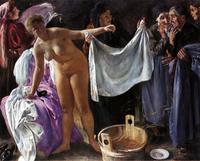
Witches
Lovis Corinth
Cards
Nikolaos Gyzis
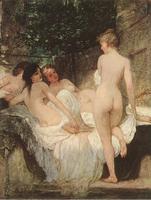
After the Bath
Károly Lotz
Susanna and the Elders
Umberto Veruda
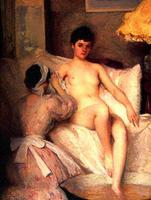
The Bath
Edmund Charles Tarbell
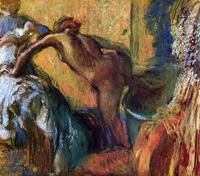
After the Bath
Edgar Degas
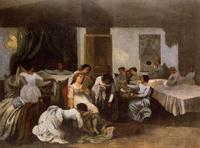
Dressing the Dead Girl (Dressing the Bride)
Gustave Courbet
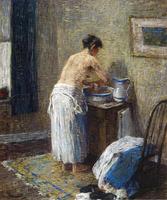
Woman Washing
Robert Spencer
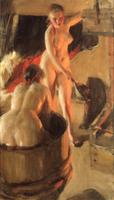
Women Bathing in the Sauna
Anders Zorn
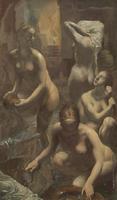
At the bath-house
Alexandre Jacovleff
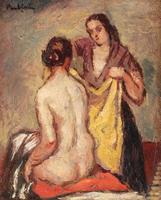
After Bath
Adam Baltatu
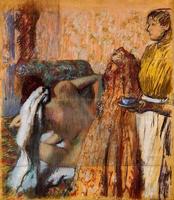
Breakfast after Bath
Edgar Degas
Woman Leaving Her Bath
Edgar Degas
The Harem
Lovis Corinth