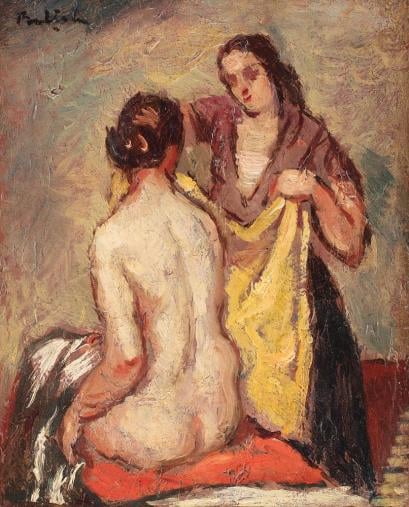
After Bath
Analisi esperta di After Bath di Adam Baltatu
Stile: Impressionism · Genere: genre painting
Expert Analysis of "After Bath" by Adam Baltatu
“After Bath” stands as a compelling example of how Eastern European artists adapted the core tenets of Impressionism to intimate, domestic subject matter. As a genre painting executed in the Impressionist style, the work captures a fleeting, private moment—likely a woman drying or dressing after bathing—with the movement’s hallmark emphasis on light, atmosphere, and spontaneous brushwork.
Significance within Impressionism and Genre Painting:
Adam Baltatu’s contribution lies in his ability to merge the French Impressionist focus on sensory perception with a distinctly genre-driven narrative. Unlike the movement’s typical urban or rural landscapes, “After Bath” zeros in on an everyday ritual, elevating it through the Impressionist lexicon of broken color, soft-edged forms, and the play of natural or interior light on skin and fabric. The painting exemplifies how Impressionism was not solely about plein-air landscapes but could also revitalize genre scenes—subjects traditionally associated with moralizing or anecdotal content—by treating them as studies in optical sensation.
Stylistic Hallmarks:
Baltatu employs Impressionism’s characteristic loose, visible strokes to suggest the dampness of skin, the transparency of water, and the warmth of a towel’s texture. The composition likely avoids sharp outlines, letting colors merge at the edges to evoke the shimmering, fleeting quality of post-bath humidity. By focusing on such an ordinary yet vulnerable moment, the artist uses the style to explore how light and color define form without resorting to rigid academic finish.
Art-Historical Context:
As a Romanian artist working in the late 19th and early 20th centuries, Baltatu was part of a generation that imported Impressionism into a different cultural setting. “After Bath” is significant because it demonstrates that Impressionism’s principles—an emphasis on the here-and-now and the primacy of visual perception—could be applied to the quiet, interior world as effectively as to bustling boulevards or haystacks. The painting thus serves as a bridge between Western European avant-garde methods and Eastern European genre traditions, proving that the movement’s revolutionary approach to light and color was universal in its appeal, yet deeply personal in its expression.
Visivamente simili
20 opere con composizione e palette affini
Czóbel Béla Half Nude
Bela Czobel
The Bath (Woman from Behind)
Edgar Degas
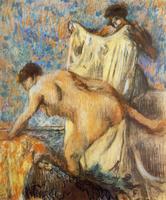
Woman Leaving Her Bath
Edgar Degas
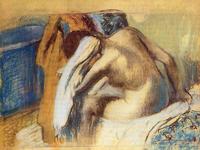
Woman Drying Her Hair
Edgar Degas
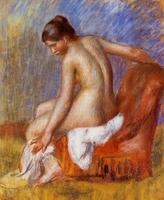
Nude in an Armchair
Pierre-Auguste Renoir
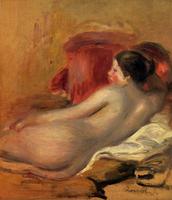
Reclining Model
Pierre-Auguste Renoir
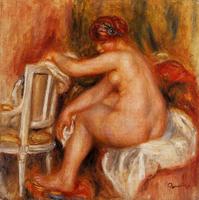
Seated Nude
Pierre-Auguste Renoir
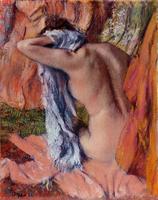
After the Bath
Edgar Degas
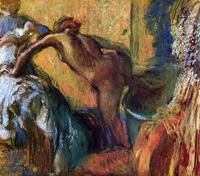
After the Bath
Edgar Degas
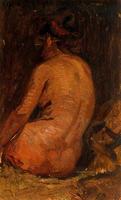
Female nude from back
Pablo Picasso
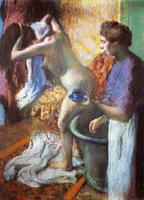
The Cup of Tea (Breakfast after Bathing)
Edgar Degas
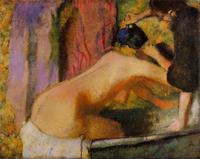
Woman at Her Bath
Edgar Degas
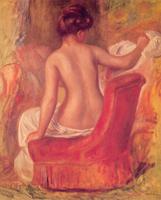
Nude in a Chair
Pierre-Auguste Renoir
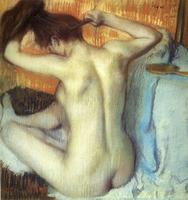
Woman Combing Her Hair
Edgar Degas
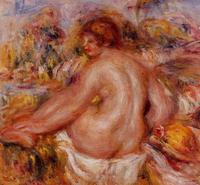
After Bathing, Seated Female Nude
Pierre-Auguste Renoir
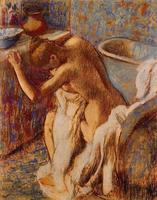
Woman Drying Herself
Edgar Degas
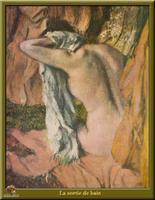
Leaving the Bath
Edgar Degas
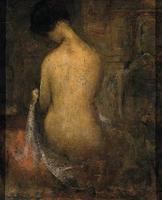
Seated Nude
Theophrastos Triantafyllidis
After the Bath
Edgar Degas
After the Bath
Edgar Degas