Expert analysis of John Henry Twachtman’s Afternoon Shadows
Style: Impressionism · Genre: landscape
Analysis of John Henry Twachtman’s Afternoon Shadows
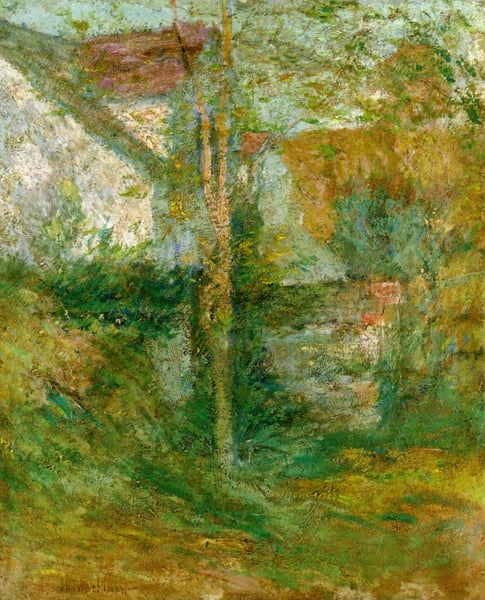
John Henry Twachtman’s Afternoon Shadows is a masterful example of American Impressionism, a movement that adapted the French Impressionist fascination with light and atmosphere to the more subdued, introspective landscapes of the northeastern United States. Painted during the height of Twachtman’s mature period, this work exemplifies the artist’s singular approach: a quiet, almost meditative rendering of nature that prioritizes mood over spectacle.
Significance within Impressionism
While French Impressionists like Monet flooded their canvases with brilliant, saturated color and dynamic brushwork, Twachtman took a distinctly more restrained path. Afternoon Shadows demonstrates his preference for a tonal, muted palette—soft grays, silvery whites, and delicate lavender blues—that evokes the hazy, diffused light of a winter or early spring afternoon. This subtlety is key to the work’s innovation: Twachtman uses color not to describe the world literally, but to capture a fleeting sensory experience, the “afternoon shadows” themselves becoming the true subject.
The composition reflects Twachtman’s debt to Japanese print aesthetics, particularly the flattening of space and the asymmetrical balance of natural forms. Trees and branches often frame the scene, drawing the eye into a shallow, atmospheric depth rather than a vast panorama. In Afternoon Shadows, this arrangement transforms a simple landscape into a meditative, almost abstract arrangement of light and shadow.
What Makes It Exceptional
Twachtman was among the first American artists to fully embrace Impressionism while infusing it with a personal, lyrical sensibility. Unlike contemporaries who favored dramatic rock formations or bustling outdoor scenes, Twachtman found poetry in the quietest moments: a snow-covered hillside, a stream trickling through thawing ice, or the long shadows of late afternoon. Afternoon Shadows captures that ephemeral stillness—a moment when time seems to pause. The brushwork is loose yet deliberate, dissolving solid forms into vibrating patches of color that coalesce into a serene whole.
This painting is significant because it represents American Impressionism at its most introspective and original—a fusion of European technique with a distinctly American sense of solitude and reverence for nature. Twachtman’s work here moves beyond mere representation to evoke an emotional state, making Afternoon Shadows a quiet masterpiece of atmospheric landscape painting.
Visually similar
20 works with related composition and palette
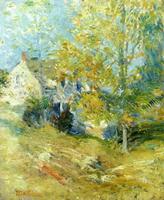
The Artist's House through the Trees (also known as Autumn Afternoon)
John Henry Twachtman
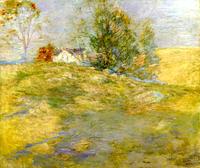
Artist's Home in Autumn, Greenwich, Connecticut
John Henry Twachtman
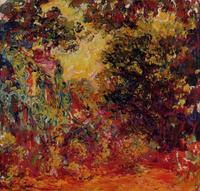
The Artist's House from the Rose Garden
Claude Monet
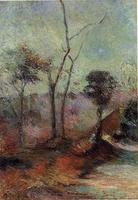
Landscape
Paul Gauguin
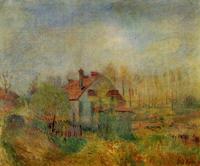
Springtime Scene Morning
Alfred Sisley
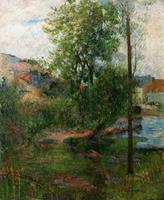
Willow by the Aven
Paul Gauguin
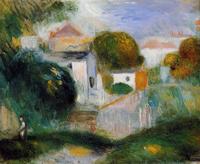
Houses in the Trees
Pierre-Auguste Renoir
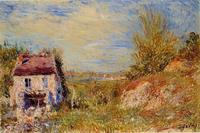
Abandoned House
Alfred Sisley
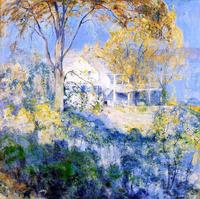
October
John Henry Twachtman
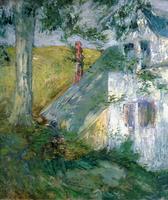
The Summer House
John Henry Twachtman
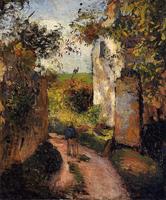
A Peasant in the Lane at Hermitage, Pontoise
Camille Pissarro
Czóbel Béla , Szentendrei Kert
Bela Czobel
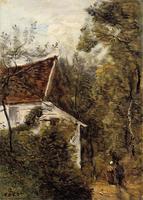
Luzancy, the Path through the Woods
Camille Corot
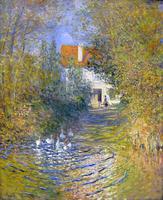
Geese in the creek
Claude Monet
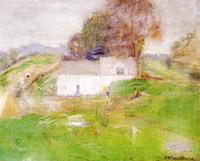
Twachtman's House
John Henry Twachtman
Cagnes Landscape
Pierre-Auguste Renoir
Corner of a House
Georges Seurat
The Large Walnut Tree at Hermitage
Camille Pissarro
The Garden
Gustave Loiseau
House at Beynac
Gustave Loiseau