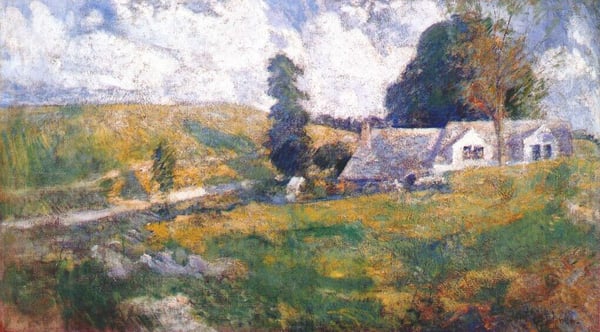
Summer Late
John Henry Twachtman sanatçısının Summer Late eseri hakkında uzman analizi
Tarz: Impressionism · Tür: landscape
Expert Analysis: "Summer Late" by John Henry Twachtman
John Henry Twachtman’s Summer Late is a quintessential example of American Impressionism, yet it stands apart for its introspective, almost poetic restraint. Unlike the more vibrant, sun-drenched canvases of his contemporaries, Twachtman favored muted, tonal harmonies and a subtle evocation of atmosphere.
Significance within Impressionism and Twachtman’s Oeuvre
-
Tonal Impressionism: Twachtman often blurred the line between Impressionism and Tonalism. In Summer Late, the palette is subdued—soft greens, dusty golds, and hazy blues—capturing the waning light of a late summer day. This quietude is a deliberate departure from the high-key color of French Impressionism, emphasizing mood over momentary brilliance.
-
Compositional Intimacy: The scene likely focuses on a secluded corner of nature—perhaps a pond edge or a shadowed grove. Twachtman often painted his own garden in Greenwich, Connecticut, or scenes along the Connecticut coast. The composition is asymmetrical and cropped, reflecting his interest in Japanese woodblock prints (which he admired), giving the landscape a fresh, unposed spontaneity.
-
Brushwork and Texture: Short, broken brushstrokes capture the shimmer of leaves and the soft diffusion of sunlight. However, Twachtman’s touch is lighter and more fluid than that of Monet or Pissarro; the paint is often thinned, allowing the canvas to breathe. This technique creates a sense of transience—the fleeting moment when summer begins to yield to autumn.
-
Personal and Evocative: Twachtman described his own work as aiming for “the sensation of a moment.” Summer Late is not merely a record of light but a meditation on the cycle of seasons and the passage of time. The melancholic undertone is characteristic of his later works, which often feel private and contemplative.
Why It Matters
“Summer Late” exemplifies how American Impressionists softened the French style with a distinctly lyrical, reserved sensibility. Twachtman’s ability to evoke an entire season’s mood through subtle color and delicate touch makes this painting a significant contribution to the development of a distinctly American modernism, predating the more radical abstractions of the 20th century.
Görsel olarak benzer
İlişkili kompozisyon ve renk paletine sahip 20 eser
Summer
John Henry Twachtman
Artist's Home in Autumn, Greenwich, Connecticut
John Henry Twachtman
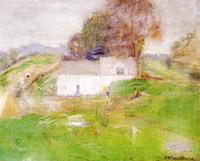
Twachtman's House
John Henry Twachtman
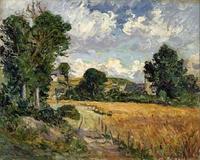
Cornfield in the Valley of Saint-Jean-du-Doigt
Maxime Maufra
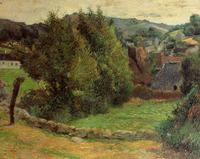
Landscape at Pont-Aven
Paul Gauguin
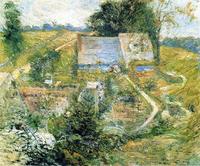
From the Upper Terrace
John Henry Twachtman
Summer New Abbey
Samuel Peploe
The House Seen through the Roses
Claude Monet
Connecticut Hillside
Emil Carlsen
Valley of Falaise
Claude Monet
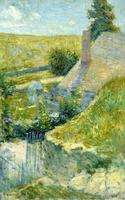
Artist's Home Seen from the Back
John Henry Twachtman
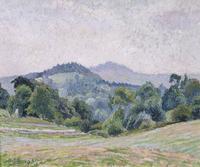
The Hills from Hayfield Green
Lucien Pissarro
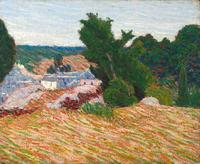
The Farm
Roderic O'Conor
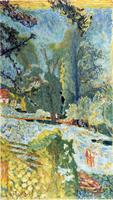
Landscape in Normady
Pierre Bonnard
The Farmer's Lawn
Julian Alden Weir
Houses of l'Hermitage, Pontoise
Camille Pissarro
Milton, East Knoyle
Lucien Pissarro
The Artist's House through the Trees (also known as Autumn Afternoon)
John Henry Twachtman
Landscape at Pontgibaud
Armand Guillaumin
View of the normandy coast near wargemont
Pierre-Auguste Renoir