Expert analysis of Norman Rockwell’s Jolly Postman
Style: Regionalism · Genre: genre painting
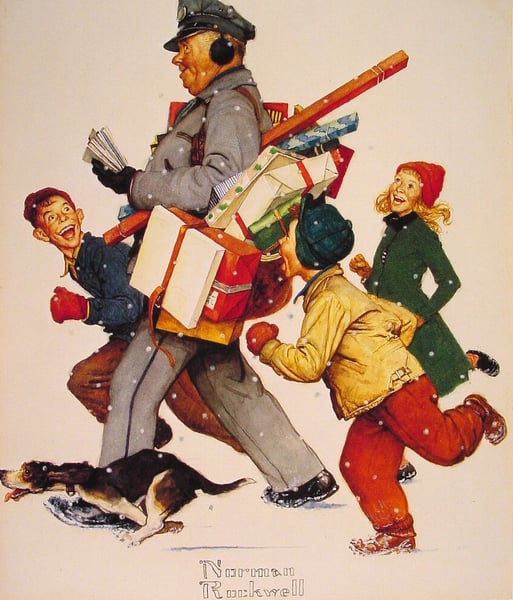
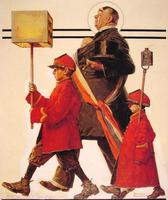
The "Jolly Postman" (c. 1930s) by Norman Rockwell stands as a quintessential example of Regionalist genre painting, celebrating the dignity and charm of everyday American life during the Great Depression era. While Rockwell is most famously associated with his Saturday Evening Post covers, this work aligns him with the Regionalist movement’s core mission: to find profound meaning in the ordinary, rural, and small-town experiences of the nation.
What makes this artwork significant:
-
Capturing the "Everyday Hero": Rockwell elevates a routine postal delivery into a moment of quiet joy. The postman—cheerful, robust, and warmly engaged with his route—embodies the resilience and communal spirit that Regionalists prized. Rather than depicting hardship, Rockwell focuses on the small pleasures that bound communities together, offering a comforting, optimistic vision during economically trying times.
-
Masterful Narrative Storytelling: True to Rockwell’s genius, the painting tells a complete story in a single frame. The postman’s amiable expression, the dog at his heel, the letters in his hand, and the suggestion of a friendly exchange with a neighbor work together to create a vignette of neighborly trust. This narrative clarity—accessible yet rich in detail—is a hallmark of Rockwell’s genre scenes and a reason his work resonates across generations.
-
Regionalist Identity Through Specificity: Unlike pure American Scene painting, Regionalism often rooted its subjects in recognizable, localized details. Here, the postman’s uniform, the period-accurate mailbag, the architecture of the houses, and the seasonal setting (likely autumn) ground the image in a particular time and place—yet the emotional warmth transcends locality. It is both distinctly American and universally touching.
-
Contribution to the "American Ideal": Rockwell’s Jolly Postman helped shape the popular image of the small-town postal worker as a friendly, reliable figure—a symbol of civic connection. In the context of the 1930s, when New Deal programs were expanding federal services like the Post Office, this painting subtly reinforced the idea of government workers as trusted community members, not faceless bureaucrats.
-
Technical Virtuosity in a "Low" Genre: Rockwell’s detailed realism—the play of light on the postman’s face, the texture of the leather bag, the clarity of the dog’s fur—demonstrates his academic skill. He used these techniques not for grand historical or mythological subjects, but for the lives of ordinary people, thereby elevating genre painting to a respected art form within the American Regionalist canon.
In sum, "Jolly Postman" is significant because it embodies the Regionalist belief that the most profound art can be found in the simple, honest moments of daily life. Norman Rockwell’s ability to render those moments with humor, empathy, and technical mastery ensures the work remains an enduring icon of mid-century American visual culture.
Visually similar
20 works with related composition and palette
Poster of the Leningrad Society bows town and country
Boris Kustodiev
I Say Mommy Kissing Santa Claus
Frank Xavier Leyendecker
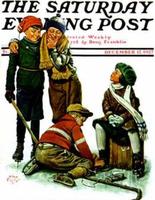
Hockey Waits - Tying Skates
Alan Stephens Foster
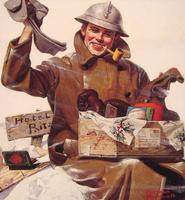
They Remembered Me
Norman Rockwell
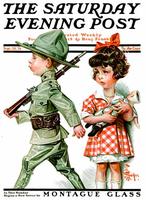
“littlest Soldier” by J. C. Leyendecker. Saturday Evening Post Cover, September 30, 1917
J. C. Leyendecker
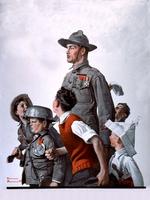
Soldier and comrads
Norman Rockwell
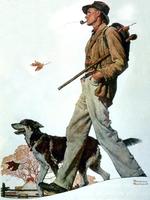
Pipe
Norman Rockwell
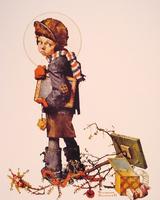
Little Boy holding Chalk Board
Norman Rockwell
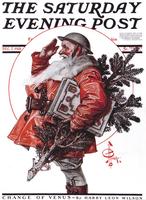
Saluting Santa, by J. C. Leyendecker. Saturday Evening Post Cover, December 7, 1918
J. C. Leyendecker
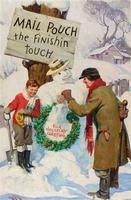
Mail pouch
Jerome G. Rozen

Untitled
Harrison Fisher
Woman Kissing Soldier Goodbye, by J. C. Leyendecker. Saturday Evening Post Cover, May 19, 1917
J. C. Leyendecker
No Swimming
Norman Rockwell
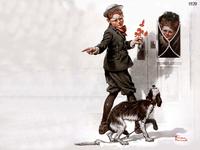
Is He Coming
Norman Rockwell
The Nocturne Review
Sergey Solomko
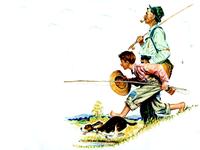
Fishing
Norman Rockwell
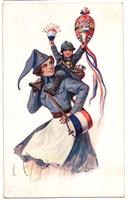
Vive la France!
Sergey Solomko
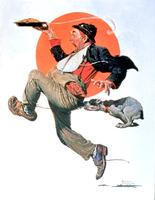
Running with Pie
Norman Rockwell
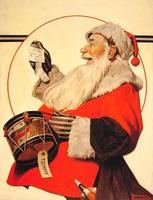
A Drum for Tommy
Norman Rockwell
Parade
Norman Rockwell