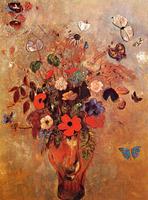
Expert Analysis: "Flowers" by Odilon Redon
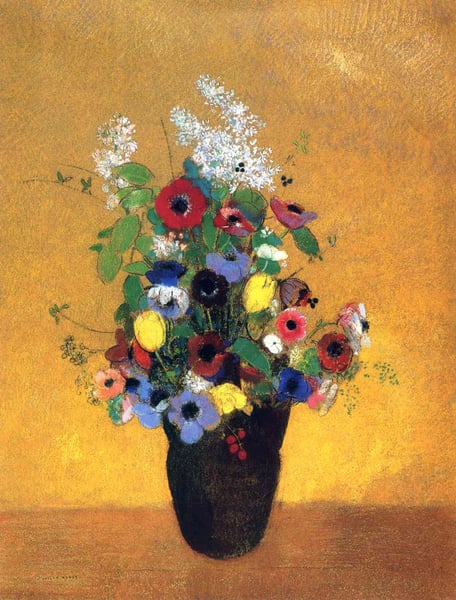
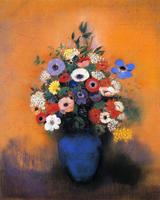
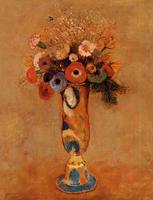
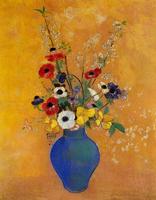
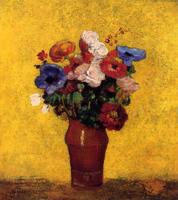
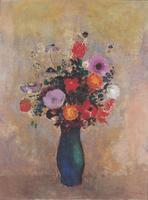
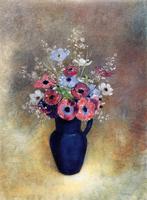
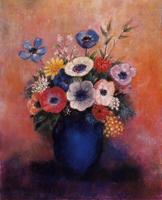
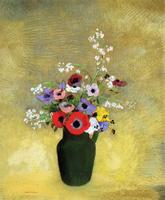
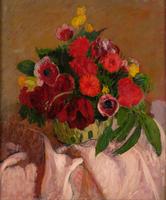
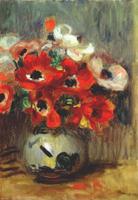
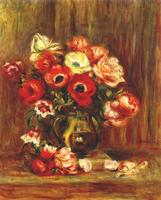
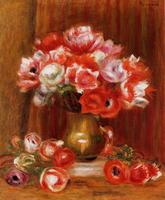
Odilon Redon’s Flowers occupies a fascinating intersection of Realism and Symbolism, two movements that typically pull in opposite directions. While the genre is explicitly “flower painting”—a subject long associated with precise botanical observation—Redon infuses the work with a dreamlike, introspective quality that transcends mere representation. The significance here lies in how the artist uses the conventions of realist floral detail (accurate form, naturalistic color) as a springboard for symbolic expression. Unlike the scientific still lifes of the 19th century, Redon’s blooms seem to exist in a suspended, almost spiritual space; they are not simply observed but felt. This duality makes Flowers a pivotal work within Redon’s career and within the broader Symbolist movement, demonstrating that the most ordinary subject can become a vessel for the extraordinary: a silent meditation on life, fragility, and inner vision. The work’s power resides in its refusal to choose between the tangible and the transcendent—instead, it harmonizes them.