
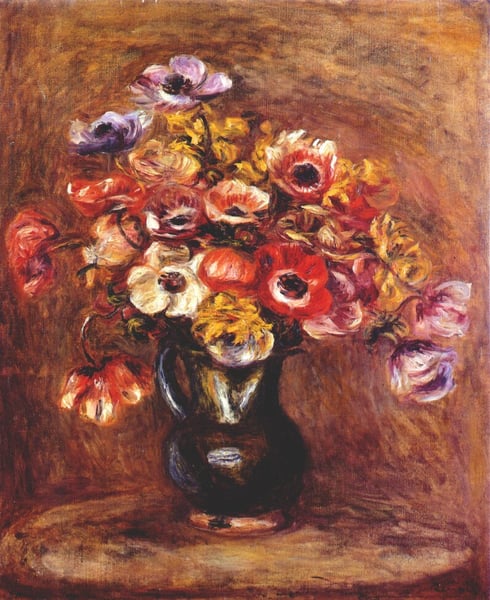
Analisi esperta di Anemones di Pierre-Auguste Renoir
Stile: Impressionism · Genere: flower painting
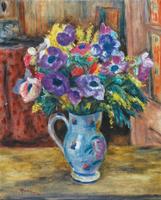
Pierre-Auguste Renoir’s Anemones (from his later years) is a masterful still-life that encapsulates the enduring vitality of Impressionism even as the artist’s own physical abilities waned. In this flowering of the genre, Renoir shifts his focus from the human figure to the intimate beauty of nature's forms, demonstrating that Impressionist principles of light, color, and texture are equally powerful in a simple bouquet.
Significance within Renoir’s oeuvre and the Impressionist movement:
-
A Celebration of Pure Color and Light: True to Impressionism, Renoir builds the composition not through line but through patches of luminous color. The anemones’ vivid reds, purples, and whites are set against a soft, atmospheric background, where strokes of blue and green suggest foliage without detailed delineation. The petals seem to glow from within, a direct result of his broken-color technique—applying dabs of pure pigment side by side to optically mix warmth and brilliance.
-
Texture and the Legacy of Later Renoir: Painted in his later years, when arthritis severely limited his hand movement, Anemones displays a remarkably tactile quality. The paint is often thickly applied (impasto), giving the petals and leaves a physical, sculptural presence. This shift from his earlier, feathery strokes to a more robust handling reflects both his physical adaptation and his deepening focus on the material pleasure of paint itself—a hallmark of his final period.
-
Still Life as a Vessel for Joy: While Renoir is renowned for his figures (dancers, bathers), his floral still lifes from the 1900s–1910s are equally significant. They distill his philosophy that art should be beautiful, comforting, and life-affirming. Anemones is not a botanical study but an emotional response: the composition feels casual, almost spontaneous, as if the flowers are bursting from a simple vase placed on a table. This immediacy makes the flowers feel alive, not static.
-
Influence on Decorative and Modern Art: In works like Anemones, Renoir proved that Impressionism could transcend the plein-air landscape. His vibrant, loosely structured bouquets inspired later artists—from Matisse’s fauvist color to Bonnard’s intimate interiors—who saw in Renoir’s flowers a way to merge realism with pure painting.
In summary, Anemones is significant because it demonstrates Renoir’s unwavering commitment to capturing the sensory joy of the world, even as his own body failed him. It stands as a testament to how Impressionism, often associated with fleeting outdoor scenes, finds its most distilled, personal expression in the humble, radiant stillness of a vase of flowers.
Visivamente simili
20 opere con composizione e palette affini
Anemones
Pierre-Auguste Renoir
Spray of Anemones
Pierre-Auguste Renoir
Anemones
Pierre-Auguste Renoir
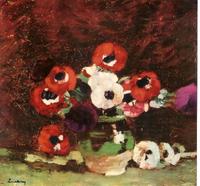
Anemone Flowers
Stefan Luchian
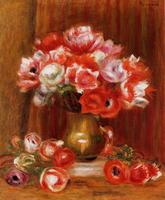
Anemones
Pierre-Auguste Renoir
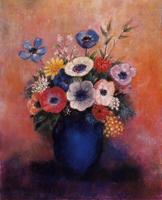
Bouquet of Flowers in a Blue Vase
Odilon Redon
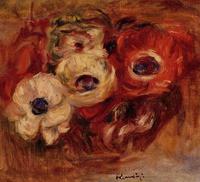
Anemones
Pierre-Auguste Renoir
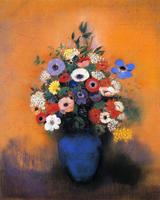
Mimosas, Anemonies and Leaves in a Blue Vase
Odilon Redon
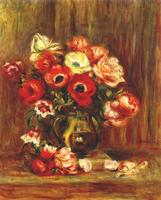
Still life with anemones
Pierre-Auguste Renoir
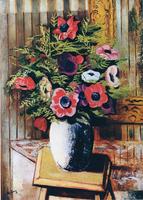
Untitled
Moise Kisling
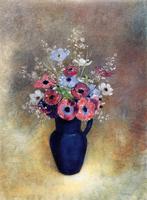
Anemones in a Jug
Odilon Redon
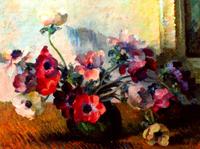
Still Life with Flowers
Stefan Popescu
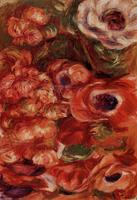
Anemonies
Pierre-Auguste Renoir
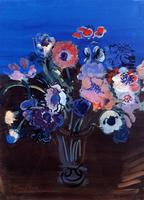
Anemones
Raoul Dufy
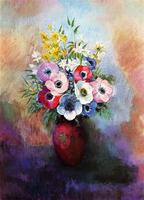
Anemones
Odilon Redon
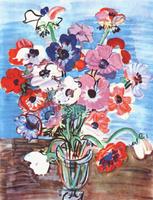
Anemones
Raoul Dufy
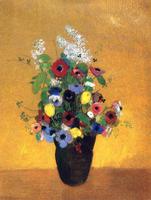
Flowers
Odilon Redon
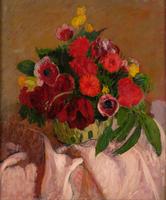
Mixed Flowers on Pink Cloth
Roderic O'Conor
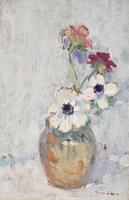
Anemone
Sever Burada
Anemony W Wazonie
Józef Pankiewicz