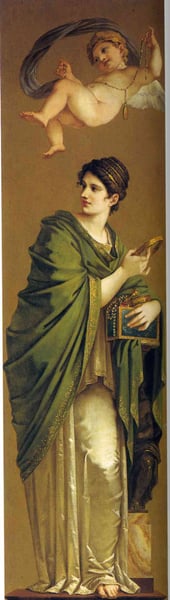
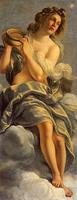
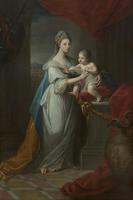
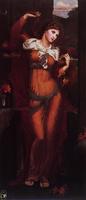
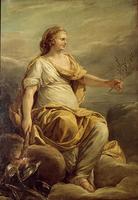
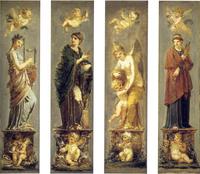
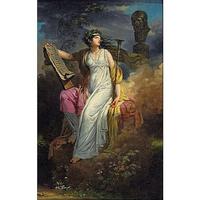
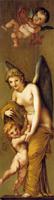
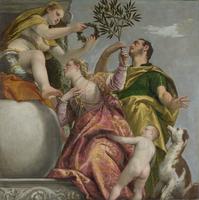
"Arts, Wealth, Pleasure and Philosophy: Wealth" by Pierre-Paul Prud'hon is a significant work within the Neoclassical tradition, functioning as a clear allegorical representation of wealth. As an allegorical painting, it embodies the Neoclassical emphasis on rational clarity, moral instruction, and the personification of abstract concepts. The work belongs to a series exploring fundamental human pursuits—arts, wealth, pleasure, and philosophy—allowing Prud'hon to engage with Enlightenment ideals of order and virtue. Within the Neoclassical style, such allegories were valued for their ability to convey universal truths through idealized forms and balanced compositions. "Wealth" stands out for its didactic purpose: rather than merely celebrating material abundance, it likely presents wealth as one element in a larger philosophical discourse, typical of Neoclassicism's concern with ethical and civic values. The painting's significance lies in how it employs the codified visual language of allegory—using attributes and symbolic figures—to communicate a clear, instructive message, reinforcing the period's belief in art as a vehicle for moral and intellectual uplift.