Claude Lorrain sanatçısının Campo Vaccino (Forum Romanum) eseri hakkında uzman analizi
Tarz: Classicism · Tür: cityscape
Expert Analysis of "Campo Vaccino (Forum Romanum)" by Claude Lorrain
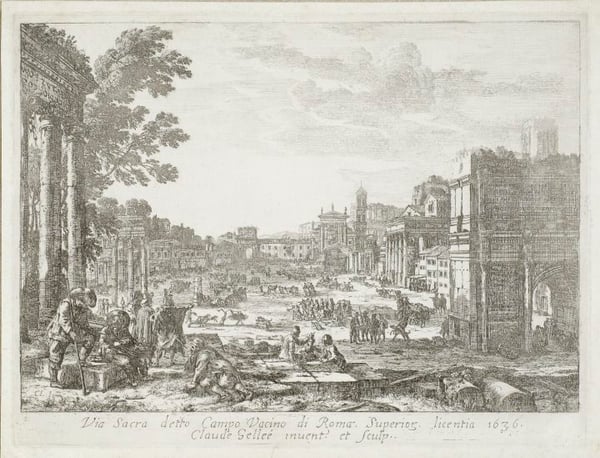
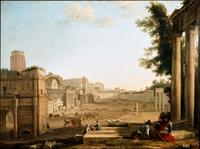
Claude Lorrain’s Campo Vaccino (Forum Romanum) is a masterful cityscape that exemplifies the key tenets of Classicism—order, harmony, and idealized antiquity—while showcasing Lorrain’s revolutionary approach to landscape painting. Painted in the 17th century, the work depicts the Roman Forum not as a bustling modern site but as a serene, pastoral vista where ancient ruins blend seamlessly with contemporary rural life (the title refers to the area’s use as a cattle market).
Significance within Classicism:
- Idealized Antiquity: Lorrain elevates the real topography of the Forum into a timeless, poetic vision. The ruins—columns, triumphal arches, and temples—are arranged with classical symmetry and proportion, creating a balanced composition that evokes the golden age of Rome. This idealization aligns with Classicism’s reverence for ancient art and architecture as models of perfection.
- Harmonious Light and Atmosphere: The painting is renowned for its luminous, golden light, which bathes the scene in a soft, unifying glow. This use of light—often called “Lorrain’s light”—not only enhances the serenity of the cityscape but also structures the spatial depth, leading the eye from the foreground figures and cattle through the middle-ground ruins to the distant hills. It embodies the Classical ideal of claritas (clarity) and emotional calm.
- Integration of Nature and Architecture: Unlike many contemporary cityscapes that focused on topographical accuracy, Lorrain subordinates documentary detail to aesthetic harmony. The ruins are not depicted as fragmented or chaotic; instead, they are composed as stable, geometric masses that echo the natural curves of the trees and hill. This synthesis of man-made and natural elements is a hallmark of Classicism’s search for universal order.
Impact and Legacy:
Campo Vaccino stands as a cornerstone of the classical landscape tradition, directly influencing generations of painters from the 18th-century British landscape school (e.g., Richard Wilson, J.M.W. Turner) to the vedutisti like Canaletto. Lorrain’s ability to blend observed reality with an idealized, calm grandeur set a new standard for cityscape painting, elevating it from mere documentation to a medium for philosophical reflection on the passage of time and the enduring beauty of Roman civilization. The work remains a quintessential example of how Classicism transforms a specific location into a universal, contemplative vision of order and grace.
Görsel olarak benzer
İlişkili kompozisyon ve renk paletine sahip 20 eser
Vedute di Roma
Giovanni Battista Piranesi
The Campo Vaccino, Rome
Claude Lorrain
The Campo Vaccino, Rome
Claude Lorrain
Temple of Castor and Pollux
Giovanni Battista Piranesi
View of Campo Vaccino
Giovanni Battista Piranesi
VEDUTA DI CAMPOVACCINO
Antonio Joli
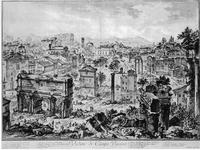
Vedute di Roma
Giovanni Battista Piranesi
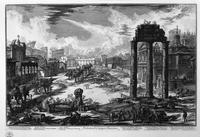
View of Vaccino Campo
Giovanni Battista Piranesi
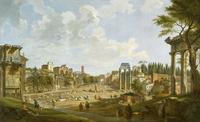
View of the Roman Forum
Giovanni Paolo Panini
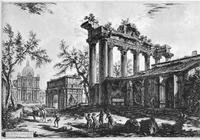
Vedute di Roma
Giovanni Battista Piranesi
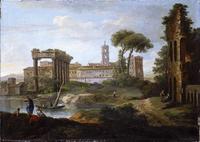
THE PROPERTY OF A GENTLEMAN
Paolo Anesi
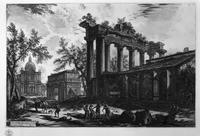
Another view of the ruins of the pronaos of the Temple of Concord
Giovanni Battista Piranesi
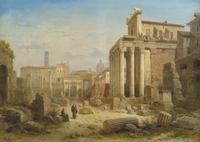
Forum Romanum
Albert Rieger
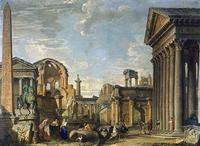
Architectural Capriccio
Giovanni Paolo Panini
A Capriccio of the Roman Forum
Giovanni Paolo Panini
Blick auf das Forum Romanum, das Kapitol und den Bogen des Septimus severus
Franz Kaisermann
Römische Ruinenlandschaft
Paul Bril
Roman Ruins Landscape
Paul Bril
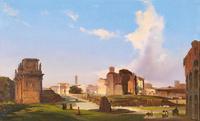
A view of the Roman Forum with the Arch of Constantine, the Temple of Venus and the Meta Sudans at the centre
Ippolito Caffi
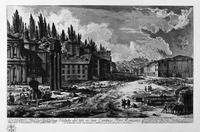
View of the site where was the ancient Roman Forum
Giovanni Battista Piranesi