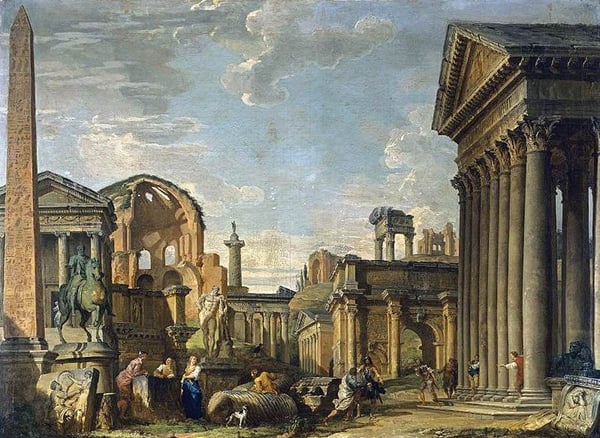
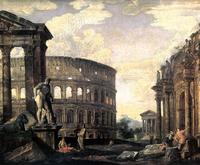
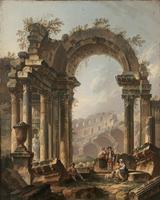
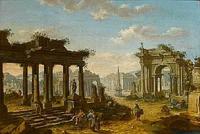
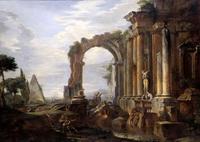
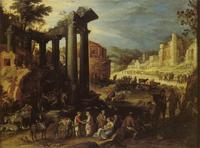
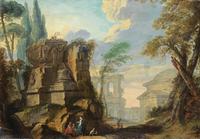
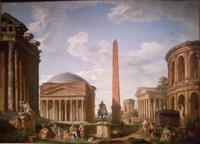
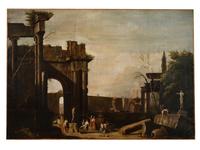
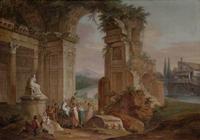
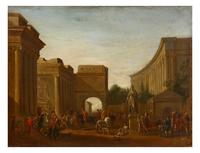
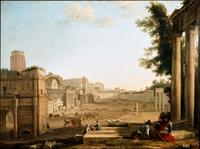
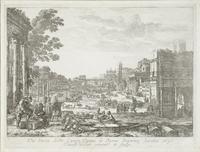
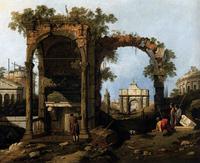
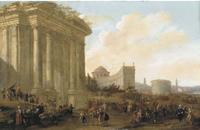
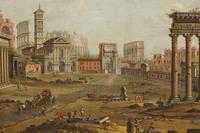
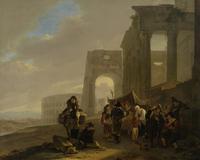
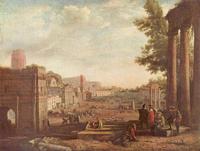
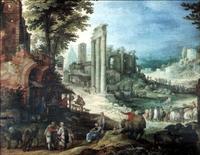
This artwork, Architectural Capriccio by Giovanni Paolo Panini, is a quintessential example of the Baroque era’s fascination with grandeur and illusion. As a capriccio—a genre that freely mixes real and imaginary architectural elements—the painting showcases Panini’s mastery in constructing a fantastical yet plausible vista of ancient ruins, monuments, and classical structures. The work’s significance lies in its ability to blur the line between reality and fantasy, a hallmark of Baroque artistic ambition. By assembling fragments of actual Roman landmarks alongside invented ones, Panini creates a dramatic, theatrical composition that emphasizes depth, light, and shadow. This not only celebrates the grandeur of antiquity but also demonstrates the Baroque period’s love for dynamic, immersive scenes that invite the viewer to explore an idealized architectural realm.