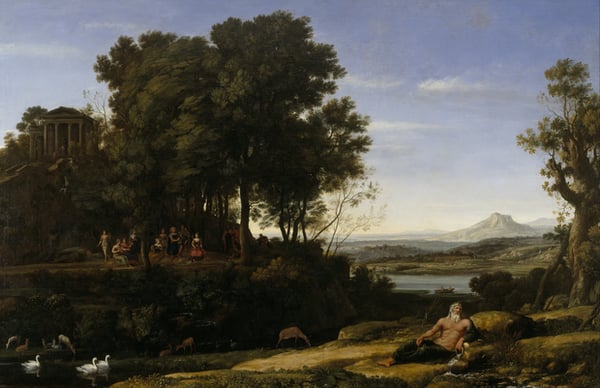
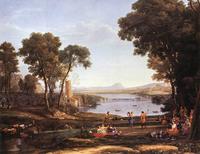
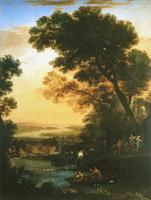
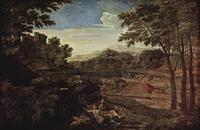
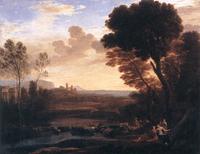
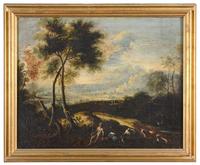
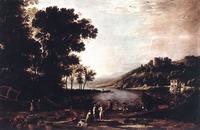
In Claude Lorrain's Landscape with Apollo and the Muses, the artist synthesizes the principles of Classicism with the mythological genre to create an idealized vision of nature as a setting for divine harmony. The work is significant for its embodiment of the classical landscape tradition, where every element—from the balanced composition to the soft, golden light—serves to elevate the scene beyond mere topography into a timeless, pastoral realm. Lorrain’s treatment of Apollo and the Muses is not merely narrative; instead, the figures are integrated seamlessly into the landscape, their presence reinforcing the classical ideal of an orderly, serene universe. The painting exemplifies how Classicism values clarity, proportion, and a sense of calm grandeur, while the mythological subject provides a framework for exploring the relationship between humanity, the divine, and the natural world. This fusion of structured composition with poetic atmosphere marks Lorrain as a master who defined the idealized landscape for generations of artists to come.