
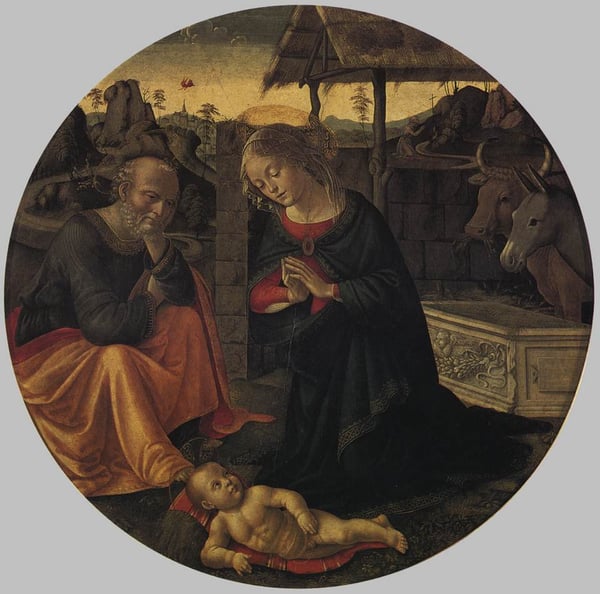
Adoration of the Child
Expertenanalyse zu Domenico Ghirlandaios Adoration of the Child
Stil: Early Renaissance · Genre: religious painting
Expert Analysis of "Adoration of the Child" by Domenico Ghirlandaio
Domenico Ghirlandaio’s Adoration of the Child exemplifies the Early Renaissance synthesis of religious sentiment with burgeoning naturalism. Painted in the late 15th century, the work reflects Ghirlandaio’s mastery of compositional clarity, detailed observation of the natural world, and his ability to infuse a sacred scene with the domestic familiarity prized by Florentine patrons.
Significance within the Early Renaissance
-
Integration of Realism and Devotion – Ghirlandaio departs from the hieratic, gold-ground icons of the Gothic era by placing the Holy Family in a believable landscape—often a rocky grotto or ruined classical structure that nods to the humilitas of Christ’s birth. The Christ Child is depicted as a vulnerable, human infant, and the Virgin’s tender pose reflects the new emphasis on emotional accessibility.
-
Spatial and Compositional Innovation – The painting employs a stable pyramidal composition, a hallmark of Renaissance balance, while the careful layering of figures and landscape elements creates a convincing sense of depth. Ghirlandaio frequently includes a diagonal recession (e.g., a winding path or architectural fragment) that guides the eye to the Christ Child, underscoring the theological focus.
-
Portraiture and Contemporary Detail – One of Ghirlandaio’s signatures is the inclusion of recognizable contemporary figures—often donors or members of the patron family—dressed in Florentine finery, witnessing the Adoration. This merges the sacred narrative with the viewer’s own world, making the divine present and tangible. The meticulous rendering of fabrics, jewelry, and landscape plants demonstrates his debt to Flemish influence, particularly in handling light and texture.
-
Thematic Continuity with Florentine Humanism – The scene, though religious, celebrates the humanistic value of observation: the shepherds and Magi are individualized, the animals are studied from life, and the setting often includes classical ruins symbolizing the triumph of Christianity over paganism. This intellectual layering places Ghirlandaio within the circle of artists like Verrocchio and the young Leonardo, who elevated painting from craft to intellectual pursuit.
Contextual Legacy
While later overshadowed by Michelangelo and Raphael, Ghirlandaio’s Adoration remains a crucial document of Early Renaissance taste: a harmonious blend of piety, civic pride, and empirical naturalism. It exemplifies how Florentine painters transformed the static altarpiece into a vivid window onto a sacred yet believable world—a foundation upon which the High Renaissance would build.
Museum / Gallery
Visuell ähnlich
20 Werke mit ähnlicher Komposition und Farbpalette
The Nativity
Domenico Ghirlandaio
The Virgin Adoring the Child
Sandro Botticelli
The Virgin Adoring the Child
Sandro Botticelli
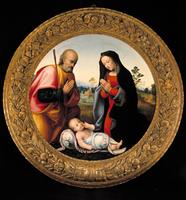
La Sainte Famille Avec L'adoration De L'enfant
Mariotto Albertinelli
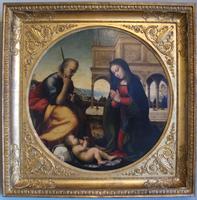
Adoration of the Child
Mariotto Albertinelli
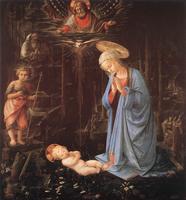
The Adoration of the Infant Jesus
Filippo Lippi
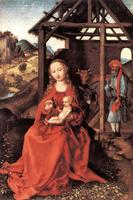
Nativity
Martin Schongauer

Adoration Of The Child With Saints
Filippo Lippi
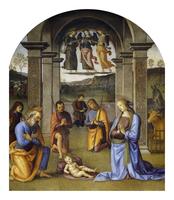
Nativity
Pietro Perugino
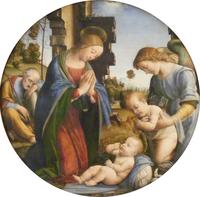
Holy Family
Fra Bartolomeo

Polyptych Albani Torlonia (particular detail)
Pietro Perugino
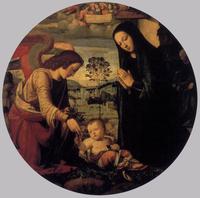
Adoration of the Child with Angel
Mariotto Albertinelli
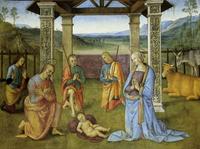
Nativity
Pietro Perugino
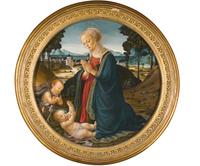
The Madonna and Child with the Infant Saint John the Baptist in a Landscape
Francesco Botticini

Adoration of the Child
Filippino Lippi
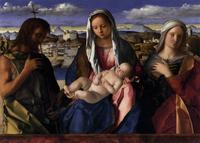
Madonna and Child with St.John the Baptist and a Saint, detail of the background waterside city
Giovanni Bellini
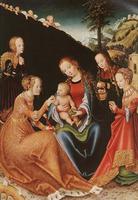
The Mystic Marriage of St. Catherine
Lucas Cranach the Elder
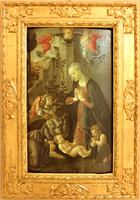
Adorazione del bambino
Francesco Botticini
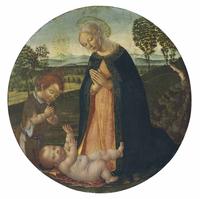
Madonna and Child with the Infant St. John the Baptist
Francesco Botticini
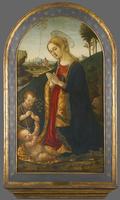
Madonna and Child in a Landscape with the Infant St. John the Baptist
Francesco Botticini