Expert analysis of Pietro Perugino’s Nativity
Style: High Renaissance · Genre: religious painting
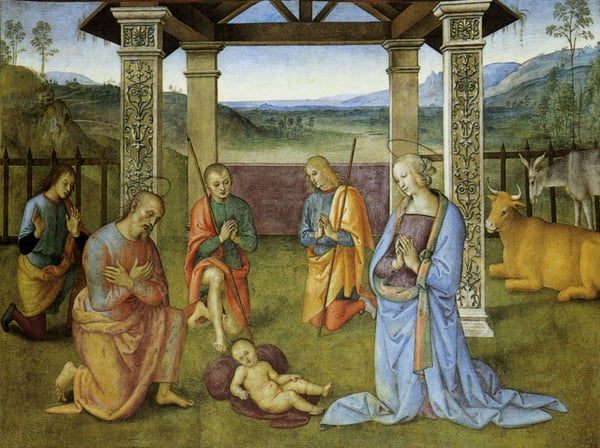
Pietro Perugino’s Nativity is a quintessential example of the High Renaissance religious painting, embodying the era’s pursuit of harmonious composition, luminous clarity, and serene devotion. As a leading figure of the Umbrian school and a master who profoundly influenced the young Raphael, Perugino’s treatment of this sacred subject reveals the period’s shift from the ornate complexity of the 15th century toward a balanced, idealized naturalism.
Significance within the High Renaissance
The painting is significant for its masterful use of perspective and spatial organization—a hallmark of Perugino’s mature style. The scene unfolds in a carefully constructed architectural or pastoral setting (common in his Nativity variants), where the central grouping of the Virgin, Child, and adoring figures is framed by receding landscape or classical loggia. This structure guides the viewer’s eye toward the holy pair, while the soft, atmospheric sfumato in the background—a technique later refined by Leonardo—creates a sense of depth and airy tranquility.
Emotional Tone and Figural Style
Perugino’s figures are noted for their graceful, almost ethereal stillness; here, the Virgin’s gentle inclination, the shepherds’ reverent poses, and even the animals’ calm presence convey a sacred quietude rather than dramatic action. The faces are idealized, with sweet, slightly downcast features that emphasize piety and inner contemplation. This emotional restraint, combined with cool, luminous colors (pale blues, rosy pinks, and soft greens), distinguishes Perugino’s Nativity from the more dynamic treatments of his contemporaries like Botticelli or Ghirlandaio. It embodies the High Renaissance ideal of grazia—a graceful harmony that elevates the divine narrative beyond everyday reality.
Influence and Legacy
Perugino’s Nativity is also significant as a precursor to the mature Raphael’s Madonnas and Holy Families. The balanced composition, the serene interchange between figures and landscape, and the lyrical use of line would deeply resonate in Raphael’s Alba Madonna or Madonna of the Meadow. In this work, Perugino achieves what the High Renaissance prized most: a fusion of naturalistic observation with a timeless, spiritual calm—making it a touchstone for understanding the transition from Early Renaissance experimentation to the full classical poise of the 16th century.
Visually similar
20 works with related composition and palette
Nativity
Pietro Perugino
The Presepio
Pietro Perugino
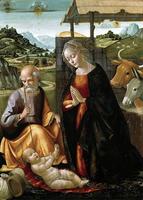
The Nativity
Domenico Ghirlandaio
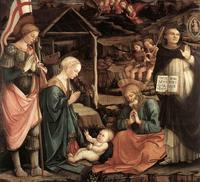
Adoration Of The Child With Saints
Filippo Lippi
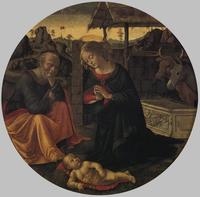
Adoration of the Child
Domenico Ghirlandaio
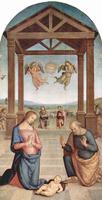
Altarpiece of St. Augustine - Adoration of the Shepherds
Pietro Perugino
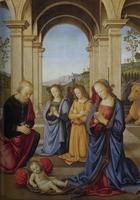
Polyptych Albani Torlonia (particular detail)
Pietro Perugino
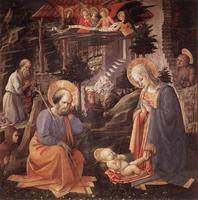
Adoration Of The Child With Saints
Filippo Lippi
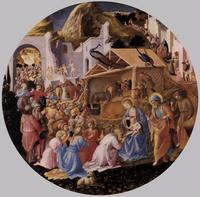
Adoration of the Magi
Fra Angelico
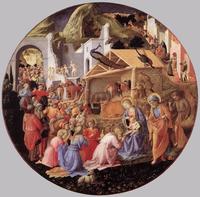
Adoration of the Magi
Filippo Lippi
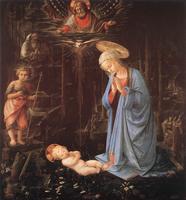
The Adoration of the Infant Jesus
Filippo Lippi
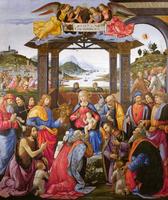
The Adoration of the Magi
Domenico Ghirlandaio
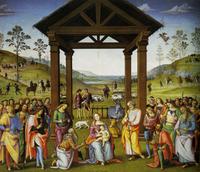
The Adoration of the Magi
Pietro Perugino
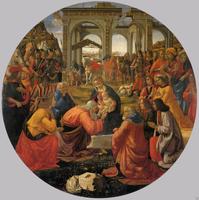
The Adoration of the Magi
Domenico Ghirlandaio
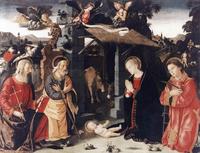
Nativity with Sts Lawrence and Andrew
Antoniazzo Romano
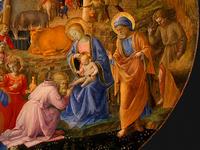
Adoration of the Magi (detail)
Filippo Lippi
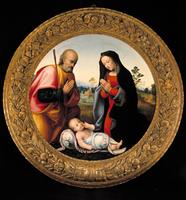
La Sainte Famille Avec L'adoration De L'enfant
Mariotto Albertinelli
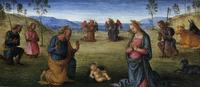
Madonna of Loreta (Nativity)
Pietro Perugino
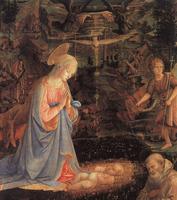
The Adoration of the Child
Paolo Uccello
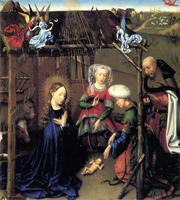
Nativity
Jacques Daret