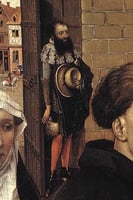
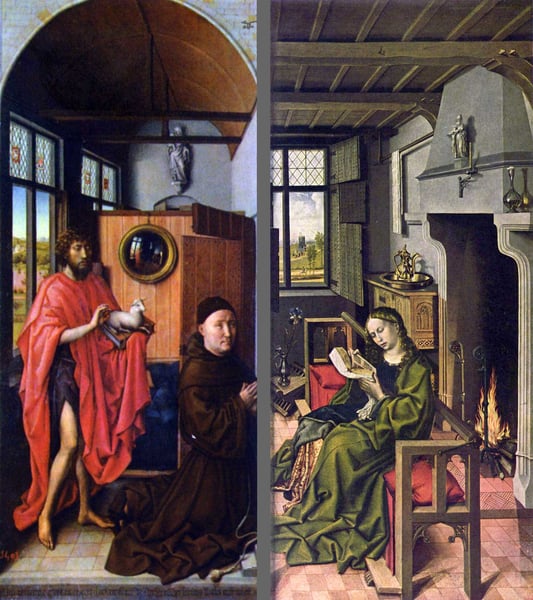
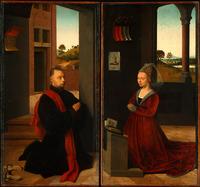
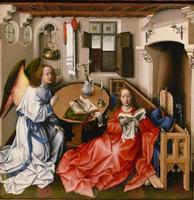
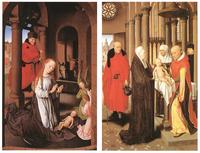
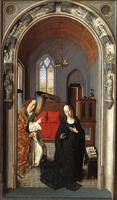
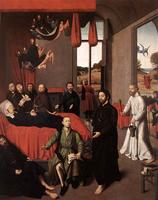
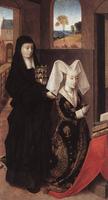
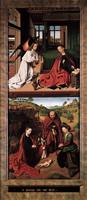
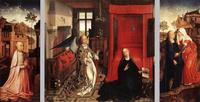
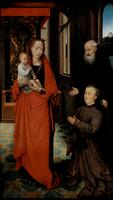
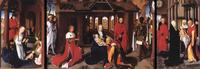
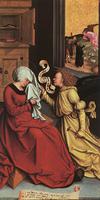
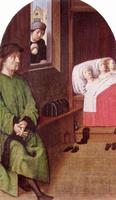
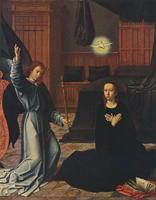
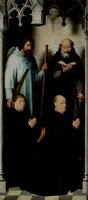
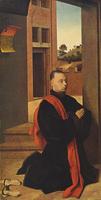
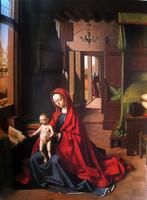
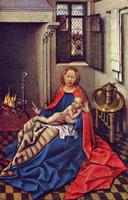
Based solely on the provided structured facts, the Werl Altarpiece by Robert Campin is a religious painting executed in the Northern Renaissance style. Its significance within this style and period lies in its embodiment of the core Northern Renaissance preoccupations: meticulous naturalism, symbolic complexity, and the conveyance of spiritual meaning through domestic, earthly settings. As a religious work by Campin—a pioneering figure in early Netherlandish painting—the altarpiece exemplifies the shift from the idealized, otherworldly figures of the Gothic era toward a palpable, humanized sacred reality. The very fact that it is an altarpiece (a polyptych or triptych designed for a church or private devotion) situates it within the period’s key demand for art that was both didactic and emotionally accessible, inviting the viewer into a direct, contemplative encounter with the divine through the lens of everyday visual experience.