Analisi esperta di Holy Conversation di Vittore Carpaccio
Stile: High Renaissance · Genere: religious painting
Expert Analysis: Holy Conversation by Vittore Carpaccio
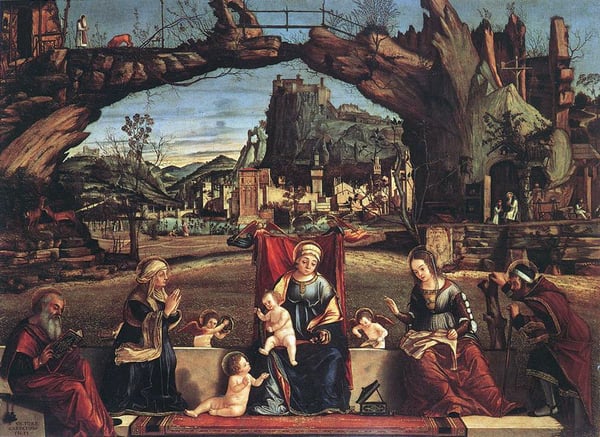
As a High Renaissance religious painting, Carpaccio’s Holy Conversation (or Sacra Conversazione) exemplifies the period’s quest for harmonious composition, naturalistic space, and serene devotional clarity—while also reflecting the distinct Venetian sensitivity to light, color, and atmospheric unity that sets this work apart within the broader Renaissance canon.
Significance within the High Renaissance:
-
Synthesis of Sacred & Human: The “Holy Conversation” genre brings together the Virgin and Child with saints in a unified, logical space, often set in an architectural or landscape backdrop. Carpaccio achieves a balanced, pyramid-like grouping that directs the viewer’s eye toward the central figures, embodying the High Renaissance ideal of sfumato of gesture and calm interaction. The saints are not isolated hieratic figures but engage in wordless dialogue through subtle glances and poses, making the divine appear accessible and human.
-
Venetian Color & Light: Unlike the Florentine emphasis on linear perspective and sculptural form, Carpaccio’s Venetian heritage shines through in his luminous palette and soft, diffused light. The colors—rich reds, blues, and golds—are layered with glazes to create a vibrant, almost ethereal glow. This atmospheric handling of light models the figures gently, merging them with the surrounding environment (whether interior or landscape) and conveying a sense of spiritual intimacy.
-
Narrative & Detail: Carpaccio was renowned for his detailed narrative cycles (e.g., the Legend of St. Ursula). Even in a static sacra conversazione, he weaves in telling details—a piece of fruit, a book, a distant building—that anchor the scene in a recognizable, lived-in world. This attention to the quotidian within the sacred underscores the High Renaissance belief that the divine can be contemplated through the beauty of the natural and the everyday.
-
Historical Context: Painted on the cusp of the 16th century, the work bridges the late Gothic tradition of Carpaccio’s predecessors (like the Bellini family) and the full-blown High Venetian style of Giorgione and Titian. Its calm, symmetrical composition and controlled emotion typify the High Renaissance’s move toward idealization, while its warm Venetian tonality anticipates the dramatic chiaroscuro that would follow.
In summary, Carpaccio’s Holy Conversation is significant for its masterful fusion of Renaissance gravitas with Venetian coloristic grace—a quiet, luminous meditation that compels the viewer to contemplate both the humanity and the divinity of the figures, and that stands as a testament to the regional diversity within the High Renaissance’s universal ideals.
Visivamente simili
20 opere con composizione e palette affini
Holy Family with St. Catherine and St. Barbara
Mabuse
The Adoration of the Kings
Mabuse
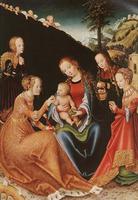
The Mystic Marriage of St. Catherine
Lucas Cranach the Elder
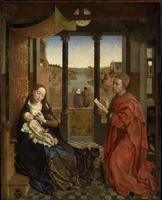
St. Luke Drawing a Portrait of the Virgin Mary
Rogier van der Weyden
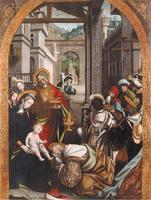
Adoration of the Magi
Defendente Ferrari
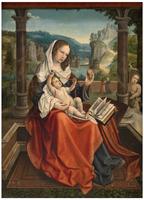
Virgin with the Child and St. John
Bernard Van Orley
Nativity
Martin Schongauer
Madonna of the Meadow (Madonna del Prato)
Giovanni Bellini
The Adoration of the Magi
Pietro Perugino
Adoration of the Shepherds
Andrea Mantegna
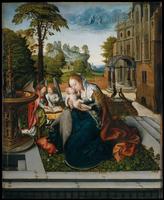
Virgin and Child with Angels
Bernard Van Orley
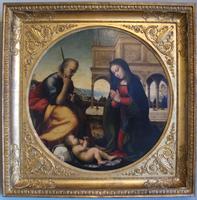
Adoration of the Child
Mariotto Albertinelli
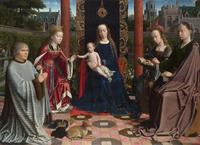
The Virgin and Child with Saints and Donor
Gerard David
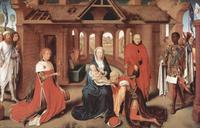
Adoration of the Magi, central panel of the Triptych of the Adoration of the Magi
Hans Memling
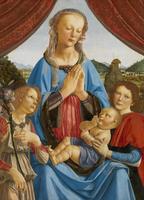
Virgin and Child with Two Angels
Andrea del Verrocchio
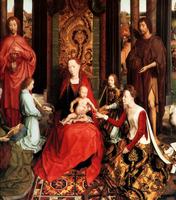
Triptych of the Mystical Marriage of St. Catherine of Alexandria, central panel: Marriage of St. Catherine
Hans Memling
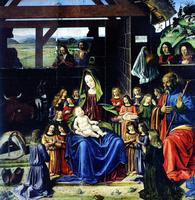
The Nativity
Andrea Mantegna
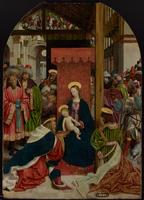
Adoration of the Magi
Defendente Ferrari
Madonna and Child with St. John the Baptist and Mary Magdalene
Cima da Conegliano
Adoration of the Magi
Geertgen tot Sint Jans