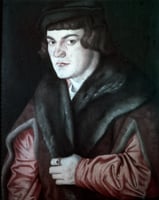
Экспертный разбор работы «Lamentation» художника Hans Baldung
Стиль: Northern Renaissance · Жанр: religious painting
Expert Art Historical Analysis: "Lamentation" by Hans Baldung
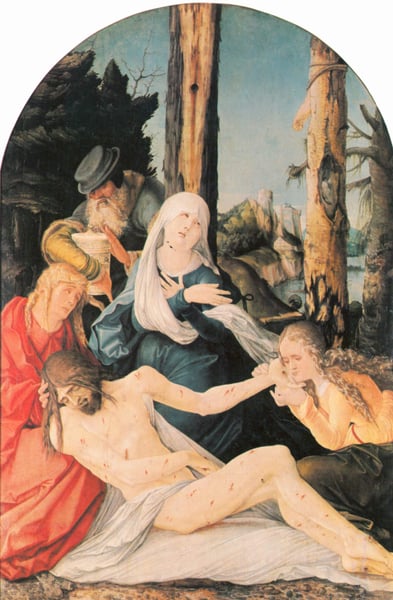
Hans Baldung (1484–1545), a leading German artist of the Northern Renaissance and a close associate of Albrecht Dürer, brings a distinctly expressive and psychologically charged sensibility to the traditional religious subject of the Lamentation. This work is significant within the Northern Renaissance for several reasons:
-
Emotional Intensity and Mannerist Tendencies: Unlike the more restrained piety of earlier Northern devotional works, Baldung’s “Lamentation” heightens the drama of Christ’s death through exaggerated gestures, contorted poses, and vivid facial expressions. This prefigures Mannerist sensibilities, pushing the Northern Renaissance interest in naturalistic detail toward a more subjective, emotional realism.
-
Vibrant, Symbolic Color: Northern Renaissance painters were renowned for their mastery of oil glazes and brilliant pigments. Baldung employs a striking, almost artificial palette—acidic greens, fiery reds, and deep blues—that amplifies the sorrowful atmosphere. This coloristic intensity is a hallmark of his personal style and sets the work apart from more muted contemporary treatments.
-
Macabre Undertones: Baldung is famous for his fascination with death, decay, and the supernatural (seen in works like “The Bewitched Groom” or “The Three Ages of Man”). In “Lamentation,” this manifests in a stark physicality: the pallor of Christ’s body, the stark contrast between living flesh and corpse, and the raw grief of the mourners. This morbid focus underscores the Northern Renaissance’s preoccupation with mortality (memento mori) and the human condition.
-
Compositional Innovation: Instead of a balanced, symmetrical Lamentation (common in Italian art), Baldung arranges the figures in a dynamic, diagonal sweep, drawing the viewer’s eye from the swooning Virgin to the lifeless body of Christ. This creates a sense of instability and urgency, reflecting the anguish of the moment.
-
Integration of Northern Naturalism with Spiritual Pathos: Baldung retains the Northern tradition of meticulous detail (texture of cloth, anatomy, landscape elements) but subjugates it to the overall emotional narrative. The result is a work that is both visually compelling and theologically stirring—a key contribution to the evolution of religious painting in Northern Europe.
In sum, Hans Baldung’s “Lamentation” is significant as a bridge between the High Renaissance naturalism of Dürer and the more subjective, emotionally volatile art of the later 16th century, marking a pivotal moment in Northern Renaissance religious painting.
Museum / Gallery
Визуально похожие
20 работ с близкой композицией и палитрой
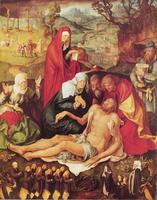
Lamentation of Christ
Albrecht Durer
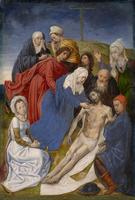
Diptych of The Fall of Man and The Redemption (Lamentation of Christ)
Hugo van der Goes
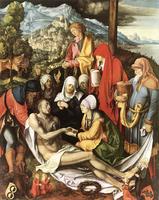
Lamentation for Christ
Albrecht Durer
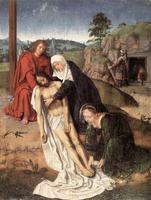
The Lamentation
Gerard David
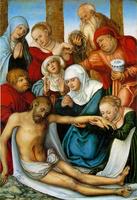
Lamentation
Lucas Cranach the Elder
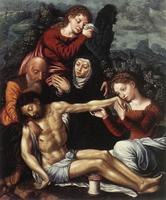
The Lamentation of Christ
Jan van Hemessen
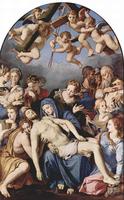
Deposition from the Cross
Agnolo Bronzino
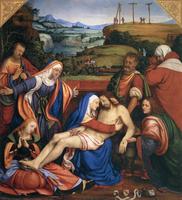
The Lamentation of Christ
Andrea Solario
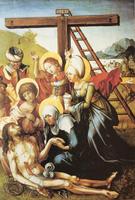
Lamentation of Christ
Albrecht Durer
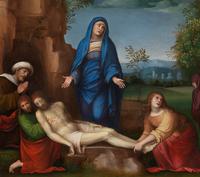
The Lamentation over the Dead Christ
Francesco Francia
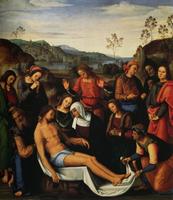
The Mourning of the Dead Christ (Deposition)
Pietro Perugino
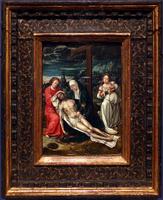
Passions of Christ
Bernard Van Orley
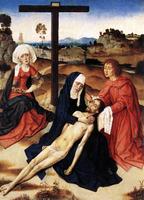
The Lamentation of Christ
Dirk Bouts
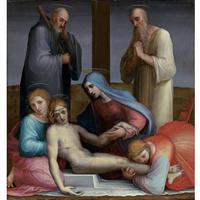
THE DEPOSITION
Fra Paolino da Pistoia
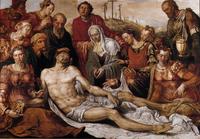
Lamentation on the Dead Christ
Maerten van Heemskerck
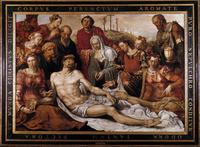
Lamentation on the Dead Christ
Maerten van Heemskerck
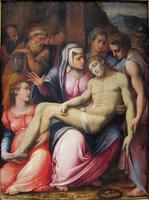
The Deposition
Giorgio Vasari
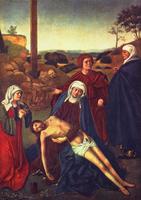
The Lamentation
Petrus Christus
The Lamentation
Ventura Salimbeni
Deposition
Giovanni Bellini