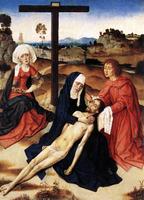
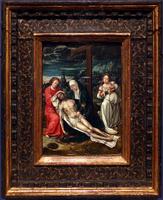
Based solely on the structured facts provided—Albrecht Dürer, Northern Renaissance, religious painting—and focusing on the significance within this style and period, the analysis is as follows:
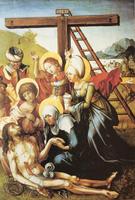
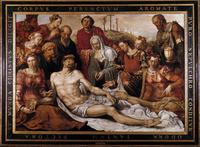
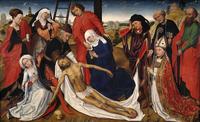
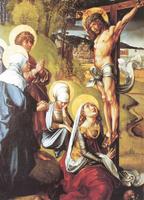
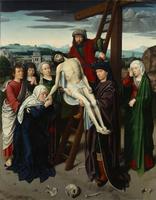
The significance of "Lamentation for Christ" lies in its embodiment of the Northern Renaissance style within a religious painting genre. As a work by Albrecht Dürer, it represents a pivotal moment where Northern European artistic traditions—characterized by meticulous detail, intense emotional realism, and symbolic precision—merge with the compositional and humanist concerns of the Italian Renaissance. Dürer’s ability to render the grief of the mourners with profound psychological depth, while maintaining the intricate surface realism (e.g., fabric folds, facial expressions, landscape details) typical of Northern art, elevates this religious painting from a mere devotional image to a masterful study of human suffering and divine love. This synthesis marks Dürer’s contribution to the Northern Renaissance: he sets a new standard for how religious painting could convey both piety and naturalistic observation, making the scene immediate and spiritually resonant for its viewers.