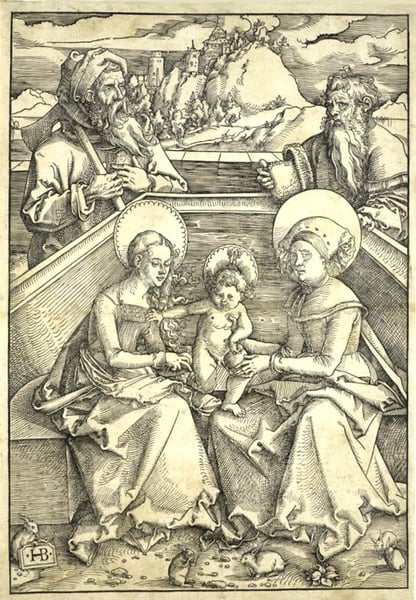
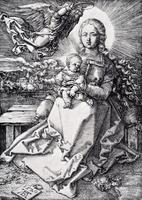
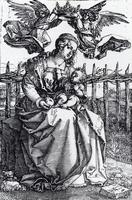
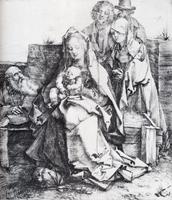
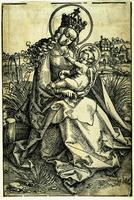
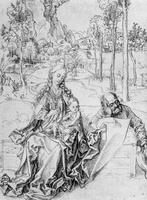
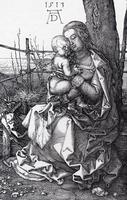
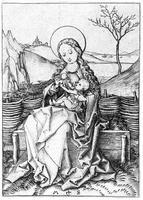
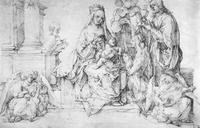
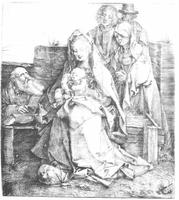
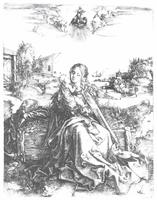
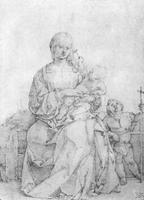
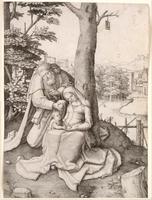
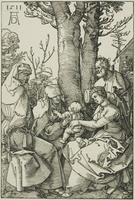
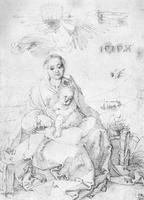
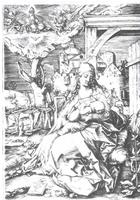
This woodcut by Hans Baldung (c. 1510–1511) is a striking example of Northern Renaissance religious imagery, distinguished by its subtle symbolic complexity and technical mastery. Measuring the intimate scale of a devotional print, Baldung reimagines the extended Holy Family—comprising the Virgin Mary, the Christ Child, Saint Anne, and Saint Joachim—through the lens of German printmaking’s expressive line and meticulous detail.
What makes this work particularly significant is the inclusion of five rabbits at the feet of the holy figures, an unusual motif that carries layered meanings within the Northern Renaissance context. Rabbits were commonly associated with fertility and fecundity, but here they may also evoke the purity of the Virgin (as rabbits were believed to conceive without loss of chastity) or serve as a memento mori—a reminder of the fleeting nature of life, a theme Baldung frequently explored. The number five could allude to the five wounds of Christ or the five joys of Mary, intertwining domestic tenderness with theological reflection.
Stylistically, the woodcut demonstrates Baldung’s debt to Albrecht Dürer (with whom he trained) while asserting his own bold, often visceral linework. The figures are compressed into a shallow space, their drapery carved with energetic hatching that models form and creates a palpable sense of texture. The rabbits, rendered with careful observation, contrast with the sacred stillness of the holy group, grounding the scene in the natural world—a hallmark of Northern Renaissance art. This fusion of the emblematic and the everyday, of precision and pathos, marks the work as a key example of Baldung’s contribution to the period’s devotional print culture.