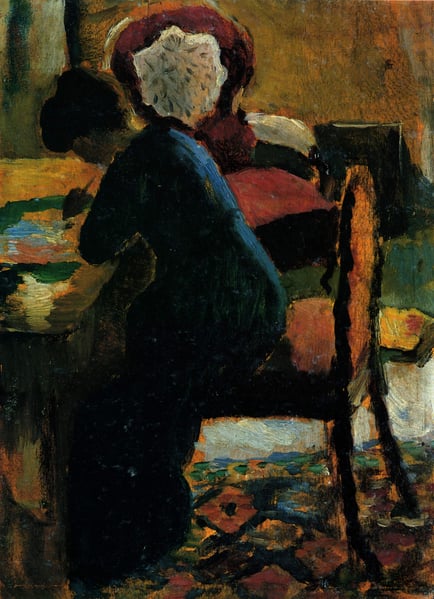
Expertenanalyse zu August Mackes Elisabeth at the Table
Stil: Fauvism · Genre: portrait
Analysis: "Elisabeth at the Table" by August Macke
This portrait exemplifies the bold, emotionally charged vocabulary of Fauvism through its radical use of color and simplified form. Macke, though often associated with German Expressionism here firmly locates his work within Fauvist principles: the subject—Elisabeth—is rendered not through naturalistic tones but through heightened, non-representational hues that convey mood rather than reality. The table and figure dissolve into planes of vibrant color, emphasizing the artist’s freedom from academic conventions. The work’s significance lies in its demonstration of Fauvism’s core tenet—that color can be an independent, expressive force—applied to intimate portraiture. By reducing detail and prioritizing chromatic harmony, Macke transforms a domestic scene into a dynamic, almost abstract composition, bridging Fauvist spontaneity with the personal, introspective quality of early modern portraiture.
Museum / Gallery
Visuell ähnlich
20 Werke mit ähnlicher Komposition und Farbpalette
Nostalgia
Grigoriy Goldstein
Young Womwn in an Interior
Pierre Bonnard
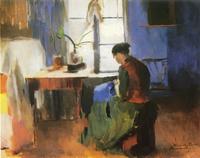
Sewing Woman
Harriet Backer
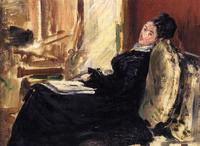
Young woman with a book
Edouard Manet
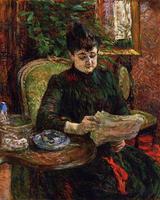
Madame Aline Gibert
Henri de Toulouse-Lautrec
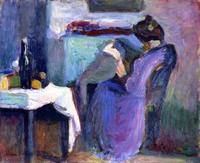
Reading Woman In Violet Dress
Henri Matisse
Woman Putting on her Gloves
Edgar Degas
The Red Carpet
Lesser Ury
The Thread
Edouard Vuillard
Female Figure in the Interior
Adalbert Erdeli
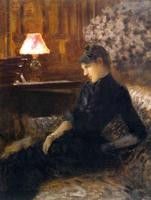
Pensive (Listening to the piano)
Giuseppe De Nittis
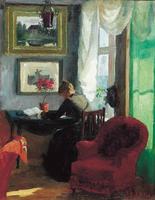
Interior
Kitty Lange Kielland
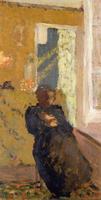
Seated Woman Dressed in Black
Edouard Vuillard
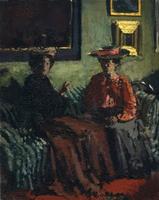
Young Belgium Women
Walter Sickert
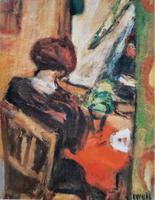
Nyergesi Fiu
Bela Czobel
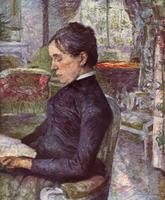
Portrait of Countess A. de Toulouse Lautrec
Henri de Toulouse-Lautrec
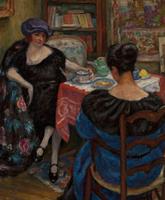
Filiżanka Herbaty (wizyta)
Józef Pankiewicz
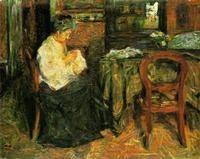
The mother sews
Mario Sironi
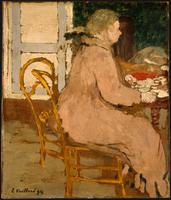
Breakfast
Edouard Vuillard
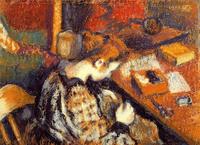
Young Woman Sewing
Georges Lemmen