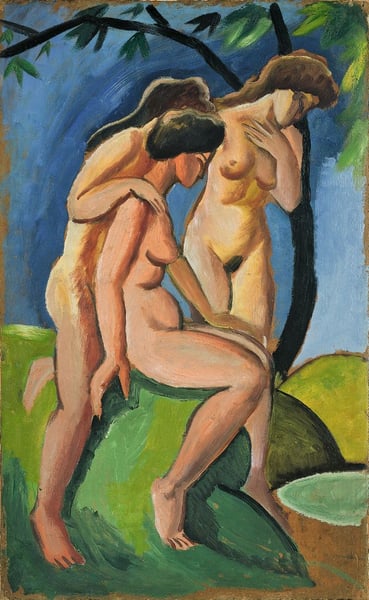
Expert analysis of August Macke’s Three Nudes
Style: Expressionism · Genre: nude painting (nu)
Expert Analysis: "Three Nudes" by August Macke
August Macke’s “Three Nudes” is a significant work within the Expressionist movement, specifically as a nude painting that departs from classical or academic representations of the human figure. Instead of idealized anatomy or naturalistic proportions, Mackie employs the hallmarks of Expressionism: bold, non-naturalistic color, simplified forms, and emotional intensity. The work’s significance lies in how it transforms the traditional nude genre—often associated with timeless beauty or mythological allegory—into a vehicle for subjective, modern emotion. Mackie’s figures are not passive objects of contemplation; their distorted outlines and flat, vibrant planes of color convey inner psychic states, aligning with Expressionism’s goal to depict the artist’s feeling rather than external reality. This painting thus exemplifies how early 20th-century German Expressionists reframed the nude as a means of exploring primal human energy and spiritual authenticity, breaking decisively from Renaissance and Impressionist precedents.
Visually similar
20 works with related composition and palette
Women Bathing (detail)
Tamara de Lempicka
Zwei Mädchen
Otto Mueller
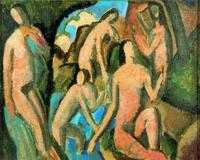
Bathing women
Andre Derain
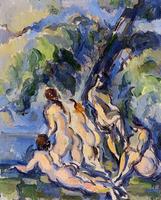
Bathers
Paul Cezanne
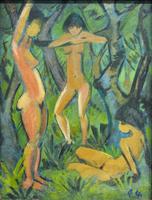
Three Nudes in the Forest
Otto Mueller
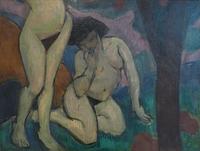
Nudes in landscape
Roger de La Fresnaye
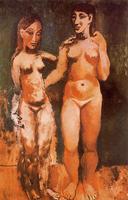
Two nude women
Pablo Picasso
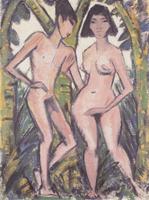
Adam Und Eva
Otto Mueller
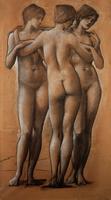
The Three Graces
Edward Burne-Jones
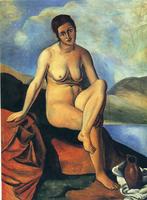
Female nude with a jug
Andre Derain
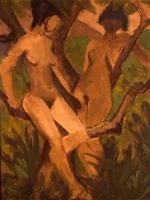
Badende in Landschaft
Otto Mueller
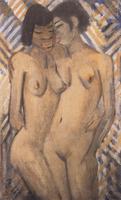
Zwei Negermädchen
Otto Mueller
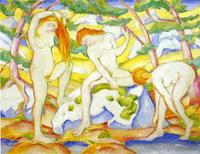
Bathing Girls
Franz Marc
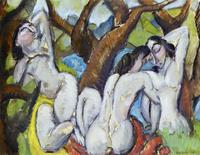
Three Nudes in a Forest
Max Weber
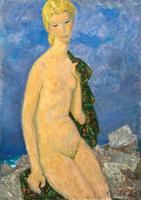
First Day at the Beach
Octav Angheluta
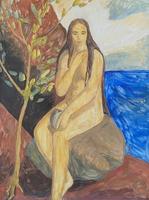
Like Bible
Kateryna Lysovenko
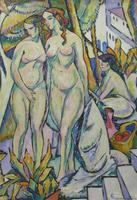
Nudes in a Landscape
Ion Theodorescu-Sion
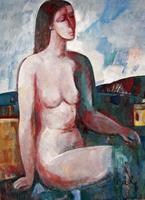
Nude
Rudolf Bér
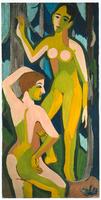
Two Nudes in the Wood II
Ernst Ludwig Kirchner
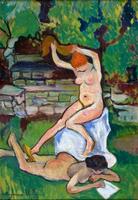
Nudes
Suzanne Valadon