Expert analysis of Jacob Jordaens’s Ferry Boat to Antwerp
Style: Baroque · Genre: genre painting
Expert Art Historical Analysis: Ferry Boat to Antwerp by Jacob Jordaens (c. 1630s–40s)
As a quintessential Baroque genre painting, Ferry Boat to Antwerp exemplifies Jacob Jordaens’ mastery of everyday life rendered with the dynamism, earthy realism, and emotional immediacy for which Flemish Baroque art is celebrated.
Significance within the Baroque Style
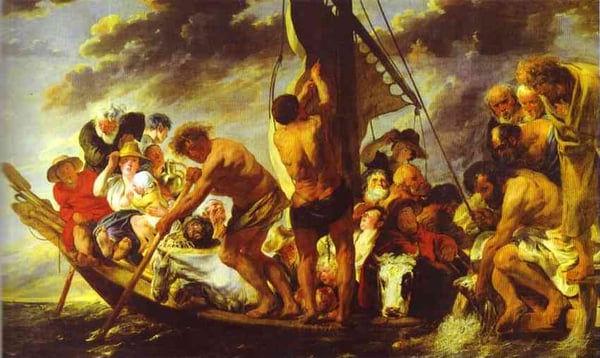
The work captures a crowded ferry crossing the Scheldt River, teeming with passengers from various social strata—peasants, merchants, and children—engaged in animated conversation, laughter, or quiet contemplation. This bustling composition is a hallmark of Baroque genre painting, which sought to elevate ordinary moments into dramatic, morally instructive, or simply exuberant spectacles. Jordaens employs the Baroque toolkit with virtuosity: a low horizon and diagonal lines of the boat’s hull and oars create a dynamic, off-balance energy; bold chiaroscuro (strong contrasts of light and shadow) models the figures’ robust forms and draws the eye to expressive gestures and facial expressions; and a warm, golden palette—typical of Jordaens’ palette—conveys the sunlit afternoon, enhancing the scene’s palpable vitality.
Contribution to Genre Painting
Unlike the more polished, aristocratic scenes of some contemporaries, Jordaens’ genre works embrace a coarser, more robust humanism. Ferry Boat to Antwerp shows him in dialogue with fellow Flemish genre painters like Adriaen Brouwer and David Teniers the Younger, but where they often focused on tavern interiors or peasant brawls, Jordaens expands the genre to include public transit—a microcosm of society in motion. The painting is significant as a social document, capturing the bustle of 17th-century maritime commerce and travel between Antwerp, a major port, and its hinterlands.
Why It Matters
This artwork is a vital example of Jordaens’ ability to infuse the mundane with monumental Baroque spirit. It demonstrates how genre painting moved beyond mere anecdote to become a vehicle for exploring universal themes: community, class interaction, and the fleeting nature of daily life. The sheer number and variety of figures—each with distinct poses, costumes, and reactions—reveals Jordaens’ keen observation and his delight in human diversity, all unified by the Baroque love for movement and sensory abundance. In Ferry Boat to Antwerp, the ordinary ferry ride becomes a symphony of color, texture, and human connection, standing as a testament to Jordaens’ place among the great Baroque narrators of the common life.
Visually similar
20 works with related composition and palette
The Apostle Peter Finding the Tribute Money in the Mouth of the Fish
Jacob Jordaens
The Tribute Money Peter Finding the Silver Coin in the Mouth of the Fish Also Called the Ferry Boat to Antwerp
Jacob Jordaens
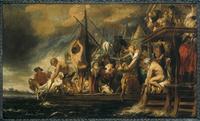
The Miracle of the Obol in the Mouth of the Fish
Jacob Jordaens
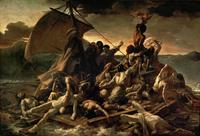
The Raft of the Medusa
Théodore Géricault
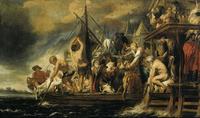
The Tribute Money Peter Finding the Silver Coin in the Mouth of the Fish
Jacob Jordaens
Study for The Raft of the Medusa
Théodore Géricault
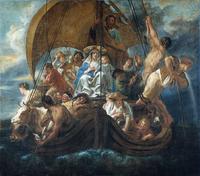
The Holy Family with Various Persons and Animals in a Boat
Jacob Jordaens
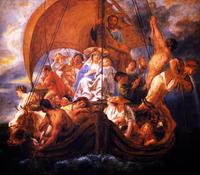
The Holy Family with characters and animals in a boat
Jacob Jordaens
Refugees At Sea
Odd Nerdrum
Study for The Raft of the Medusa
Théodore Géricault
The Miracle of Saint Walburga
Peter Paul Rubens
Idylls of the King
Gustave Dore
African Pirates Abducting a Young Woman
Eugene Delacroix
Pythagoras and the Fisherman
Salvator Rosa
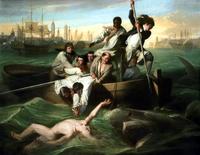
Watson and the Shark
John Singleton Copley
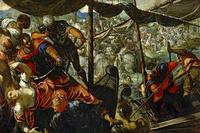
Battle between Turks and Christians
Tintoretto
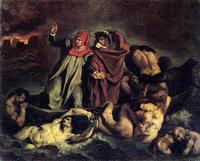
The barque of Dante (Copy after Delacroix)
Edouard Manet
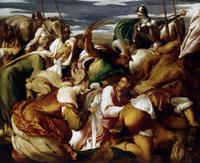
The Road to Calvary
Jacopo Bassano
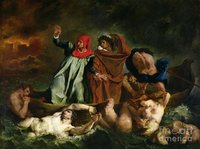
The Barque of Dante (Dante and Virgil in the Underworld)
Eugene Delacroix
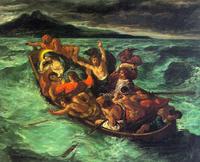
Christ on the Lake of Gennezaret
Eugene Delacroix