Expert analysis of Jacob Jordaens’s Abduction of Europa
Style: Baroque · Genre: mythological painting
Expert Analysis: "Abduction of Europa" by Jacob Jordaens
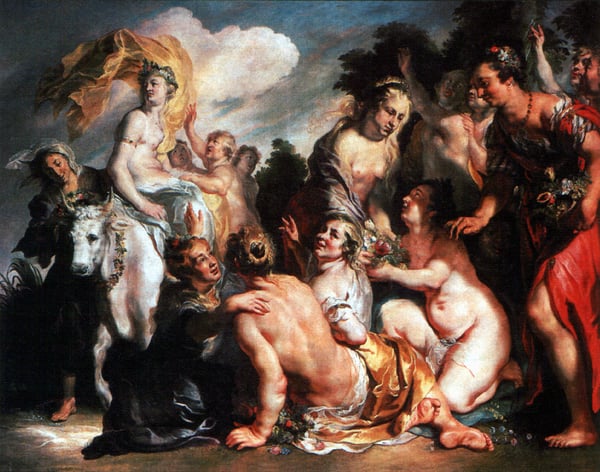
This work is a quintessential example of Baroque mythological painting, executed by the Flemish master Jacob Jordaens. Its significance lies in how it encapsulates the core tenets of the Baroque style—drama, movement, and emotional intensity—within a classical mythological narrative.
Stylistic Significance:
As a Baroque piece, the painting abandons the static balance of the Renaissance in favor of a dynamic, swirling composition. Jordaens likely employs diagonal lines and a tangle of bodies (Europa, the bull, and accompanying figures) to create a sense of urgent, spiraling action. The mythological subject—the god Zeus, disguised as a white bull, abducting the princess Europa—provides the perfect vehicle for Baroque drama: a moment of critical transition between peace and violent upheaval. The use of strong chiaroscuro and rich, earthy color (hallmarks of Flemish Baroque) heightens the scene’s theatricality, pushing the figures toward the viewer.
Genre & Narrative:
As a mythological painting, Jordaens’ work reclaims the Ovidian tale not as a refined classical ideal (as in the Renaissance) but as a raw, human experience. The abductor and victim are locked in a physical struggle, reflecting the Counter-Reformation Baroque interest in capturing fleeting, emotionally charged instants. The significance here is in the tension between sensuality and peril—Europa appears both terrified and fascinated, a duality that resonated with Baroque audiences accustomed to allegorical lessons about passion and fate.
Baroque Innovation:
Jordaens’ interpretation stands out for its monumental physicality. Unlike many Italian Baroque versions that emphasize idealized grace, Jordaens—true to his Flemish roots—renders Europa with robust, fleshy realism, making the abduction feel more visceral and immediate. The bull’s lowered head and rolling eye convey not just animal strength but divine cunning, while the sky’s stormy undertones (typical of Baroque “horror vacui”) amplify the sense of impending doom. This fusion of mythological grandeur with raw human emotion is what solidifies the painting as a significant achievement within the Baroque movement.
Visually similar
20 works with related composition and palette
The Rest of Diana
Jacob Jordaens
Feast of Venus
Peter Paul Rubens
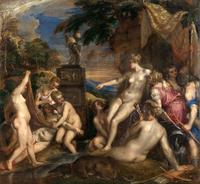
Diana and Callisto
Titian
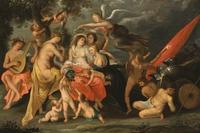
Allegory of prosperity
Erasmus Quellinus the Younger
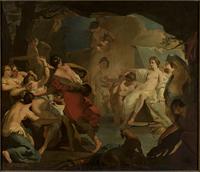
Sad Diany nad nimfa Kallisto
Gaetano Gandolfi
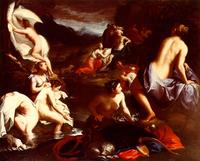
Diana Y Ninfas
Lorenzo Pasinelli
The Rape of Hippodamia
Peter Paul Rubens
Allegory on the Blessings of Peace
Peter Paul Rubens
The Pursuit of Fortune
David Scott
The Bacchanal of the Andrians
Peter Paul Rubens
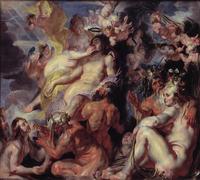
The Apotheosis of Aeneas
Jacob Jordaens
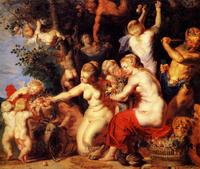
Homage to Pomona
Jacob Jordaens
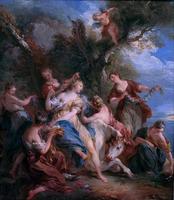
Abduction of Europe
François Lemoyne
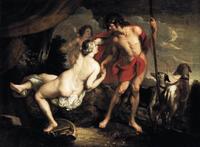
Venus and Adonis
Theodoor van Thulden
Allegory of the Poet
Jacob Jordaens
Allegory of Fertility
Jacob Jordaens
The Vision of Aeneas in the Elysian Fields
Sebastiano Conca
The Four Seasons
Cornelis de Vos
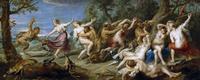
Diana and her Nymphs Surprised by the Fauns
Peter Paul Rubens
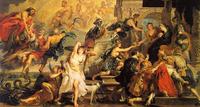
Apotheosis of Henry IV and the Proclamation of the Regency of Marie de Medici
Peter Paul Rubens