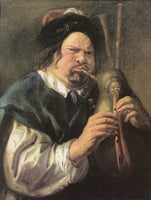
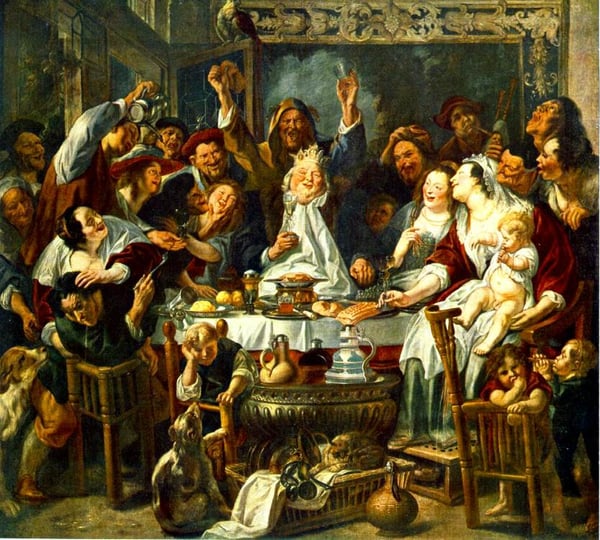
Expert analysis of Jacob Jordaens’s The King Drinks
Style: Baroque · Genre: genre painting
As an expert art historian, I will analyze "The King Drinks" by Jacob Jordaens based solely on the provided facts: its Baroque style and genre painting classification.
This work is significant within the Baroque period because it masterfully exemplifies the era’s departure from idealized, religious, or mythological subjects toward the vibrant, unvarnished depiction of everyday life—a core innovation of genre painting. While the title suggests a monarchical figure, the scene is rooted in the earthy, communal festivities of the 17th-century Flemish peasantry, a common subject for Jordaens.
What makes it significant within the Baroque style and genre:
-
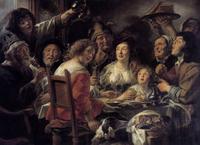
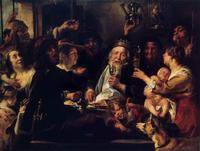
Dynamic Naturalism and Emotional Energy: The Baroque style prized dramatic intensity and a sense of immediacy. As a genre painting, "The King Drinks" captures a fleeting, chaotic moment of festive celebration—likely the Twelfth Night tradition where a pea hidden in a cake designates the "king" for the evening. The painting bursts with kinetic energy: figures lean in, raise glasses, laugh, and shout. This isn’t a static portrait but a slice of raucous life, rendered with the Baroque love for movement and direct emotional engagement.
-
Rich, Earthy Color and Chiaroscuro: Baroque painters like Jordaens used strong contrasts of light and shadow to heighten drama. In this genre scene, the light focuses on the central "king" and the flushed, animated faces of the revelers, pulling the viewer into the crowded, intimate space. The warm, earthy tones of skin, food, and drink ground the scene in sensual, physical reality—a hallmark of how Baroque genre painting celebrated the material world.
-
The Elevation of the Mundane: In previous eras, such a vulgar, boisterous gathering would rarely be a subject for fine art. By depicting a peasant festival with the same compositional complexity and painterly bravura reserved for history paintings, Jordaens asserts the significance of common human experience. This work contributes to the Baroque period’s broader humanistic turn, finding grandeur in laughter, gluttony, and social ritual.
-
Moral Ambiguity and Caricature: Genre paintings often carried a moralizing undercurrent. Here, the title "The King Drinks" is ironic—the "king" is a drunken commoner. The painting comments on folly, excess, and the temporary inversion of social order. The exaggerated facial expressions and robust figures are typical of Jordaens’ style, blending Baroque naturalism with a touch of Flemish folk caricature, making the scene both entertaining and slightly cautionary.
In summary, "The King Drinks" is a significant Baroque genre painting because it transforms a simple festival into a dramatic, dynamic tableau that celebrates life’s vitality while subtly critiquing human indulgence. It encapsulates the Baroque era’s fascination with immediacy, physicality, and the theater of the everyday, making the ordinary appear monumental.
Museum / Gallery
Visually similar
20 works with related composition and palette
The Bean King (Twelfth Night)
Jacob Jordaens
The Bean King
Jacob Jordaens
The King Drinks
Jacob Jordaens
Eating Man
Jacob Jordaens
The Bean King (The King Drinks)
Jacob Jordaens
Twelfth Night
Jan Steen
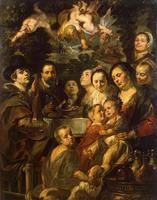
Self-Portrait with Parents Brothers and Sisters
Jacob Jordaens
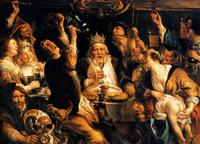
The King Drinks
Jacob Jordaens
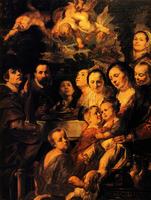
Portrait of Jordaens family
Jacob Jordaens
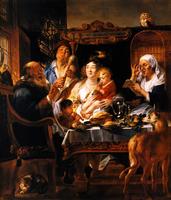
As the Old Sang, So the young Pipe
Jacob Jordaens
Absalom's Feast
Mattia Preti
Jacob Reproaching Laban
Hendrick Terbrugghen
The Feast of Herod
Peter Paul Rubens
Liveliest
Jan Steen
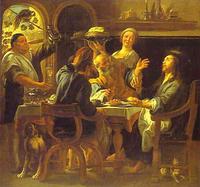
The Supper at Emmaus
Jacob Jordaens
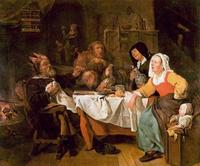
The Feast of the Bean King
Gabriel Metsu
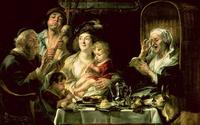
As the Old Sing So the Young Pipe
Jacob Jordaens
As the Old Sang, So the young Pipe
Jacob Jordaens
Dives and Lazarus
Luca Giordano
Merry Company on a Terrace
Jan Steen