Analyse experte de The Bean King (The King Drinks) de Jacob Jordaens
Style : Baroque · Genre : genre painting
Expert Art Historical Analysis: "The Bean King (The King Drinks)" by Jacob Jordaens
As a masterpiece of Baroque style and genre painting, Jacob Jordaens’ The Bean King (The King Drinks) holds a distinct place in 17th-century Flemish art. The work’s significance lies in how it perfectly encapsulates the core Baroque preoccupations with movement, emotion, and the vivid, unidealized depiction of human life.
Baroque Dynamism and Theatricality
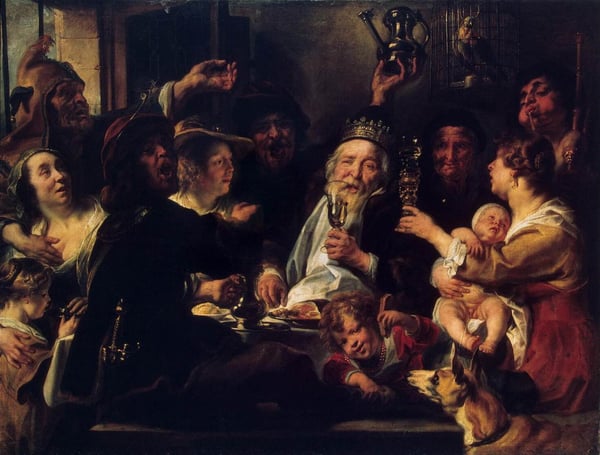
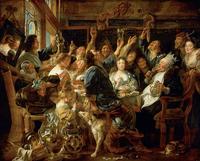
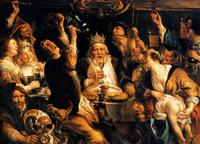
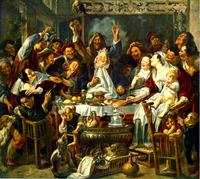
The painting is a riot of action and color, typical of the Baroque obsession with capturing a single, climactic moment. Figures crowd the canvas in a swirling, diagonal composition, their bodies twisting and reaching. The light, likely from a single candle or lamp (a favorite Baroque device known as tenebrism), cuts across the scene, picking out flushed faces and exuberant gestures while leaving corners in deep shadow. This dramatic chiaroscuro creates a sense of urgent, almost chaotic celebration—a hallmark of Jordaens' energetic handling of the Baroque idiom.
Genre Painting as Social Mirror
As a genre painting, the work elevates a humble, everyday festival—the Feast of Epiphany, where the finder of a bean in a cake is crowned “king” for the night—to a subject of artistic and moral weight. The scene is not a sanitized allegory but a raw, boisterous depiction of peasant revelry. The “king” is shown drinking lustily, surrounded by laughing, carousing family members who mimic royalty. This reflects the Baroque era’s deep interest in realism and the world of common people, moving away from purely religious or mythological scenes. Jordaens captures the universal human desires for escape, status, and communal joy, using the genre to comment on the folly of pride and excess.
Significance Within the Period
Jordaens, a contemporary of Rubens, was a master of the Flemish Baroque, and this painting exemplifies his signature approach: a robust, earthy palette, robust flesh, and a sense that the viewer has stumbled upon a real, fleeting moment. Unlike the more aristocratic or religious subjects of many Baroque works, The Bean King uses the festival as a vehicle to explore human nature in its most honest, unguarded state. It is significant for its refusal to moralize overtly—instead, it invites delight and discomfort alike, capturing the Baroque love for paradox: the sacred and profane, the dignified and the ridiculous, all swirling together in a single, unforgettable feast.
Museum / Gallery
Visuellement similaire
20 œuvres à la composition et à la palette proches
The King Drinks
Jacob Jordaens
The Bean King
Jacob Jordaens
The Bean King (Twelfth Night)
Jacob Jordaens
The King Drinks
Jacob Jordaens
Eating Man
Jacob Jordaens
The King Drinks
Jacob Jordaens
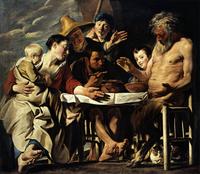
The Satyr with the Peasants
Jacob Jordaens
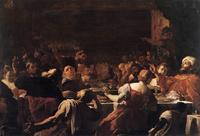
Absalom's Feast
Mattia Preti
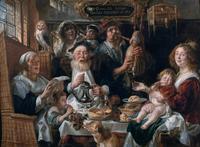
As the Old Sang, So the young Pipe
Jacob Jordaens
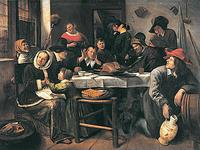
Liveliest
Jan Steen
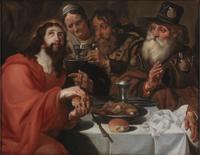
The Supper at Emmaus
Jan Cossiers
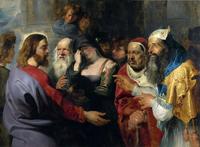
Christ and the Adulteress
Peter Paul Rubens
The Paschal Lamb
Palma il Giovane
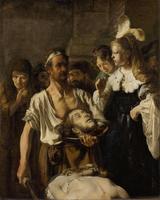
The Beheading of John the Baptist
Carel Fabritius
The Denial of Saint Peter
Gerard van Honthorst
Alegoría de la Muerte
Pietro Paolini
Tooth Puller
Caravaggio
Satyr and Peasant
Jacob Jordaens
The Beheading of John the Baptist
Rembrandt
The Satyr and the Peasant Family
Jacob Jordaens