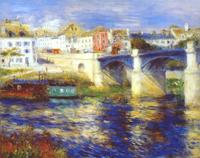
Expert Analysis of "Boats on the Seine" by Berthe Morisot
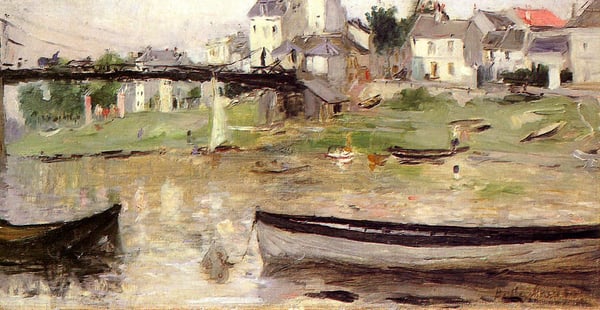
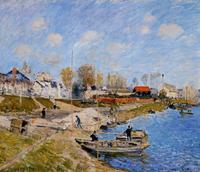
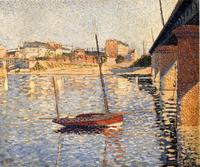
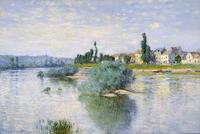
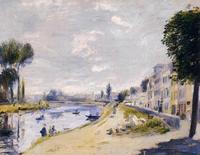
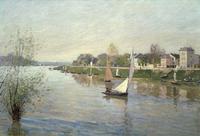
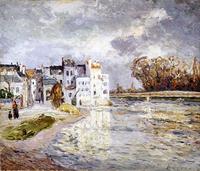
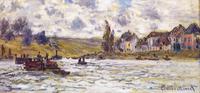
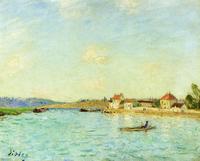
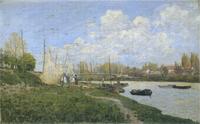
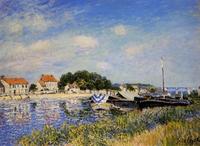
As an Impressionist cityscape, Berthe Morisot’s Boats on the Seine captures a fleeting, luminous moment of modern urban leisure—a quintessential concern of the movement. The painting’s significance lies in its embodiment of Impressionism’s core principles: broken brushwork, a bright palette, and the interplay of natural light reflected on water. The Seine, a recurring motif for Impressionists, becomes here a stage for the transient effects of atmosphere and movement. Morisot’s choice of a riverside view, with boats bobbing and shimmering reflections, typifies the genre’s focus on contemporary life rather than historical or mythological subjects. As a leading female figure within the circle, Morisot brings a distinct sensitivity to domestic and recreational scenes, yet this work equally aligns with the group’s revolutionary aim to capture the perceptual experience of a specific moment. Boats on the Seine thus exemplifies how Impressionist cityscapes transformed everyday sights into meditations on light, color, and the passage of time, solidifying Morisot’s role at the forefront of the movement’s innovations.