Expert Analysis of "Fall Colors in the Bois de Boulogne" by Berthe Morisot
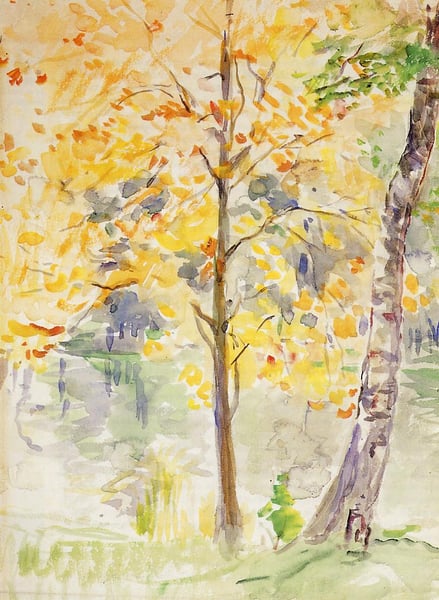
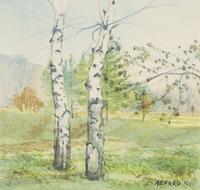
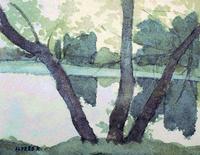
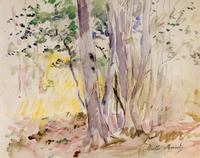
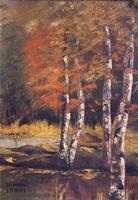
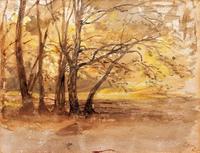
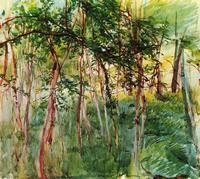
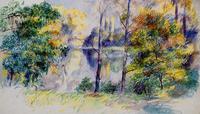
As an Impressionist landscape, Fall Colors in the Bois de Boulogne exemplifies the movement’s core ambition to capture transient effects of light and atmosphere through visible, broken brushwork and a vibrant, often unconventional palette. Berthe Morisot, a founding member of the Impressionist circle, brings a distinctly intimate sensibility to this public park—a favorite subject for her peers like Monet and Renoir. Here, the autumnal setting allows her to explore the interplay of warm ochres, russets, and fading greens against cooler shadows, rendering the Bois de Boulogne not as a mere topographical record but as a sensory impression of a specific moment in seasonal change.
What makes this work significant within Impressionism is Morisot’s ability to infuse a landscape genre—typically associated with male artists—with the same lyrical, personal touch she applied to domestic scenes. Her loose, feathery strokes suggest the rustle of leaves and the soft diffusion of autumn light, while the composition likely eschews strict perspective in favor of a flattened, almost tapestry-like surface. This approach foregrounds the viewer’s immediate visual experience over narrative or detail, a hallmark of Impressionist innovation. Furthermore, Morisot’s choice of the Bois de Boulogne—a modern urban leisure space—aligns with the movement’s fascination with contemporary life. By focusing on the fleeting beauty of fall color in a public park, she elevates a commonplace suburban scene into a study of luminosity, atmosphere, and the quiet poetry of the everyday—asserting her distinct voice within the male-dominated avant-garde.