Analisi esperta di Beirut di Vasily Polenov
Stile: Realism, Orientalism · Genere: landscape
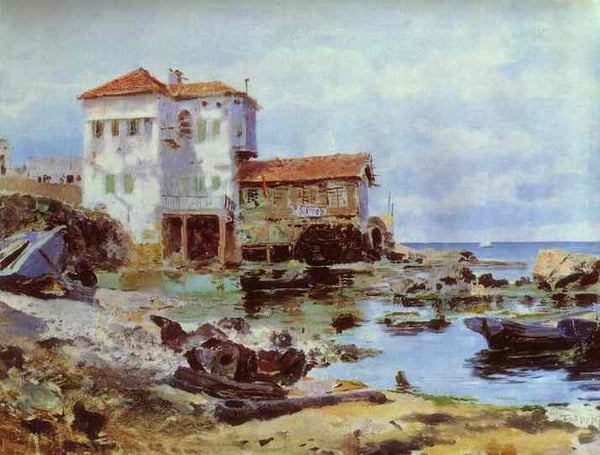
Vasily Polenov’s Beirut stands as a compelling synthesis of Realist fidelity and Orientalist allure, marking a significant moment in Russian landscape painting of the late 19th century. Created during Polenov’s extensive travels through the Middle East in the 1880s, the work exemplifies his commitment to capturing the authentic, sun‑drenched atmosphere of the Levant while avoiding the clichéd fantasy of many Western Orientalist contemporaries.
Significance within Realism: Polenov applies the rigorous observational principles of Russian Realism—meticulous handling of light, shadow, and local colour—to a landscape far from his native terrain. The painting is not a staged studio piece but a plein‑air study, evident in the naturalistic rendering of the hazy coastal light, the dusty warmth of the architecture, and the subtle gradations of the Mediterranean Sea. This approach elevates Beirut beyond mere topographical documentation; it becomes a genuine experience of place, grounded in the artist’s direct sensory encounter.
Significance within Orientalism: Unlike the dramatic, often romanticised Orient of Delacroix or Gérôme, Polenov’s vision is quieter, more intimate. Beirut presents a harmonious everyday scene—perhaps a view from the hills with white buildings climbing the slope and a ship in the harbour—that privileges truth over spectacle. The composition is balanced and serene, reflecting Polenov’s belief that the East could be studied with the same sobriety as a Russian village. This approach helped expand the scope of Orientalism toward a more respectful, less exoticising gaze, anticipating later ethnographic realism.
Art Historical Importance: Beirut encapsulates Polenov’s unique position as a bridge between the Wanderers (Peredvizhniki) tradition of social realism and the international current of plein‑air naturalism. It also testifies to the growing cultural curiosity of Russian artists beyond their borders after the Russo‑Turkish wars opened new travel routes. The painting’s refined luminosity and architectural precision make it a key work for understanding how Russian Realism engaged with the Orient not as a fantasy but as a living, luminous landscape.
Museum / Gallery
Visivamente simili
20 opere con composizione e palette affini
Seascape Near Marseille (Fantastic Village)
Adolphe Joseph Thomas Monticelli
Houses by the Sea
Pierre-Auguste Renoir
Seascape
Paul Cezanne
Landscape of Portici
Marià Fortuny
Neapolitan landscape
Gabriele Smargiassi
Venice
Vasily Polenov
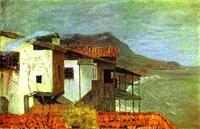
Seashore in Crimea
Isaac Levitan
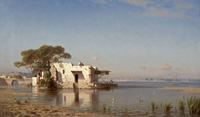
The banks of the Nile
Amédée Rosier
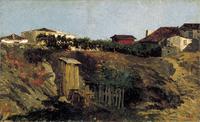
Landscape of Portici
Marià Fortuny
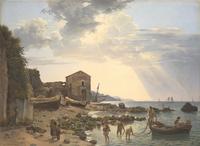
Small harbor in Sorrento overlooking the islands of Ischia and Procida
Sylvester Shchedrin
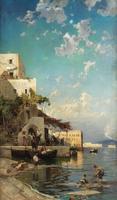
Evening meeting of the fishermen in a tavern of Mergellina near Naples
Hermann David Salomon Corrodi
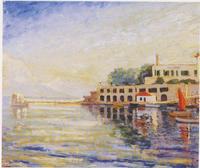
The Harbour at St. Jean Cap Ferrat
Winston Churchill
Paintings in the Milwaukee Art Museum
Ralph Blakelock
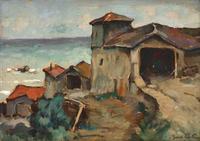
Mangalia Houses
Adam Baltatu
Venetian Canal Scene
Rubens Santoro
Fisherman Village in Brittany
Nicolae Vermont
Seascape
Isaac Levitan
Venetian Fisherman with a Distant View of San Marco, Venice
Martín Rico y Ortega
Μonasteries at Mount Athos
Spyros Papaloukas
The Small cove, Javea
Joaquín Sorolla