Jan Matejko sanatçısının Mieszko II Lambert eseri hakkında uzman analizi
Tarz: Romanticism · Tür: portrait
Expert Art Historical Analysis
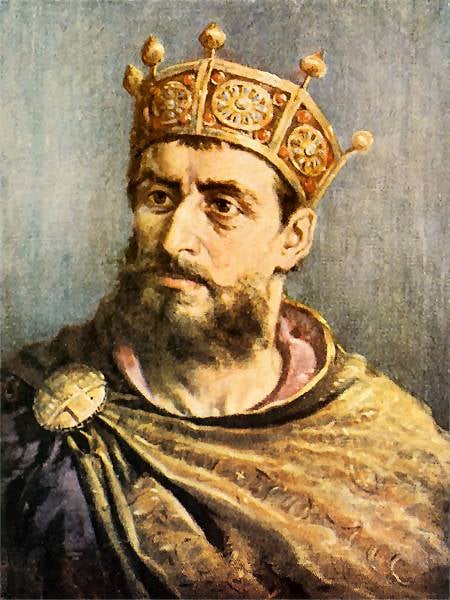
"Mieszko II Lambert" (ca. 1872–1880) by Jan Matejko
Style: Romanticism
Genre: Portrait
Context and Significance within Romanticism
Jan Matejko, the preeminent Polish history painter of the 19th century, worked within the broader European Romantic movement, but his art is distinctly marked by a fervent nationalist and historical consciousness. Romanticism in Poland was not merely an aesthetic impulse; it was a political and cultural tool for preserving national identity after the partitions of Poland (1772–1795). Matejko’s portraits of medieval Polish monarchs served as visual assertions of a sovereign, unbroken lineage.
The subject, Mieszko II Lambert (r. 1025–1034), was the second crowned king of Poland, a ruler whose reign was marked by internal strife and external threats. By choosing this figure, Matejko invokes a period of early Piast dynasty strength, implying that even troubled reigns contributed to Poland’s historical grandeur.
Stylistic and Compositional Features
As a Romantic portrait, Matejko goes beyond mere likeness. He imbues the figure with psychological depth and symbolic gravitas typical of the movement:
- Dramatic chiaroscuro and dark background: The king emerges from a shadowy, undefined space, focusing attention on his face and regalia. This technique heightens the sense of historical remoteness and melancholy—a Romantic preoccupation with the passage of time and the fragility of power.
- Expressive, introspective gaze: Mieszko II is not shown in heroic action but in a moment of quiet contemplation or burden. His facial features convey intelligence, weariness, and the weight of kingship—an emotional realism that Romanticism prized over idealized classicism.
- Meticulous historical detail: Matejko was known for his archaeological accuracy. The crown, orb, and richly embroidered robes are rendered with precision, evoking the ceremonial splendor of the Middle Ages. Yet the overall mood remains somber, reflecting the Romantic fascination with national tragedy and resilience.
Significance within Matejko’s Oeuvre
This portrait forms part of Matejko’s larger project—the visual chronicle of Poland’s kings—which he executed with both fidelity to sources and Romantic dramatization. It is significant because:
- It constructs a national identity: For a partitioned nation without a political state, Matejko’s portraits acted as a substitute for a unified national narrative. Each king became a symbol of continuity, reminding viewers that Poland’s history was not erased.
- It blends portraiture with history painting: Although classified as a portrait, the work functions as a history painting. The figure is not an individual subject but an embodiment of an era—its triumphs and crises. This synthesis is a hallmark of Romantic historicism.
- It demonstrates Matejko’s technical mastery: The painting showcases his skill in rendering textures (fur, metal, brocade) and in capturing a psychological state that aligns with Romantic notions of the sublime and the tragic.
Conclusion
“Mieszko II Lambert” is significant as a Romantic historical portrait that transcends mere depiction to become a patriotic symbol. Through its evocative mood, precise period detail, and emotional depth, it not only commemorates a medieval ruler but also asserts the enduring spirit of a nation under political duress—a central theme of Polish Romanticism.
Görsel olarak benzer
İlişkili kompozisyon ve renk paletine sahip 20 eser
Mieszko II Lambert
Jan Matejko
Casimir the Restorer
Jan Matejko
Casimir the Great
Jan Matejko
Louis of Anjou
Jan Matejko
Wladyslaw Herman
Jan Matejko
Mieszko I of Poland
Jan Matejko
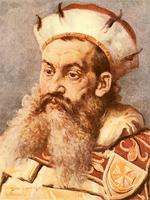
Henry the Bearded
Jan Matejko
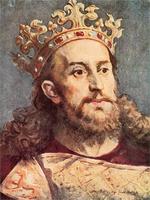
Wenceslaus II
Jan Matejko
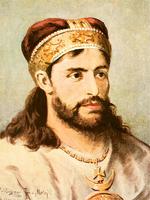
Casimir the Just
Jan Matejko
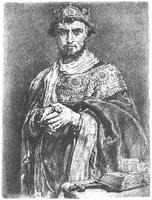
Kazimierz I Odnowiciel
Jan Matejko
Kazimierz III Wielki
Jan Matejko
Henryk Brodaty
Jan Matejko
Stefan Batory
Jan Matejko
Louis the Hungarian
Jan Matejko
Wenceslaus II
Jan Matejko
Portrait of Doge Andrea Gritti
Titian
Mieszko
Jan Matejko
Sigismund III Vasa
Jan Matejko
Boleslaw the Brave
Jan Matejko
Wladyslaw Herman
Jan Matejko