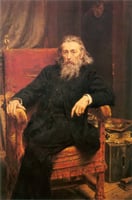
Serafiński
Analisi esperta di Serafiński di Jan Matejko
Stile: Academicism, Romanticism · Genere: portrait
Expert Analysis of "Serafiński" by Jan Matejko
This portrait, titled Serafiński, offers a compelling intersection of Academicism and Romanticism—two stylistic currents that define much of Jan Matejko’s oeuvre. As a portrait, it stands out within the artist’s predominantly historical and monumental canon, revealing his ability to distill grand narrative sensibilities into the intimate study of an individual.
Academic Significance:
True to Academicism, the work exhibits rigorous draftsmanship, balanced composition, and a polished finish. Matejko’s command of chiaroscuro and precise modeling of the sitter’s features underscores the academic ideal of technical mastery. The careful rendering of textures—whether fabric, skin, or hair—demonstrates the artist’s adherence to the established principles of the École des Beaux-Arts tradition, where clarity of form and fidelity to nature were paramount.
Romantic Influence:
Yet the portrait is not merely a clinical likeness. Matejko infuses it with a Romantic sensibility through psychological depth and expressive intensity. The sitter’s gaze, the subtle tension in the pose, and the dramatic interplay of light and shadow evoke an inner life beyond mere documentation. This aligns with Romanticism’s focus on emotion, individuality, and the sublime—even within the constrained genre of portraiture. The background, often dark or suggestive rather than explicit, further isolates the figure and amplifies a sense of drama and introspection.
Significance within Matejko’s Work and the Period:
While Matejko is celebrated chiefly for epic history paintings like The Battle of Grunwald, Serafiński demonstrates his versatility and his adherence to academic tradition while channeling Romantic expressiveness. This portrait bridges the public, patriotic narratives of his large-scale works with the private, human story of a single subject. It exemplifies how Polish Academicism of the 19th century could absorb Romantic emotionality without abandoning formal rigor, making Serafiński a vital example of the synthesis that defined much of Central European art of the era.
In summary, Serafiński is significant as a masterful portrait that fuses the precision of Academicism with the soulfulness of Romanticism, highlighting Matejko’s ability to convey character and narrative within the most intimate of genres.
Visivamente simili
20 opere con composizione e palette affini
Portrait of the artist's eldest brother J. P. Bloch
Carl Bloch
Self Portrait
Johan Erik Lindh
Self Portrait
Edgar Degas
Poles, Alexander A.
Vasily Tropinin
Portrait of Edgar Germain Hilaire Degas
Giovanni Boldini
Self-portrait
Edgar Degas
Portrait of director and shipowner Gustav Johannes Sommer
Carl Bloch
Portrait of Ary Prins
Raden Saleh
William Ewart Gladstone
George Frederick Watts
John T. Alston (1780–1857), Provost of Glasgow (1820–1821)
John Graham-Gilbert
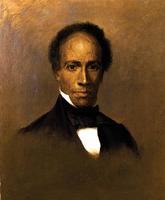
Edward James Roye
Thomas Sully
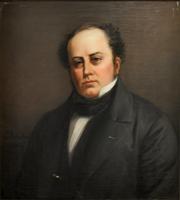
Frees Emil Horneman
Elisabeth Jerichau-Baumann
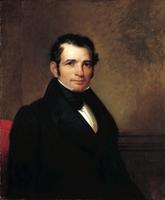
Portrait of Luman Reed
Asher Brown Durand
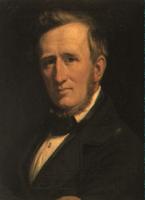
Portrait of State Councilor Edvard Collin
Wilhelm Marstrand
Retrato caballero
Antonio Maria Esquivel
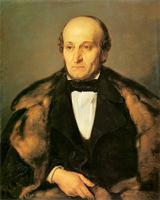
Maurizio Parys
Jan Matejko
Vicente Asuero y Cortázar
Eduardo Rosales
John Frederick William Herschel
Christian Albrecht Jensen
Portrait of a Cactus Collector
Jean-Leon Gerome
Tuchkov Alexey (the hero of 1812, the father of the Decembrist Alexei Tuchkova)
Vasily Tropinin