Theo van Doesburg の Simultaneous Composition XXIV の専門的な分析
スタイル:Neoplasticism · ジャンル:abstract
Expert Analysis: Simultaneous Composition XXIV by Theo van Doesburg
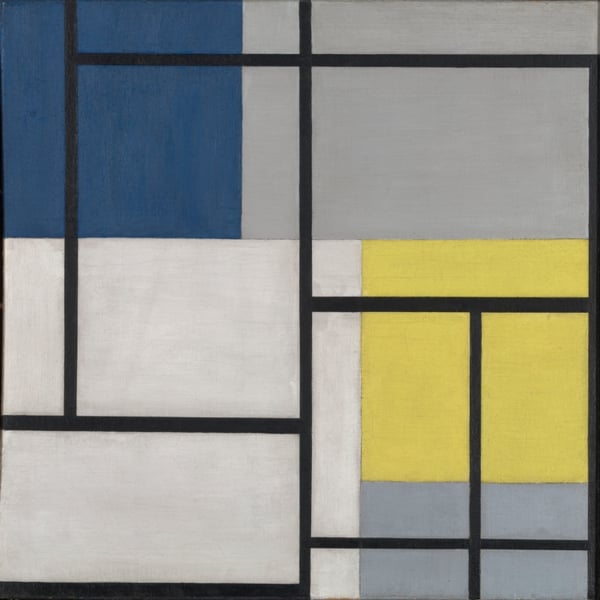
Theo van Doesburg’s Simultaneous Composition XXIV (c. 1929–1931) is a pivotal work within the Neoplasticist (De Stijl) movement, marking a decisive break from the strict orthodoxy of Piet Mondrian’s earlier principles. While Neoplasticism is defined by the reduction of form to straight lines, primary colors (red, blue, yellow), and non-colors (black, white, gray), van Doesburg introduced a radical departure in this series: the diagonal axis.
In this abstract composition, the canvas is no longer anchored to the horizontal-vertical grid. Instead, van Doesburg rotates the entire geometric structure by 45 degrees, creating a dynamic, tilted grid that suggests motion and tension. The "simultaneous" in the title refers to the artist’s ambition to capture multiple spatial and temporal viewpoints in a single plane—a concept borrowed from the Italian Futurists and Russian Suprematists but here translated into the rigorous language of Neoplasticism. Planes of primary color intersect with black lines, but the diagonal orientation breaks the static equilibrium of earlier De Stijl works, introducing a sense of centrifugal force and optical instability.
The significance of Simultaneous Composition XXIV lies in its championing of Elementarism, a term van Doesburg coined to defend his diagonal compositions against Mondrian’s objections. For van Doesburg, the diagonal represented a more universal, dynamic expression of harmony—one that could accommodate the rhythms of modern life, such as speed, jazz, and the machine age. This work thus embodies a key theoretical split in De Stijl history, showing how even within the most rigorous abstraction, innovation can emerge through a simple shift in orientation. It remains a landmark example of how geometric abstraction can achieve both order and vitality.
視覚的に類似
構図やパレットが近い作品 20 件
Tableau 3 with Orange -Red, Yellow, Black, Blue and Gray
Piet Mondrian
Composition néo-plastique 5a
Cesar Domela
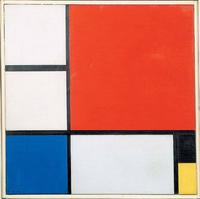
Composition 2
Piet Mondrian
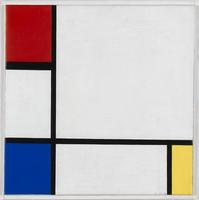
Composition No. IV, with Red, Blue and Yellow
Piet Mondrian
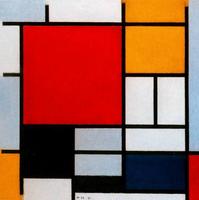
Composition with Large Red Plane, Yellow, Black, Gray and Blue
Piet Mondrian
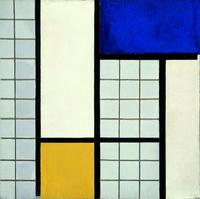
Composition with half values
Theo van Doesburg
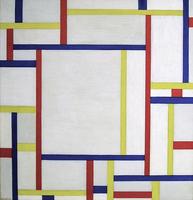
Painting (white)
Fritz Glarner
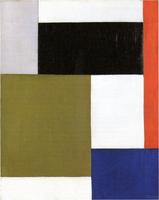
Composition
Theo van Doesburg
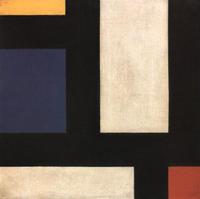
Counter Composition IV
Theo van Doesburg
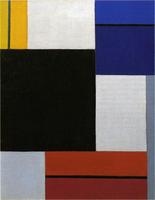
Composition XXI
Theo van Doesburg
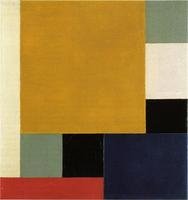
Composition XXII
Theo van Doesburg
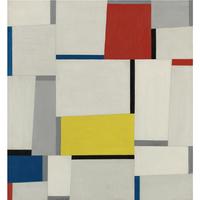
Relational Painting #65
Fritz Glarner
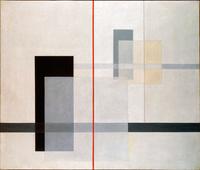
K VII
Laszlo Moholy-Nagy
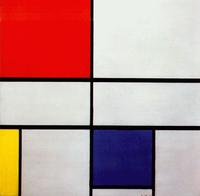
Composition C (No.III) with Red, Yellow and Blue
Piet Mondrian
Composition XX
Theo van Doesburg
Costruzione Geometrica
Joaquin Torres Garcia
Simultaneous Counter Composition
Theo van Doesburg
Tableau No. IV - Lozenge Composition
Piet Mondrian
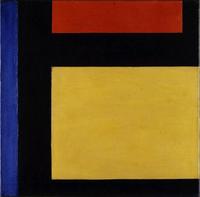
Counter composition X
Theo van Doesburg
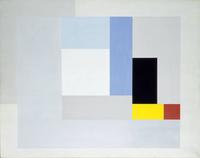
June 1937 (painting)
Ben Nicholson