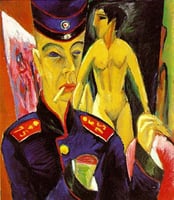
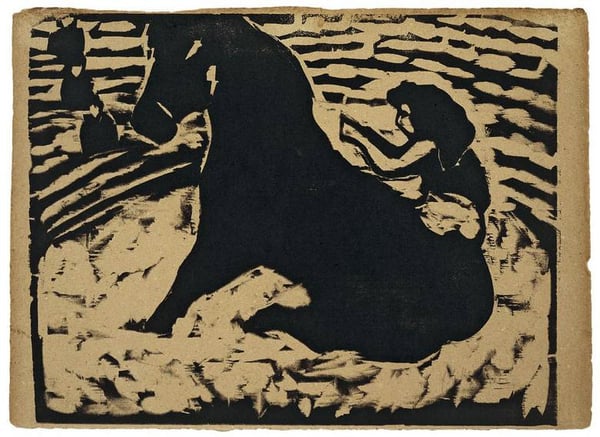
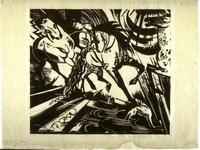
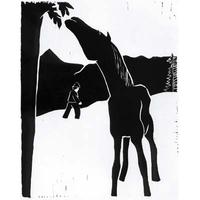
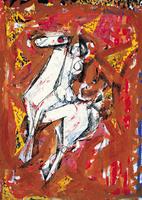
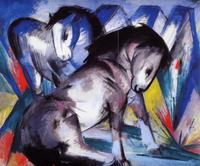
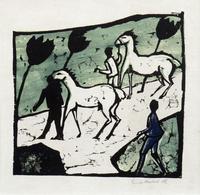
The significance of Ernst Ludwig Kirchner’s Equestrienne lies in its embodiment of key Expressionist principles through the lens of genre painting. By depicting a circus horsewoman—a common subject of modern urban life—Kirchner transforms a mundane scene into a vehicle for heightened emotional and psychological intensity. The work exemplifies the Expressionist rejection of naturalistic representation in favor of distorted forms, bold color contrasts, and dynamic, often jarring compositions that convey inner turmoil or vitality. As a founding member of the Die Brücke group, Kirchner used such genre scenes to reflect the alienation, energy, and raw sensation of early 20th‑century urban experience. Equestrienne thus stands as a quintessential example of how Expressionism elevated everyday moments into powerful expressions of subjective reality, marking a deliberate break from Impressionism and academic traditions.