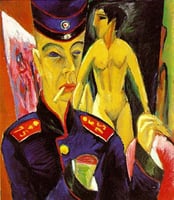
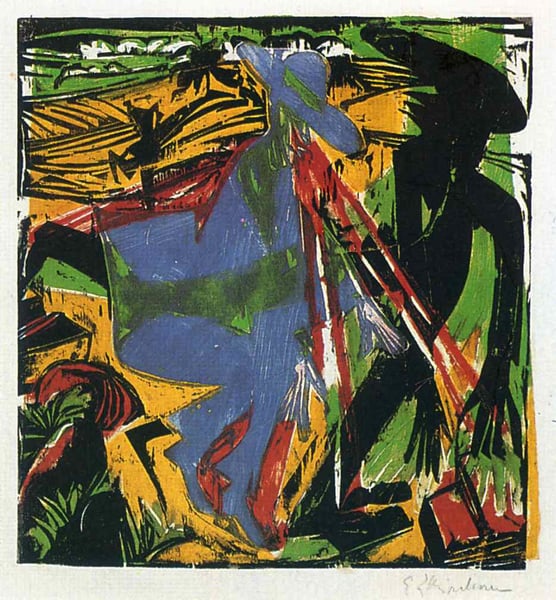
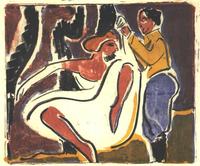
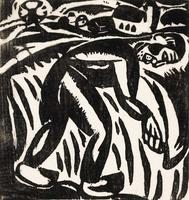
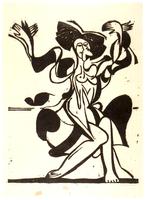
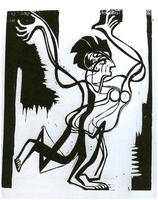
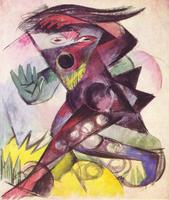
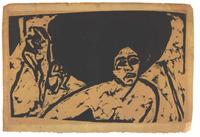
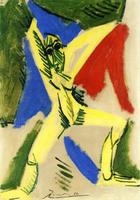
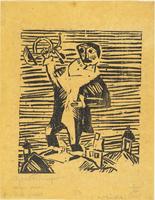
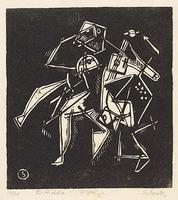
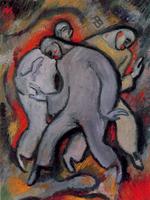
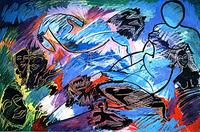
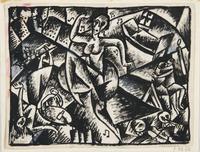
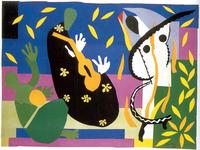
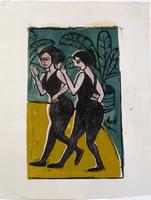
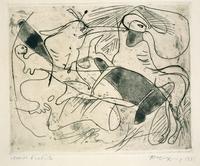
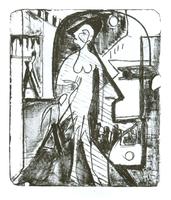
Ernst Ludwig Kirchner’s Schlemihls Entcounter with the Shadow is a striking example of German Expressionism in a literary painting. Based on Adelbert von Chamisso’s 1814 novella Peter Schlemihl—in which a man sells his shadow for a bottomless purse—the work taps into themes of identity, alienation, and the loss of one’s essence. As a leading figure of the Die Brücke group, Kirchner uses the Expressionist hallmarks of distorted forms, jarring colors, and agitated brushwork to externalize psychological turmoil. The shadow itself becomes a visceral, almost spectral presence, while Schlemihl’s angular, flattened silhouette reflects the movement’s rejection of naturalistic representation in favor of emotional intensity. The painting’s significance lies in how it bridges literary symbolism with the raw, subjective vision of Expressionism, transforming a folkloric tale into a modern allegory of fragmentation and urban anxiety—themes central to the era’s avant-garde.