Analisi esperta di Self-portrait di Ernst Ludwig Kirchner
Stile: Expressionism · Genere: self-portrait
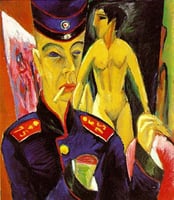
Based solely on the provided facts, the significance of Ernst Ludwig Kirchner's "Self-portrait" lies in its embodiment of the core tenets of Expressionism, a movement in which Kirchner was a founding member of the influential group Die Brücke (The Bridge). As a self-portrait in this style, the work is not a literal record of the artist's appearance but a vehicle for raw emotional and psychological expression.
Key aspects of its significance include:
-
Subjective Experience over Naturalism: True to Expressionist ideals, the portrait prioritizes Kirchner's inner state—anxiety, alienation, or creative intensity—over realistic proportions or coloring. The genre of the self-portrait becomes a powerful tool for exploring the artist's own subjective reality, a hallmark of the movement's break from Impressionism and academic tradition.
-
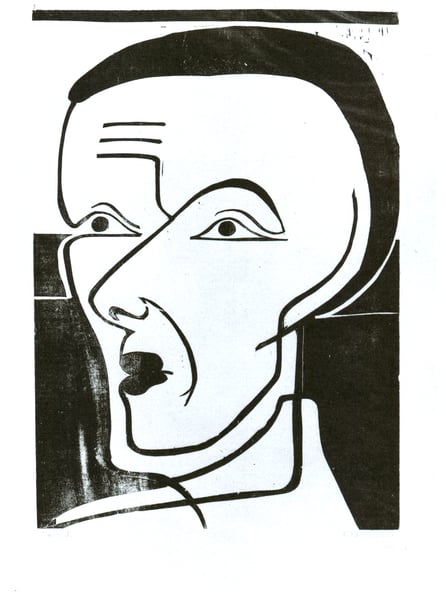
Emotional Intensity Through Form: Expressionist portraits are characterized by distorted features, angular lines, and jarring color contrasts. While we cannot describe specific colors or brushstrokes without further data, the style itself dictates that these formal elements are deliberately exaggerated to provoke a visceral response, signaling a profound shift in early 20th-century art toward psychological truth.
-
Document of the "Brücke" Aesthetic: As a work by Kirchner, this self-portrait represents the radical, primitivist, and anti-bourgeois ethos of Die Brücke. The artist often used self-portraits to assert his identity as a modern, tormented creator—a recurring theme that made these works iconic within the German Expressionist canon.
In short, the work is significant because it condenses the revolutionary aims of Expressionism into a single, intensely personal image, using the artist's own face as a canvas to reject conventional beauty in favor of emotional authenticity.
Genere
Stile
Visivamente simili
20 opere con composizione e palette affini
Two Heads Looking at Each Other
Ernst Ludwig Kirchner
Scheiber Hugó, Rérfi Portré
Scheiber Hugó
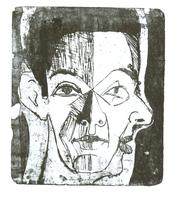
Study of a Head
Ernst Ludwig Kirchner
Portrait of Vsevolod Meyerhold
Nikolai Kulbin
Portrait of a man
Theo van Doesburg
Profile
Vilen Barsky
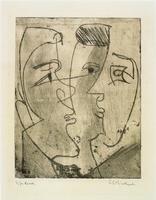
Three Faces
Ernst Ludwig Kirchner
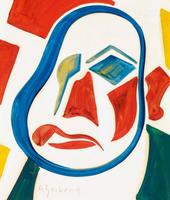
Scheiber Hugó, Önarckép 1928
Scheiber Hugó
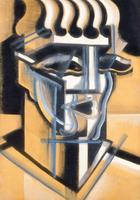
Scheiber Hugó Férfifej,
Scheiber Hugó
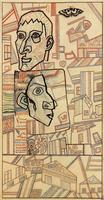
Hunger
Pavel Filonov
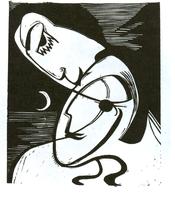
The Kiss
Ernst Ludwig Kirchner
Nina
Chaldin Alex
Homenaje a Tania nº 1
Oswaldo Guayasamin
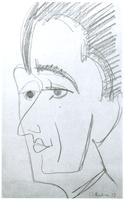
Portrait
Ernst Ludwig Kirchner
Large Heads (2 Heads I)
Christian Rohlfs
Crying woman
Pablo Picasso
Head of a man with hat
Pablo Picasso
Self Portrait II
Jean Dubuffet
Reunión en el Pentágono (Detail)
Oswaldo Guayasamin
Untitled
Mikey William Cheung