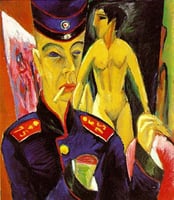
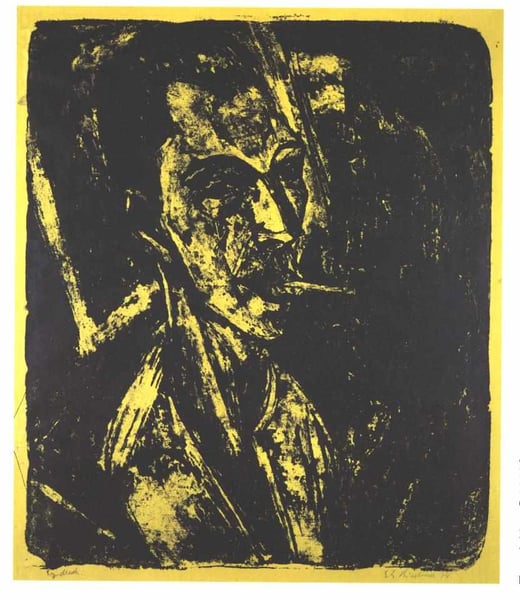
Self-portrait with Cigarette
Ernst Ludwig Kirchner sanatçısının Self-portrait with Cigarette eseri hakkında uzman analizi
Tarz: Expressionism · Tür: self-portrait
Expert Analysis of "Self-portrait with Cigarette" (c. 1915) by Ernst Ludwig Kirchner
Ernst Ludwig Kirchner’s Self-portrait with Cigarette is a quintessential work of German Expressionism, executed during a period of intense personal and societal upheaval. As a founding member of the Dresden-based group Die Brücke (The Bridge), Kirchner sought to break free from academic naturalism and channel raw emotional experience onto canvas. This self-portrait embodies that mission with striking immediacy.
Significance within the Expressionist Movement:
- Psychological Intensity: The painting is not a literal likeness but a projection of inner turmoil. Kirchner’s gaunt face, sharp angular features, and hollowed eyes convey anxiety, alienation, and a sense of modern dislocation—themes central to Expressionist art. The cigarette, held with a nervous gesture, becomes a symbol of fleeting distraction and restless energy.
- Color and Brushwork: Kirchner uses jarring, non-naturalistic hues: sickly greens, acidic yellows, and deep blues. Broad, slashing brushstrokes and distorted perspective (the head tilting asymmetrically, the background flattened) reject Renaissance illusionism and instead evoke the artist’s fractured psyche. This approach directly influenced later movements like Neo-Expressionism.
- Autobiographical Context: Painted around 1915, during World War I, Kirchner suffered from physical collapse and nervous breakdown after being conscripted. This self-portrait captures his fragile state, prefiguring the “degenerate” label the Nazis would later affix to his work. The cigarette also alludes to the bohemian, café culture of early-20th-century Berlin.
Art-Historical Legacy:
The painting stands as a landmark of self-examination in modern art. Unlike earlier self-portraits that aimed for idealized representation or objective record, Kirchner’s work turns the genre into a vehicle for subjective truth. It challenges viewers to confront the artist’s vulnerability—and by extension, the anxieties of a generation on the brink of modernity. The combination of raw expression, simplified forms, and symbolic color makes Self-portrait with Cigarette a definitive example of how Expressionism reshaped portraiture into a mirror of the soul.
Görsel olarak benzer
İlişkili kompozisyon ve renk paletine sahip 20 eser
Grief. Head. Boquilha
Amadeo de Souza-Cardoso
Scheiber Hugó , Cigarettázó Férfi
Scheiber Hugó
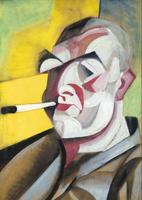
Scheiber Hugó, Kubista Önarckép
Scheiber Hugó
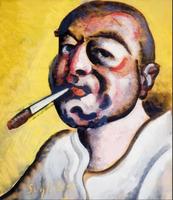
Scheiber Hugó, Cigarettázó Önarckép
Scheiber Hugó
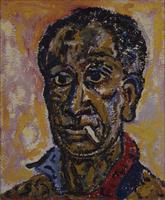
Self Portrait
Beauford Delaney
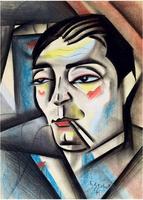
Scheiber Hugó, Cigarettázó Férfi
Scheiber Hugó
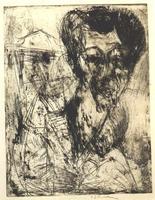
Self-portrait
Ernst Ludwig Kirchner
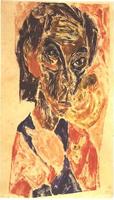
Head of a Sick Man
Ernst Ludwig Kirchner
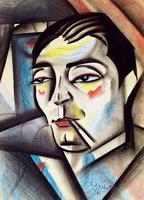
Scheiber Hugó, Cigarettázó Férfi
Scheiber Hugó
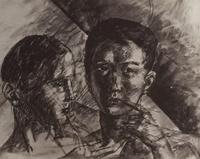
Head of boys
Kuzma Petrov-Vodkin
Kondor Béla, Férfi Fej Barna Háttérben
Kondor Béla
Scheiber Hugó, Cigarettázó Férfi
Scheiber Hugó
Man with Hat
Chaim Soutine
Self-Portrait
Endre Balint
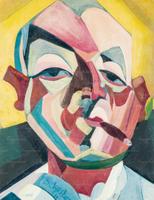
Scheiber Hugó Önarckép
Scheiber Hugó
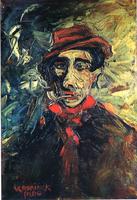
Man Smoking a Pipe
Maurice de Vlaminck
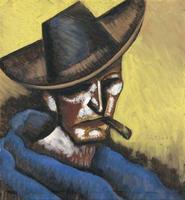
Scheiber Hugó, Kalapos Férfi, ,.
Scheiber Hugó
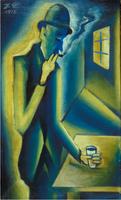
Piják
Josef Capek
Berény Róbert , Önarckép
Berény Róbert
Kondor Béla, Keresztelő Szt János
Kondor Béla