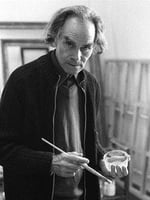
Expert analysis of Endre Balint’s Self-Portrait
Style: Expressionism · Genre: self-portrait
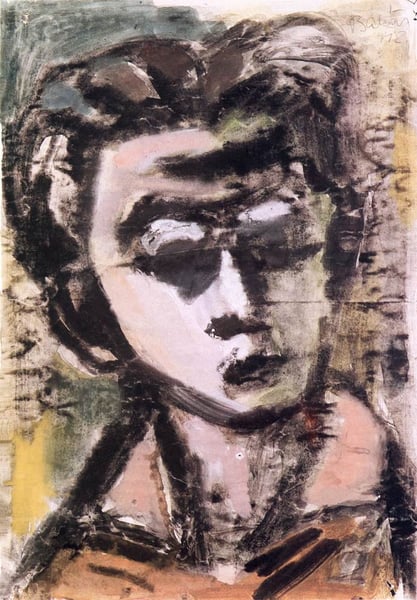
Expert Analysis: "Self-Portrait" by Endre Balint
This work is a compelling example of Expressionist self-portraiture, a genre that prioritizes psychological depth over physical likeness. Balint’s piece gains significance through its alignment with the core Expressionist mission: to convey the artist’s inner emotional state rather than objective reality. As a self-portrait, it becomes a direct window into the artist's psyche—a hallmark of the movement’s emphasis on subjective experience.
Within the Expressionist style, Balint likely employs distorted features, heightened color contrasts, and emphatic brushwork to evoke tension, alienation, or introspection. The work’s importance lies in how it captures the modernist shift toward introspection, making the artist both subject and object of his own existential inquiry. This self-portrait stands as a testament to the artist’s role as a conduit for raw emotion, situating Balint within the broader Expressionist tradition that sought to dismantle conventional representation in favor of emotional truth.
Visually similar
20 works with related composition and palette
Self-Portrait With Black Mouth,
Helene Schjerfbeck
Self-portrait in White
Istvan Ilosvai Varga
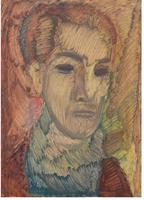
Self Portrait
Valerii Lamakh
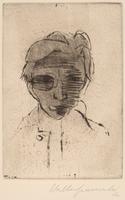
Gloomy Face, Self-portrait
Walter Gramatté
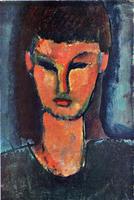
Young Woman
Amedeo Modigliani
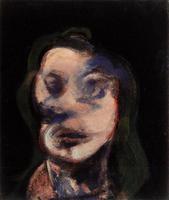
Study for a Portrait (looking right)
Francis Bacon
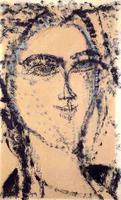
Woman's Head
Amedeo Modigliani
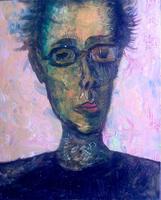
Self-portrait
Damian Kozi
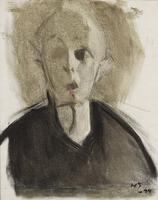
Self Portrait With Red Spot
Helene Schjerfbeck
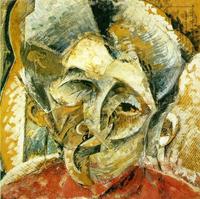
Dynamism of a Woman's Head
Umberto Boccioni
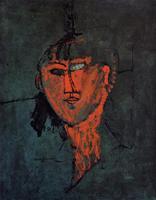
A Head
Amedeo Modigliani
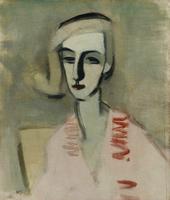
The Teacher
Helene Schjerfbeck
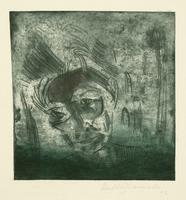
Etching from the series "The Face"
Walter Gramatté
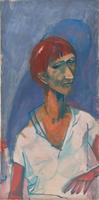
Kondor Béla, Fehér Blúzos Lány
Kondor Béla
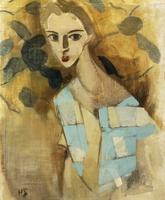
Girl from Eydtkuhnen II
Helene Schjerfbeck
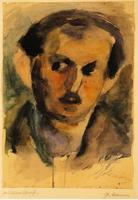
Portrait of a man
George Bouzianis
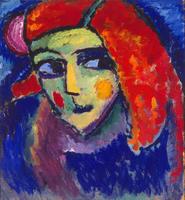
Pale Woman with Red Hair
Alexej von Jawlensky
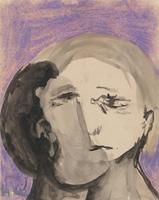
Sin título
Joy Hester
Head in blue
Alexej von Jawlensky
Self Portrait with Brown Background
Egon Schiele