Analisi esperta di Ice Flowers di Raphael Kirchner
Stile: Art Nouveau (Modern) · Genere: genre painting
Expert Analysis of "Ice Flowers" by Raphael Kirchner
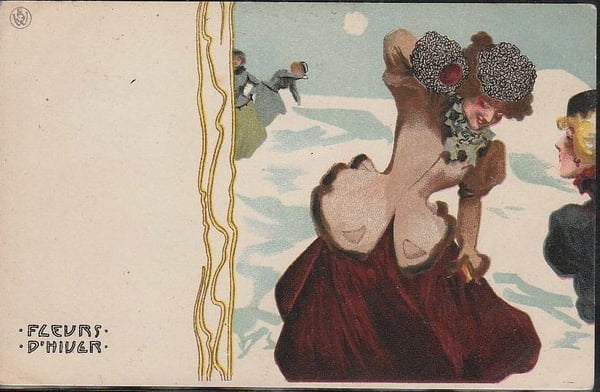
Raphael Kirchner’s Ice Flowers is a quintessential example of Art Nouveau’s fusion of natural ornament and idealized femininity, yet it also reveals a subtle tension between the movement’s high-art aspirations and the artist’s commercially oriented output. Kirchner, best known for his glamorous postcard illustrations and “pin-up” imagery, brought a distinct modernity to the genre painting tradition by elevating a seemingly simple scene—a woman amid wintry flora—into a decorative fantasy.
Significance within Art Nouveau and genre painting:
-
Stylistic hallmarks: Kirchner employs the characteristic sinuous, whiplash lines of Art Nouveau, visible in the curling tendrils of the ice flowers and the flowing contours of the woman’s gown. The composition is flattened, with pattern dominating perspective, echoing the movement’s embrace of two-dimensional decorative design. The palette likely balances cool, icy blues and whites with warm flesh tones, creating a visual harmony that is both ethereal and tactile.
-
Genre painting reimagined: Traditionally, genre painting depicted scenes of everyday life. Here, Kirchner subverts that convention by placing his subject in a fantastical, ornamental winter landscape. The “genre” becomes a vehicle for escapism—a dreamlike portrait that merges the human figure with nature, a core Art Nouveau ideal. The woman is not merely a figure in a setting; she is part of the organic, frozen growth, her hair or dress perhaps flowing into the ice formations.
-
Commercial versus fine art: Kirchner’s success in mass-produced postcards and calendars placed him at the fringes of high art, but Ice Flowers exemplifies how Art Nouveau’s decorative language could thrive in popular culture. The work’s significance lies in its accessibility: it brought the aesthetic of sinuous line and floral motif to a broad audience, democratizing the style while retaining its elegance. This cross-pollination between fine art and ephemeral illustration is a defining characteristic of the late Art Nouveau period.
-
Symbolism of ice and flowers: The title itself suggests a paradox—life (flowers) in a state of suspended animation (ice). This duality resonates with Art Nouveau’s interest in the cycle of life, decay, and transformation. The woman, often a symbol of beauty and transience in the movement, is frozen in an ideal moment, much like Kirchner’s idealized, timeless postcard beauties. The ice flowers could also allude to the fragility of beauty, a theme that links the work to Symbolist undercurrents within Art Nouveau.
In summary, Ice Flowers is significant not only as a technically accomplished Art Nouveau piece but as a bridge between the movement’s high-art aspirations and its popular, commercial manifestations. Kirchner’s ability to blend genre painting with decorative fantasy underscores the era’s redefinition of beauty—a beauty that is organic, ornamental, and accessible to all.
Visivamente simili
20 opere con composizione e palette affini
Ice Flowers
Raphael Kirchner
Parfums
Raphael Kirchner
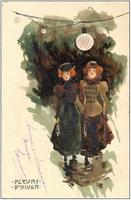
Ice Flowers
Raphael Kirchner
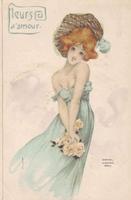
Love Flowers
Raphael Kirchner
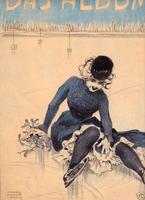
Unknown
Raphael Kirchner
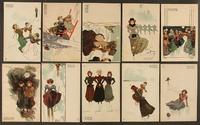
Ice Flowers
Raphael Kirchner
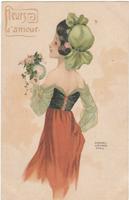
Love Flowers
Raphael Kirchner
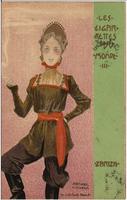
Cigarettes of the World
Raphael Kirchner
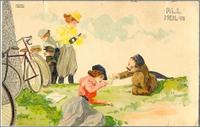
All healing
Raphael Kirchner
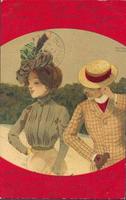
Couples between red borders
Raphael Kirchner
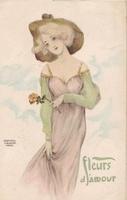
Love Flowers
Raphael Kirchner
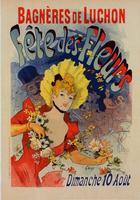
Bagnères de Luchon, Fêtes des Fleurs
Jules Cheret
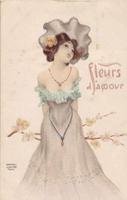
Love Flowers
Raphael Kirchner
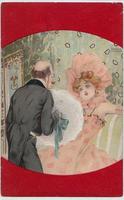
Couples between red borders
Raphael Kirchner
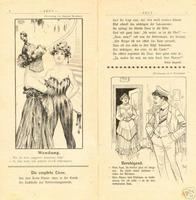
Unknown
Raphael Kirchner
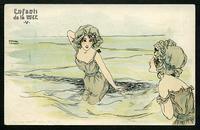
Boys and girls at sea
Raphael Kirchner
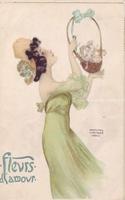
Love Flowers
Raphael Kirchner
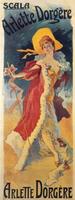
Arlette Dorgère
Jules Cheret
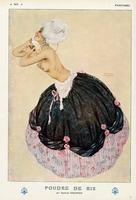
Powder of Ris
Raphael Kirchner
Seducer
Sergey Solomko