Expert Analysis of Leda and the Swan by Raphael Kirchner
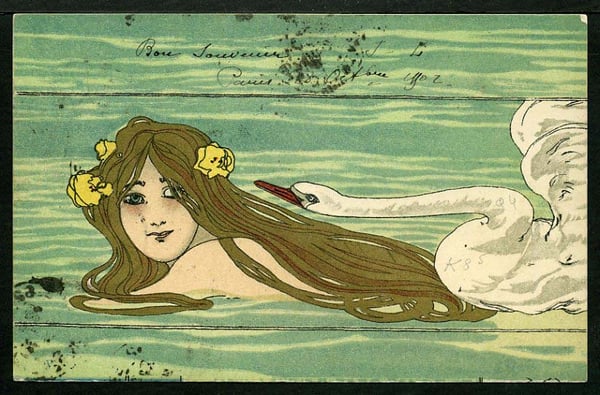
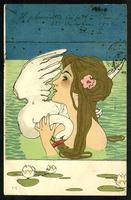
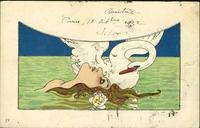
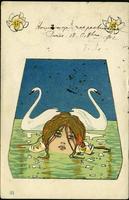
As an Art Nouveau mythological painting, Kirchner’s Leda and the Swan embodies the movement’s hallmark synthesis of organic ornament and sensual elegance. The work reinterprets the classical myth of Leda’s union with Zeus (disguised as a swan) through the lens of modern decorative refinement.
Significance within Art Nouveau:
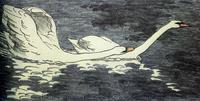
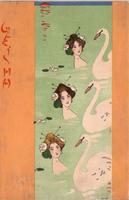
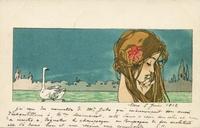
- Curvilinear design: The composition likely emphasizes flowing, sinuous lines—characteristic of Art Nouveau—in both Leda’s hair, drapery, and the swan’s neck, creating a rhythmic unity that blurs figure and background.
- Decorative sensuality: The subject allows Kirchner to merge mythological narrative with the movement’s fascination for the female form as an ornamental motif, rendering Leda as both a classical heroine and a modern femme fatale of stylized grace.
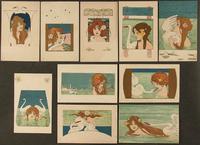
- Period innovation: By reimagining an ancient, often erotically charged story within Art Nouveau’s flat, patterned aesthetics, Kirchner demonstrates how the style recast traditional themes as sophisticated, contemporary visual poetry—prioritizing surface beauty and symbolic form over academic naturalism.
This work stands as a testament to Art Nouveau’s ability to transform mythological convention into a fresh, decorative language that appealed to fin-de-siècle tastes for elegance and exotic allure.