Expertenanalyse zu Raphael Kirchners Leda and the Swan
Stil: Art Nouveau (Modern) · Genre: mythological painting
Expert Art Historical Analysis: "Leda and the Swan" by Raphael Kirchner
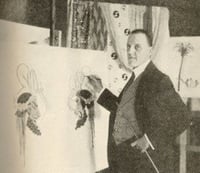
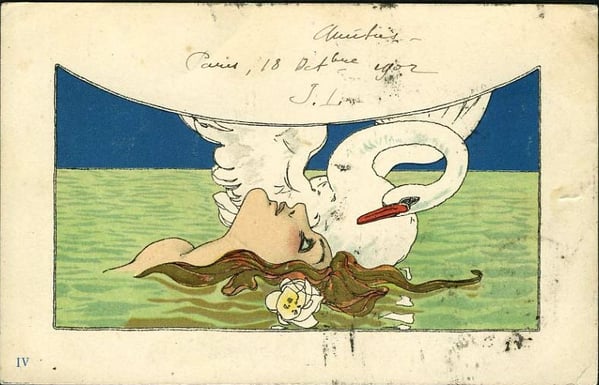
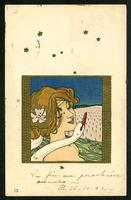
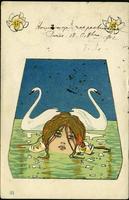
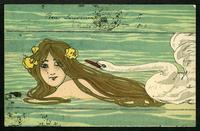
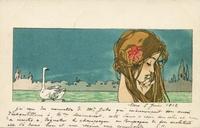
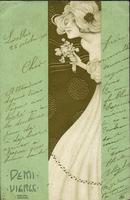
As an Art Nouveau mythological painting, Raphael Kirchner's "Leda and the Swan" embodies the movement’s core preoccupations: the fusion of natural forms with decorative elegance, the celebration of feminine beauty, and a refined sensuality that elevates classical myth into a modern visual language. Within the Art Nouveau period (roughly 1890–1910), artists sought to break from historicism by embracing organic, flowing lines—often inspired by plant tendrils, insect wings, and the sinuous curves of the female body. Kirchner, a prominent illustrator and postcard artist, was particularly known for his idealized, graceful figures that appealed to a wide audience.
Significance within Art Nouveau:
-
Integration of Myth and Modern Decoration: The mythological subject of Leda (the Spartan queen seduced by Zeus in the form of a swan) was a popular vehicle for Art Nouveau’s fascination with eroticism and nature. Kirchner’s treatment likely emphasizes the harmonious, decorative interplay between human and animal forms—the swan’s curved neck echoing the woman’s posture, and both merging into a rhythmic, ornamental whole. This reflects the movement’s goal of creating total works of art where every line contributes to an overall aesthetic experience.
-
Celebration of the Feminine Ideal: Art Nouveau frequently portrayed women as ethereal, sensual beings—often intertwined with flora or fauna. Kirchner’s Leda would exemplify this by combining mythological allure with a contemporary sense of chic, elegant refinement. Her expression, pose, and flowing garments (or lack thereof) would be rendered with the hallmark Art Nouveau linear precision, emphasizing beauty over narrative drama.
-
Commercial and Popular Appeal: Unlike some high-art Art Nouveau practitioners, Kirchner worked extensively in print media, including postcards and calendars. His "Leda and the Swan" thus represents the democratization of the style—making mythological erotica accessible to a broad public while maintaining sophisticated design. This piece would have been significant in spreading Art Nouveau’s visual vocabulary beyond galleries into everyday life.
Conclusion: Kirchner’s "Leda and the Swan" is a quintessential example of Art Nouveau’s synthesis of classical mythology and modern decorative art. Its significance lies in how it translates an ancient story into a sleek, sensual, and commercially viable image, capturing the movement’s love for curvilinear beauty, the feminine mystique, and the marriage of art with design.
Visuell ähnlich
20 Werke mit ähnlicher Komposition und Farbpalette
Leda and the Swan
Raphael Kirchner
Leda and the Swan
Raphael Kirchner
Leda and the Swan
Raphael Kirchner
Leda and the Swan
Raphael Kirchner
Leda and the Swan
Raphael Kirchner
Leda and the Swan
Raphael Kirchner
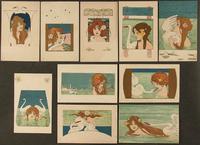
Leda and the Swan
Raphael Kirchner
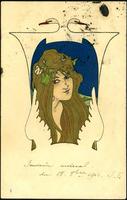
Leda and the Swan
Raphael Kirchner
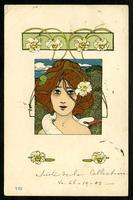
Leda and the Swan
Raphael Kirchner
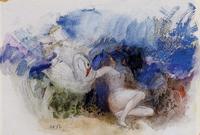
Leda and the Swan
Odilon Redon
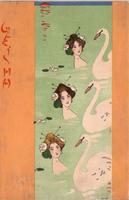
Geisha
Raphael Kirchner
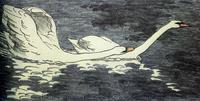
Farbiger Holzschnitt Zwei Schwäne
Otto Eckmann
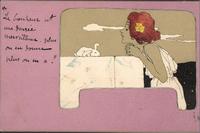
Girls with purple surrounds
Raphael Kirchner
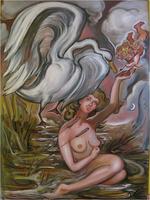
Leda col cigno
Gabino Amaya Cacho

Give me a sign
Clovis Trouille
Untitled
Jindrich Styrsky
Fables
Raphael Kirchner
Leda Sleeping
Paul-Albert Besnard
Leda
Maximilian Pirner
A half of a Virgin
Raphael Kirchner