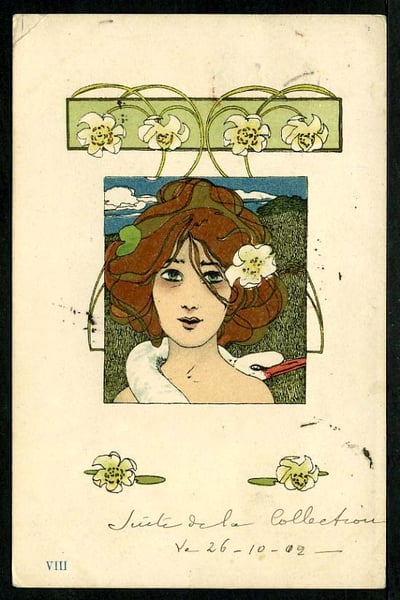
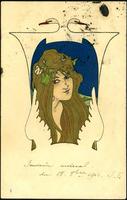
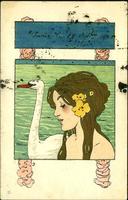
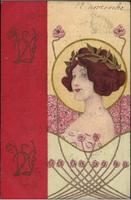
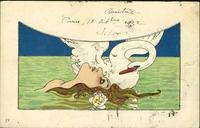
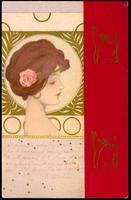
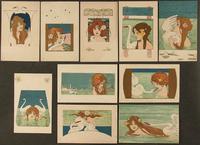
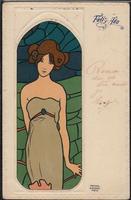
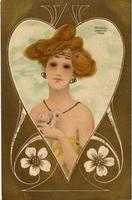
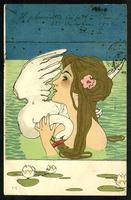
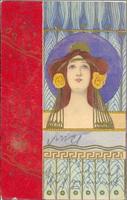
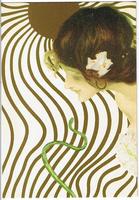
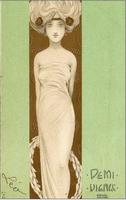
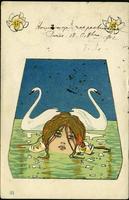
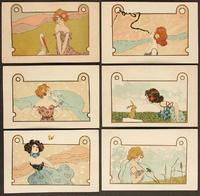
The significance of Raphael Kirchner's Leda and the Swan lies in its fusion of a classical mythological subject with the modern decorative sensibility of Art Nouveau. As a mythological painting, it draws on the ancient story of Leda’s encounter with Zeus in swan form—a theme long associated with beauty, metamorphosis, and sensual mystery. However, Kirchner re-imagines this timeless narrative through the lens of Art Nouveau, a style that prized organic, flowing lines, elegant ornamentation, and the integration of fine art with everyday design. The work’s importance within the period stems from its ability to transpose a canonical myth into the sinuous, stylized visual language of Modernism: the swan’s curved neck, the rhythmic drapery, and the decorative interplay of figure and background all embody Art Nouveau’s hallmark emphasis on harmony, natural forms, and sophisticated linear grace. By doing so, Kirchner’s piece demonstrates how mythological motifs were revitalized for a modern audience, blending narrative tradition with the avant-garde aesthetic of the turn of the century.