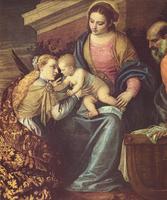
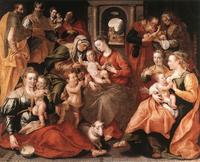
Expert Analysis: "Virgin and Child with Saints Jerome, Peter, Clare and Francis" by Lorenzo Lotto
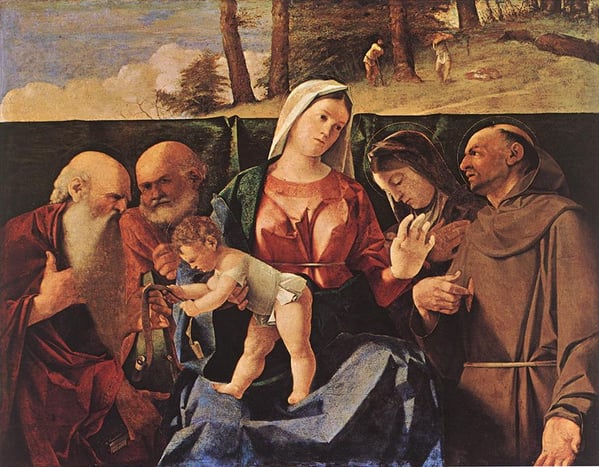
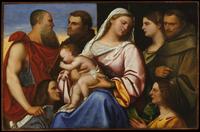
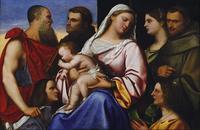
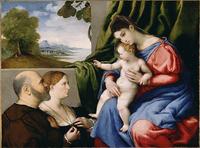
This religious painting, executed in the High Renaissance style, showcases Lorenzo Lotto’s distinctive departure from the serene idealism of his peers. While the period is marked by balanced compositions and classical harmony, Lotto infuses the scene with psychological intensity and idiosyncratic detail, making the work significant precisely for its divergence from the norm.
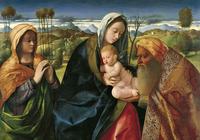
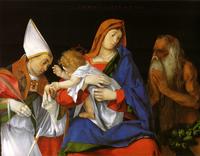
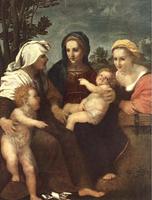
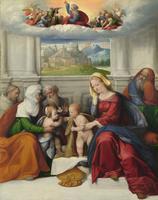
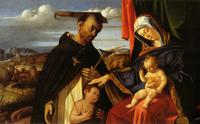
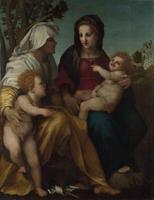
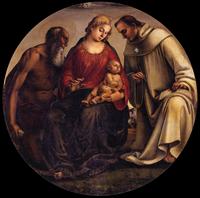
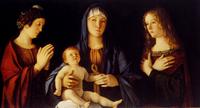
The grouping of four saints around the Virgin and Child is carefully choreographed to create both spiritual hierarchy and human intimacy. Saint Jerome, the scholar-penitent, is recognizable by his traditional lion and the symbol of his ascetic life; Saint Peter holds the keys to heaven; Saint Clare’s presence signals Franciscan devotion, and Saint Francis bears the stigmata. Lotto arranges them not in a static pyramid, but in a more dynamic, emotionally charged interaction. Each figure appears lost in private contemplation or direct engagement with the holy child, lending the composition a psychological depth rare for its time.
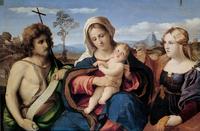
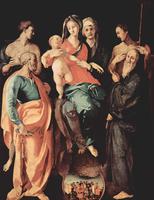
What makes this work significant within the High Renaissance is Lotto’s treatment of light and color—vibrant, almost jewel-like hues that model forms while conveying a palpable atmosphere. The Virgin and Child are the focal point, but the saints’ expressive faces and gestures draw the viewer into a quiet, devotional narrative. Lotto avoids the monumental calm of Raphael or Leonardo, instead offering a more personal, intimate vision of the sacred. This painting stands as a testament to his individualistic voice, blending traditional iconography with a distinctly human, emotional realism that prefigures Mannerist sensibilities.