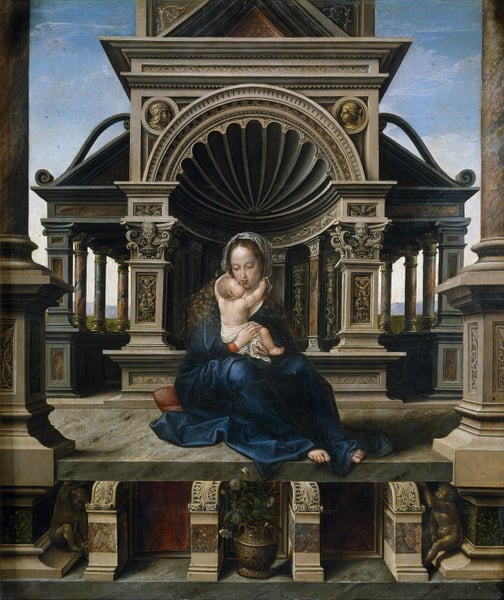
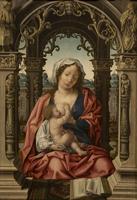
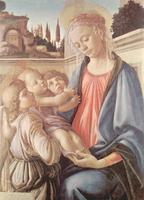
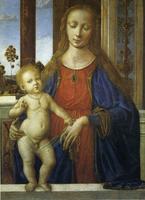
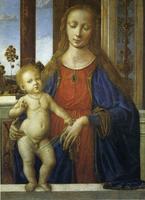
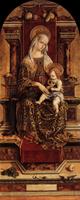
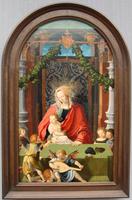
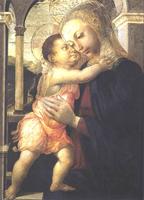
Based solely on the supplied facts, the significance of "Virgin of Louvain" by Mabuse lies in its representation of the Northern Renaissance style within the religious painting genre.
As a work of this period, it would typically emphasize meticulous naturalism, rich symbolism, and a detailed, almost devotional realism. Within the Northern Renaissance, religious paintings served both as objects of piety and as displays of technical virtuosity in rendering textures, light, and space. Mabuse’s painting is significant for embodying these hallmarks—its treatment of the Virgin as a focal point for spiritual contemplation, while also demonstrating the period’s growing interest in capturing the material world with precision.
The title, linking the Virgin to Louvain (Leuven), further anchors the work in a specific regional and devotional context, reflecting how Northern Renaissance art often localized sacred imagery to foster a more intimate connection between the faithful and the divine. This blend of regional identity and stylistic refinement makes the painting a noteworthy example of its time.