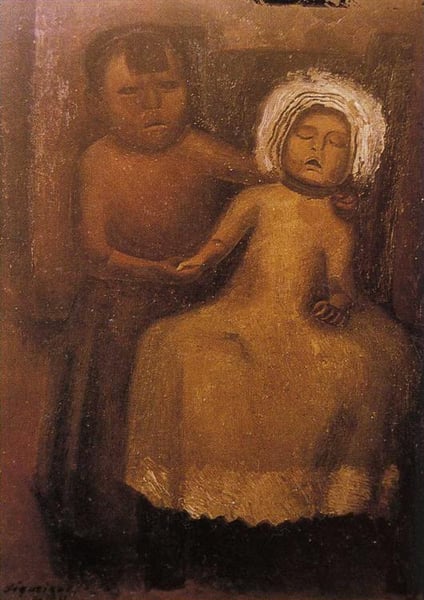
Analisi esperta di Portrait of a Dead Child di David Alfaro Siqueiros
Stile: Expressionism · Genere: genre painting
Analysis of Portrait of a Dead Child by David Alfaro Siqueiros
As an expert in art history, I can place this work within its Expressionist context and genre-painting tradition. David Alfaro Siqueiros, a leading figure in the Mexican muralist movement, is known for his politically charged, large-scale works. In Portrait of a Dead Child, he adapts Expressionist techniques—bold, distorted forms, heightened emotional intensity, and dramatic chiaroscuro—to transform a seemingly private genre scene into a universal statement on mortality and social injustice.
Artistic Significance:
-
Expressionist Emotional Impact: The painting eschews naturalistic detail in favor of raw, visceral emotion. The child’s lifeless face and rigid posture are rendered with thick, agitated brushwork and stark contrasts of light and shadow. This approach intensifies the viewer’s sense of loss and helplessness, characteristic of Expressionism’s goal to evoke subjective, often painful, psychological states.
-
Genre as Social Commentary: While genre painting typically depicts everyday life, Siqueiros subverts it. The “dead child” is not a sentimental Victorian mourning picture; it is a confrontational image that likely reflects the realities of poverty and high infant mortality in post-revolutionary Mexico. The stark, almost claustrophobic composition forces the viewer to confront death not as a romanticized event but as a blunt, societal tragedy.
-
Siqueiros’ Unique Contribution: Unlike many European Expressionists who focused on individual angst, Siqueiros merges personal grief with political critique. He uses the child’s body as a symbol of systemic neglect—a hallmark of his belief that art must serve as a tool for social change. The painting’s power lies in this fusion: the intimate terror of a parent losing a child becomes a collective indictment of a world that allows such suffering.
In summary, Portrait of a Dead Child is significant for its masterful Expressionist handling of emotion and its redefinition of genre painting as a vehicle for social protest, offering a deeply human yet politically charged meditation on life, death, and inequality.
Museum / Gallery
Visivamente simili
20 opere con composizione e palette affini
Modok Mária, Család 1937
Modok Mária
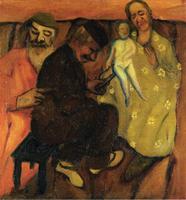
Circumcision
Marc Chagall
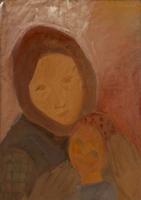
Modok Mária, Anyaság
Modok Mária
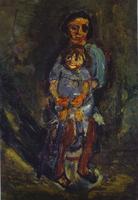
Mother and Child
Chaim Soutine
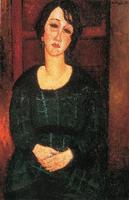
Woman with Scottish Dress
Amedeo Modigliani
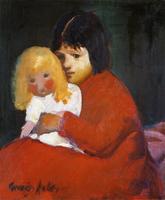
Girl with Doll
George Luks
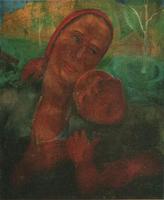
Mother and Child
Victor Palmov
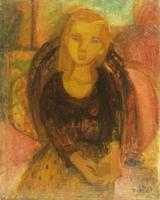
Modok Mária, Fekete Blúzos Nő
Modok Mária
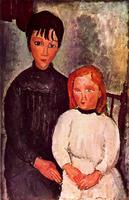
Two girls
Amedeo Modigliani
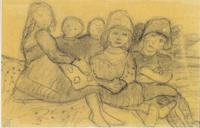
Five children on the edge of the meadow
Paula Modersohn-Becker
Menina triste e doente
Jose Pancetti
Portrait of a Child
Lajos Tihanyi
Portrait of a woman
George Bouzianis
A young girl
Amedeo Modigliani
Maternity
Chaim Soutine
Annie Bjarne
Amedeo Modigliani
The Two Sailor Brothers
Constant Permeke
Female Dancers
George Bouzianis
Untitled
Lasar Segall
Infant with her mother's hand
Paula Modersohn-Becker