
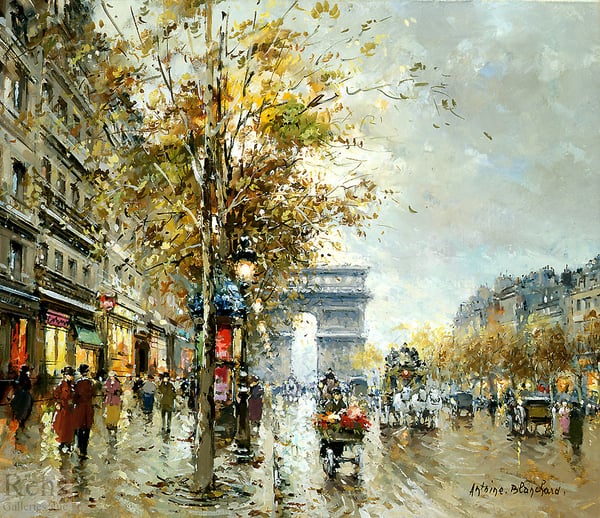
Analisi esperta di Champs Elysees di Antoine Blanchard
Stile: Impressionism · Genere: cityscape
Expert Analysis: "Champs-Élysées" by Antoine Blanchard
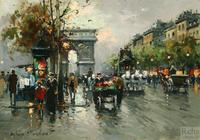
Antoine Blanchard’s "Champs-Élysées" is a quintessential example of post-Impressionist nostalgia, painted decades after the height of Impressionism yet firmly rooted in its visual language. While the artist worked primarily in the mid-20th century, his cityscapes deliberately channel the Belle Époque Paris of the 1890s–1910s, offering a romanticized view of the avenue that epitomized modern urban leisure.
Significance within Impressionism and Its Legacy:
- Perpetuation of Light and Atmosphere – Blanchard employs the classic Impressionist technique of broken, rapid brushstrokes to capture the play of sunlight filtering through trees and reflecting off wet pavement. The soft, hazy treatment of the distant Arc de Triomphe and the shimmering carriage traffic evoke a sense of fleeting moment, a core Impressionist pursuit.
- Urban Spectacle as Subject – Like Pissarro and Monet, Blanchard focuses on the city’s grand boulevards as theaters of modern life. The Champs-Élysées is shown teeming with horse-drawn carriages, elegant strollers, and gas lamps—deliberately omitting 20th-century automobiles to create a timeless, idealized Paris.
- Color Harmony and Mood – A muted palette of warm ochres, soft greys, and pale blues, punctuated by bright touches of red and white in figures, recreates the delicate tonal unity of early Impressionist city views. The low horizon line and broad sky emphasize the avenue’s grandeur, while the blurred edges of buildings and trees mimic peripheral vision.
What Makes It Significant:
Blanchard’s work is not groundbreaking—he did not advance Impressionist theory—but it is a superb coda to the movement. His "Champs-Élysées" is significant as a historical pastiche, preserving the memory of a Paris that was vanishing even as he painted. For collectors and scholars, it represents the enduring appeal of Impressionism’s sensory pleasures, repackaged for a mid-century audience longing for a lost golden age. The painting is less a document of its own time than a loving re-creation of an earlier era, making it a key example of retrospective Impressionism—a genre that kept the style alive through commercial and nostalgic success.
Visivamente simili
20 opere con composizione e palette affini
L'Arc de Triomphe
Antoine Blanchard
Arc de Triomphe
Antoine Blanchard
Champs Elysees
Antoine Blanchard
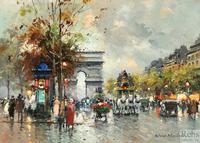
Arc de Triomphe
Antoine Blanchard
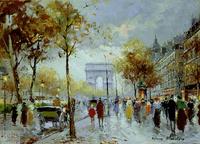
Paris, les Champs Elysees
Antoine Blanchard
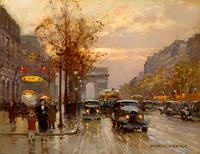
Champs-Élysées
Edouard Cortes
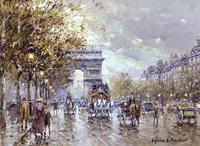
Paris l'Arc de Triomphe
Antoine Blanchard
Champs Elysees
Antoine Blanchard
Champs-Élysées
Edouard Cortes
Arc de Triomphe
Antoine Blanchard
Champs-Élysées
Edouard Cortes
Champs Elysees, Arc de Triomphe
Antoine Blanchard
Champs-Élysées
Edouard Cortes
Champs Elysees, Arc de Triomphe
Antoine Blanchard
Triumphal Arch
Edouard Cortes
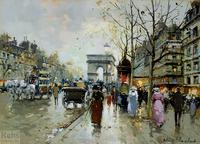
Champs Elysees
Antoine Blanchard
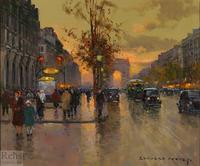
Champs-Élysées
Edouard Cortes
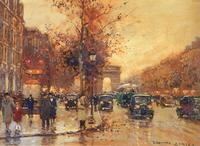
Metro George V
Edouard Cortes
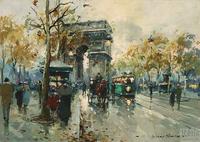
Arc de Triomphe
Antoine Blanchard
Arc de Triomphe
Antoine Blanchard