Analisi esperta di Champs Elysees di Antoine Blanchard
Stile: Impressionism · Genere: cityscape
Expert Analysis of "Champs Elysees" by Antoine Blanchard
Style: Impressionism
Genre: Cityscape
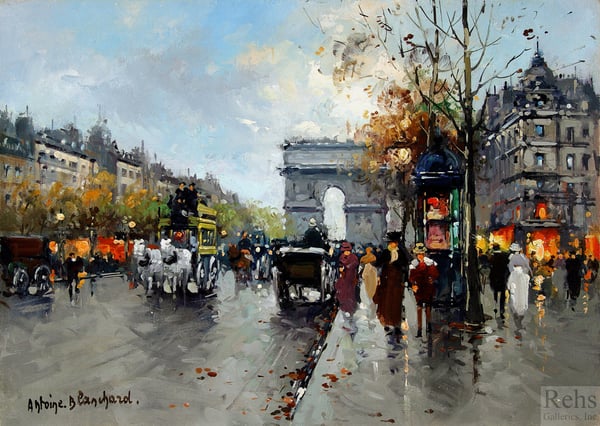
Antoine Blanchard’s “Champs Elysees” stands as a quintessential example of Impressionist cityscape painting, capturing the vibrant urban life of Paris with an emphasis on light, atmosphere, and fleeting moments. While many Impressionists focused on rural or suburban scenes, Blanchard specialized in the grand thoroughfares of the French capital, and this work exemplifies his dedication to the genre.
Significance within Impressionism and the Cityscape Genre:
Blanchard’s painting is significant for how it adapts core Impressionist principles—broken brushwork, high-key color, and the play of natural light—to a bustling urban setting. The Champs-Élysées, one of the world’s most famous avenues, is rendered not as a static postcard but as a living, breathing spectacle. The artist captures the dappled light filtering through the double rows of trees, the shimmer of reflections on wet pavement (a favorite motif in Blanchard’s oeuvre), and the subtle haze of horse-drawn carriages and pedestrians moving through the space.
This work belongs to Blanchard’s wider body of cityscapes that evoke the Belle Époque era—a time of elegance, prosperity, and leisure in Paris. By focusing on the Champs-Élysées, he aligns himself with the Impressionist fascination with modern life, following in the footsteps of predecessors like Monet and Pissarro, who painted the boulevards of Paris. However, Blanchard’s palette often leans toward cooler, silvery tones, and his handling of atmospheric perspective gives the avenue a sense of depth and majesty that emphasizes its role as a symbol of Parisian sophistication.
Why It Matters:
In the context of Impressionism, “Champs Elysees” is significant because it represents a later, nostalgic continuation of the movement’s ideals. Blanchard painted well into the 20th century, but he deliberately revived the techniques and subjects of the late 19th century, offering viewers a window into a romanticized Paris that many considered lost after World War I. His cityscapes are celebrated for their ability to merge technical impressionist brushwork with an affectionate, almost sentimental portrayal of urban life. This painting, in particular, stands out for its balanced composition—the avenue’s linear perspective leads the eye toward the Arc de Triomphe, while the lively foreground figures and carriage traffic add movement and human scale.
In summary, “Champs Elysees” is a masterful cityscape that showcases how Impressionism could capture the essence of a iconic urban space through light, color, and momentary impression. It reinforces Blanchard’s reputation as a painter who preserved the spirit of Impressionism within the genre of the Parisian street scene, making it a cherished piece for lovers of both the style and the city it immortalizes.
Visivamente simili
20 opere con composizione e palette affini
Arc de Triomphe
Antoine Blanchard
L'Arc de Triomphe
Antoine Blanchard
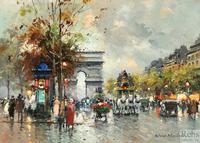
Arc de Triomphe
Antoine Blanchard
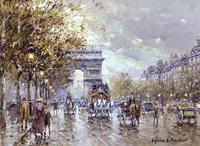
Paris l'Arc de Triomphe
Antoine Blanchard
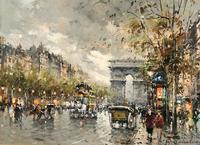
Champs Elysees, Arc de Triomphe
Antoine Blanchard
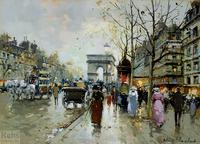
Champs Elysees
Antoine Blanchard
Arc de Triomphe
Antoine Blanchard
Champs Elysees
Antoine Blanchard
Champs Elysees, Arc de Triomphe
Antoine Blanchard
Arc de Triomphe
Antoine Blanchard
Champs Elysees, Winter
Antoine Blanchard
Champs Elysees, Arc de Triomphe
Antoine Blanchard
Champs-Élysées
Edouard Cortes
Paris, les Champs Elysees
Antoine Blanchard
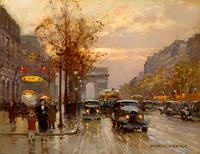
Champs-Élysées
Edouard Cortes
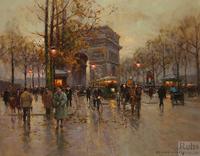
Triumphal Arch
Edouard Cortes
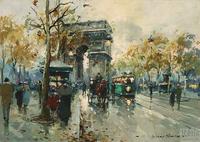
Arc de Triomphe
Antoine Blanchard
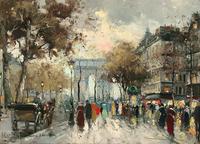
Champs Elysees
Antoine Blanchard
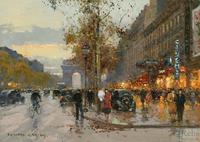
Champs-Élysées
Edouard Cortes
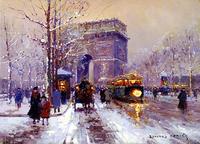
Triumphal Arch
Edouard Cortes