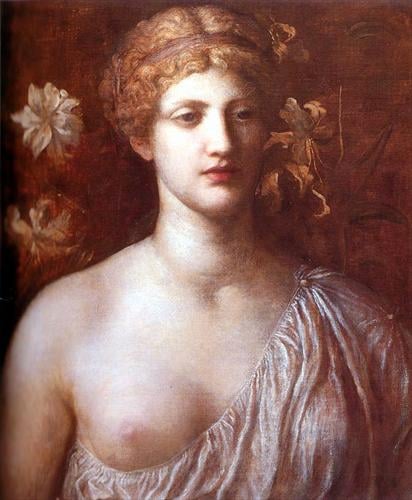
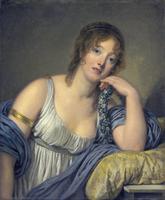
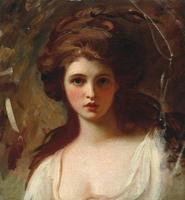
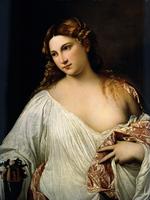
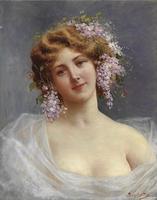
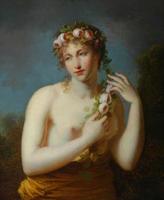
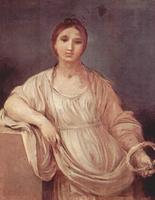
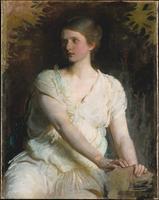
"The Wife of Pygmalion" is a significant Romantic portrait that merges mythological narrative with the psychological depth characteristic of the era. By depicting the moment after Pygmalion’s statue comes to life—retold from Ovid’s Metamorphoses—Watts elevates portraiture beyond mere likeness into an allegory of artistic creation, idealized beauty, and the boundary between reality and imagination. The work exemplifies Romanticism’s preoccupation with intense emotion, the sublime, and the artist’s power to breathe life into matter. Watts’s treatment of the subject also foreshadows his later Symbolist interests, making this portrait a key bridge between Romantic idealism and the symbolic explorations of the late 19th century.